Ancient Oceans Challenge Climate Expectations: A Closer Look at Oxygen Levels During Warming Periods
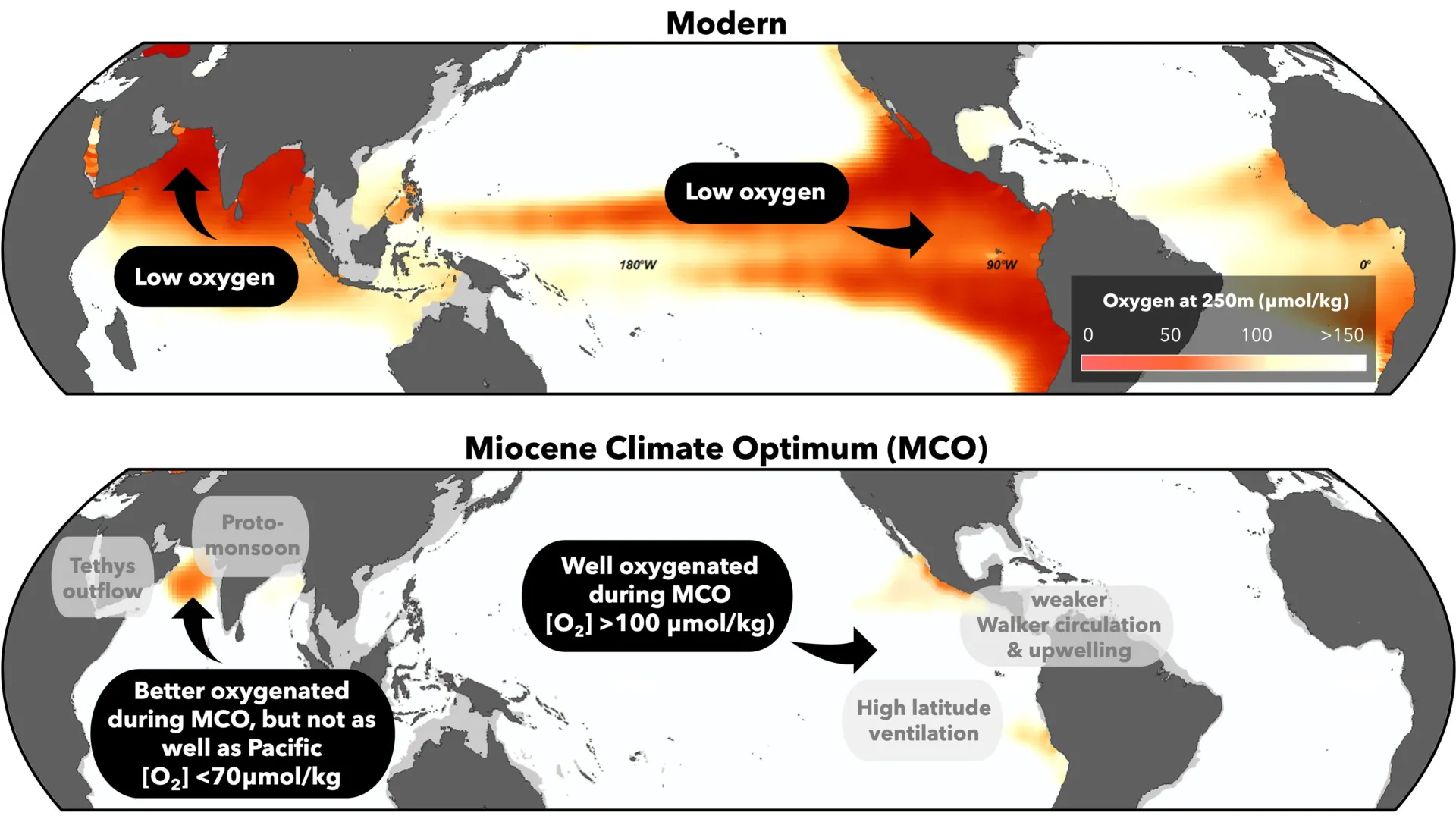
Research into ancient oceanic conditions has unveiled surprising findings about the Arabian Sea's oxygen levels during a period of global warming that occurred approximately 16 million years ago. While scientists have long operated under the assumption that warmer ocean temperatures lead directly to deoxygenation, this recent analysis of marine fossils indicates that the Arabian Sea maintained a relatively high oxygen content during this warm epoch. This unexpected discovery not only challenges established climatic theories but also raises critical questions about the future of oceanic health as global temperatures rise.
Fossils collected from the seabed reveal that even during periods of heightened temperatures, the Arabian Sea exhibited an ecosystem resilient enough to sustain higher oxygen levels. Researchers attributed this anomaly to the influence of powerful monsoon systems and effective ocean circulation patterns prevalent in the region at that time. Unlike the Pacific Ocean, which experienced significant deoxygenation during similar warming events, the Arabian Sea's unique climatic conditions appear to have acted as a buffer, delaying the onset of oxygen depletion for millions of years. This nuanced understanding of ancient marine environments sheds light on the complex interactions between climate patterns and ocean chemistry.
The implications of this study extend beyond mere academic curiosity. Understanding how ancient oceans functioned during periods of extreme warming can inform current climate models and our predictions for future ocean health. As global temperatures continue to rise due to anthropogenic climate change, the anticipation of widespread oceanic deoxygenation has been a prevalent narrative. However, the Arabian Sea's historical resilience suggests that other factors, such as regional currents and wind patterns, could profoundly impact how marine ecosystems respond to climate shifts. This research encourages a reevaluation of the simplistic view that warming invariably leads to oxygen loss.
The scientific community has long understood that oxygen levels in oceans are crucial for the survival of marine life, particularly in regions where biodiversity is rich and complex. Decreased oxygen levels can lead to dead zones, areas where marine organisms struggle to thrive, ultimately disrupting food chains and affecting human communities reliant on fishing and other marine resources. By examining the Arabian Sea's past, researchers are gaining insights into how different environmental and geological factors can either exacerbate or mitigate these risks. This newfound perspective could be instrumental in developing adaptive management strategies for marine ecosystems in the face of climate change.
Moreover, the study highlights the importance of interdisciplinary approaches in climate science. By combining paleoclimatology, oceanography, and geology, researchers can construct a more comprehensive picture of Earth's climatic history. This integrated methodology not only enhances our understanding of past events but also equips scientists with better tools to forecast future scenarios. As climate change continues to pose unprecedented challenges, exploring the historical precedents of ocean behavior becomes ever more critical.
In summary, the Arabian Sea's oxygen levels during a period of ancient global warming challenge long-held assumptions about the relationship between temperature and ocean health. The evidence suggests that while warming may induce stress on marine ecosystems, factors such as regional climate phenomena and ocean circulation can play a significant role in determining oxygen availability. As researchers continue to unravel the complexities of our planet's climatic history, these insights will be vital in informing present-day policies to safeguard oceanic health and biodiversity amid ongoing climate change.