Asteroid Impacts: The Cosmic Catalysts for Life on Earth?
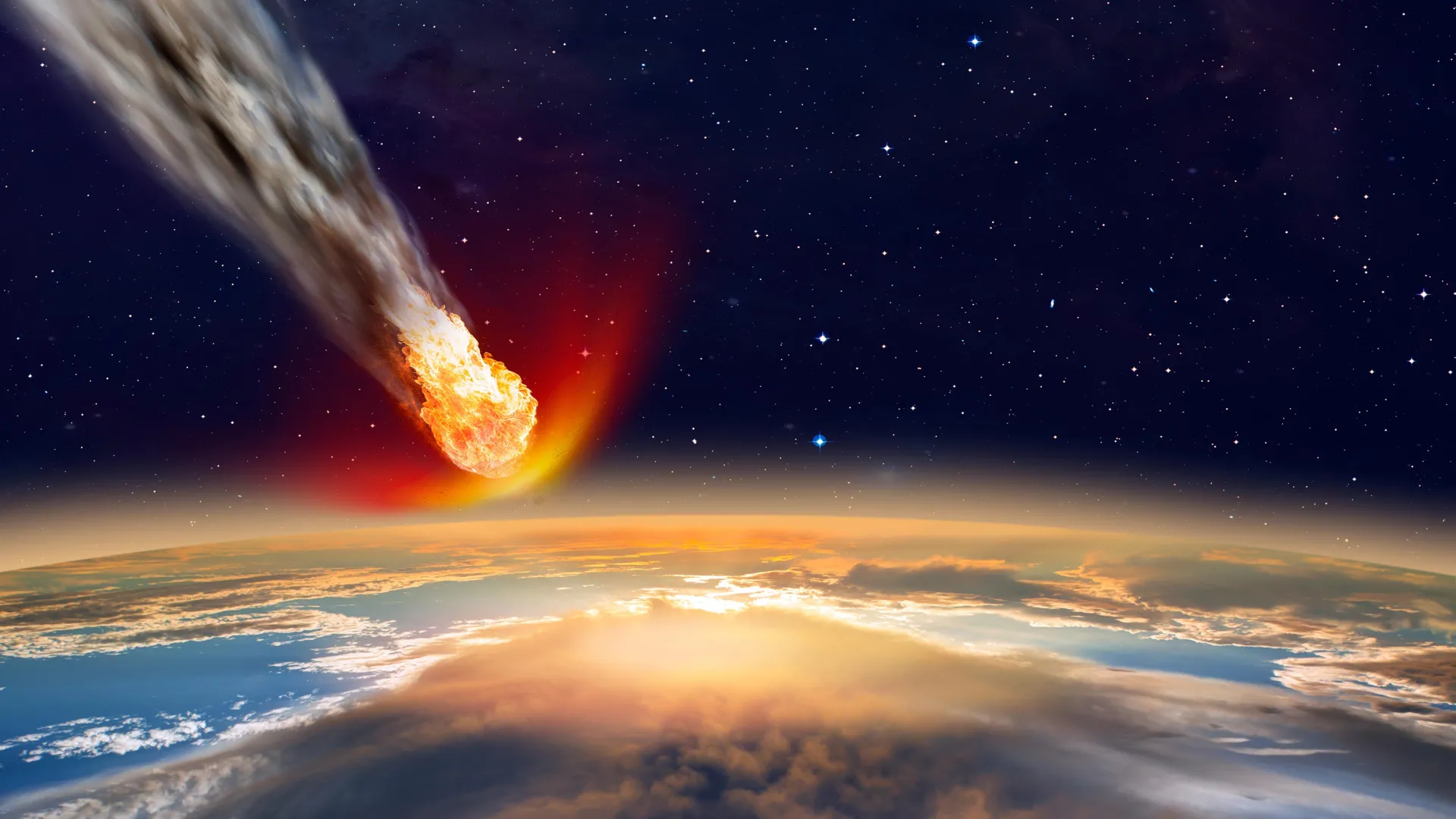
The origins of life on Earth remain one of the great mysteries of science, captivating researchers and enthusiasts alike for centuries. Recent studies have shed new light on a fascinating possibility: the role of asteroid impacts in creating the conditions necessary for life to emerge. According to scientists, the violent collision of asteroids with the early Earth may have generated localized, hot, chemical-rich environments that were perfect for the formation of life’s essential building blocks. This hypothesis highlights how cosmic events, often perceived as destructive, could have inadvertently provided the nurturing grounds for the beginnings of life.
When asteroids struck the early Earth, they released massive amounts of energy, leading to dramatic changes in temperature and pressure. These high-energy events resulted in the formation of hydrothermal systems, which are underwater hot springs that create a unique mix of heated water and minerals. Such systems can persist for thousands of years, offering a stable environment where organic molecules can form and evolve. The chemical reactions that occur in these environments could have been the catalyst for the synthesis of amino acids, nucleotides, and other precursors to life, suggesting that these impact-generated hydrothermal systems played a pivotal role in the origins of biology.
The significance of this theory extends beyond Earth. Understanding how life could begin in these extreme conditions opens new avenues in the search for extraterrestrial life. Scientists now have a template for the types of environments to investigate on other planets and moons within our solar system and beyond. For example, the icy moons of Jupiter, such as Europa, and Saturn’s moon Enceladus are believed to harbor subsurface oceans. If these moons were to experience similar impact events in their histories, they could potentially share a commonality with early Earth, where life might have also taken root under the right conditions. This perspective broadens the scope of astrobiology, allowing researchers to look for life in a more diverse range of environments.
The early Earth was a dramatically different place compared to the planet we know today. Approximately 4 billion years ago, it was still cooling from its formation, with a surface marked by volcanic activity and frequent asteroid collisions. The chemical composition of the atmosphere was also vastly different, rich in methane, ammonia, and other gases that are not conducive to life as we know it. However, the simultaneous presence of these elements could have created a fertile ground for life's precursors to emerge in hydrothermal vents, which acted as natural laboratories. Thus, the research into asteroid impacts provides a crucial link in our understanding of how life could have arisen from a seemingly inhospitable environment.
Recent studies have utilized computer simulations and geological evidence to support the theory that these ancient impacts created conditions suitable for life. Researchers have modeled the thermal and chemical dynamics of impact-generated hydrothermal systems, demonstrating that the right temperature and pressure conditions can lead to the synthesis of complex organic molecules. They have also compared these simulations to geological samples from ancient Earth, finding parallels that bolster their findings. These advances illustrate how interdisciplinary approaches, combining geology, chemistry, and planetary science, can enhance our understanding of life’s origins.
As the quest to unravel the mystery of life's beginnings continues, the implications of asteroid impacts extend to our understanding of planetary evolution and the potential for life elsewhere in the universe. The exploration of asteroids and other celestial bodies could hold the key to unlocking the secrets of the early solar system, revealing how life may have initiated on Earth and whether similar processes could occur on other planets. This ongoing research not only enriches our knowledge of Earth's history but also inspires future missions to explore the cosmos, searching for signs of life, past or present, in the vast expanse of space.