China's Carbon Emissions: A Significant Shift Towards Sustainability
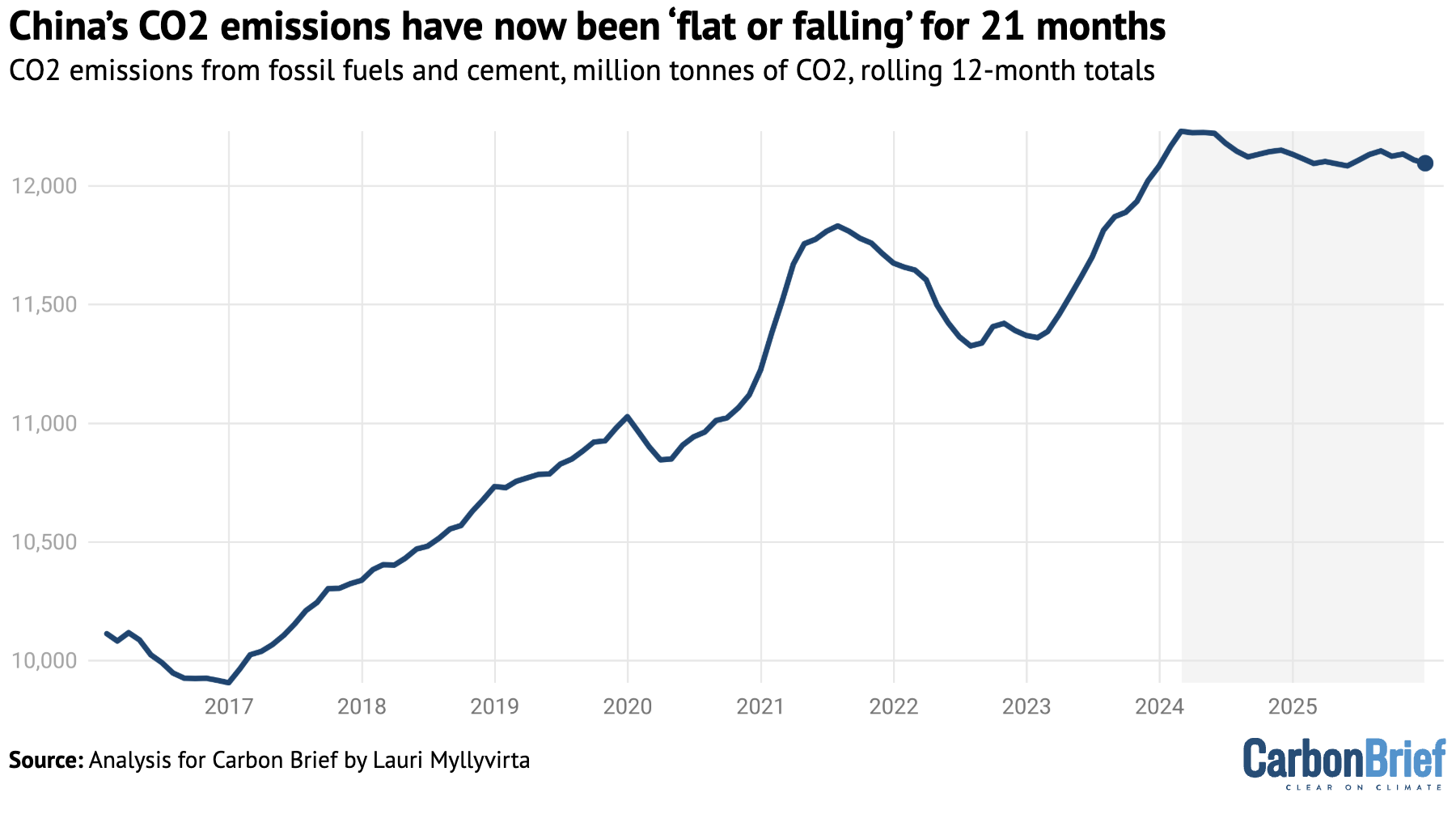
Recent analyses reveal that China's carbon dioxide emissions have experienced a notable trend of stabilization or decline, marking a significant shift in the country's approach to climate change. As of the final quarter of 2025, emissions decreased by 1%, contributing to an estimated overall reduction of 0.3% for the entire year. This marks an important milestone, as it extends a nearly two-year period of either flat or declining emissions that began in March 2024. The implications of this trend are profound, not only for China but also for global climate efforts, particularly given the country's status as the world's largest emitter of greenhouse gases.
A detailed examination of 2025's emissions data reveals that while fossil fuel emissions saw a slight uptick of 0.1%, this increase was more than compensated for by a remarkable 7% decrease in carbon output from the cement industry, a major contributor to emissions. Additionally, emissions fell across nearly all major sectors, including transportation (down by 3%), power generation (down by 1.5%), and building materials (down by 7%). The only notable exception was the chemicals sector, where emissions surged by 12%. This sector's growth demonstrates the complex interplay between industrial demand and environmental targets, highlighting the ongoing challenges China faces in balancing economic growth with sustainability.
The energy landscape in China is also undergoing transformative changes that support these declining emissions figures. Renewable energy sources, particularly solar and wind, have seen remarkable increases in output, with solar power generation soaring by 43% and wind power by 14% year-on-year. Nuclear power generation also increased by 8%, together delivering a significant boost to the country's clean electricity supply. As a result, coal generation fell by 1.9%, reflecting a broader shift away from fossil fuels towards more sustainable energy solutions. This transition is vital for reducing China's carbon footprint and meeting international climate commitments.
Energy storage capacity has experienced unprecedented growth, expanding by 75 gigawatts in 2025, outpacing the rise in peak electricity demand of 55 gigawatts. This advancement in energy storage technology is crucial, as it allows for better management of electricity supply and demand, facilitating the integration of intermittent renewable sources into the grid. The increase in energy storage capacity, combined with an overall rise in clean energy output, indicates a forward momentum in China's energy strategy, positioning the country to potentially meet its climate goals more effectively.
Despite the positive trajectory, China's carbon intensity, which measures fossil fuel emissions per unit of GDP, fell by only 4.7% in 2025 and by 12% from 2020 to 2025. This performance falls short of the ambitious target of an 18% reduction set forth in the 14th five-year plan. To meet its commitments under the Paris Agreement, China would need to achieve a further 23% reduction in carbon intensity over the next five years. The upcoming 15th five-year plan, scheduled for publication in March, will play a critical role in determining the nation's climate strategy moving forward. Policymakers' commitment to setting and adhering to these targets will be essential in establishing whether emissions have indeed peaked or if they will rise again, delaying progress towards the country's stated goal of peaking emissions before 2030.
The ongoing trends in China's emissions and energy production underscore the delicate balance between economic growth and environmental responsibility. As the largest emitter of carbon dioxide globally, China's actions will significantly influence international climate efforts. The data from 2025 reflects not only the country's evolving energy landscape but also the socio-economic factors at play. A commitment to reducing carbon emissions while maintaining robust economic growth is a challenge faced by many nations around the world. The lessons learned from China's experience could serve as a valuable case study in navigating this complex dichotomy, offering insights into how large-scale industrial nations can transition towards more sustainable practices while fostering economic resilience.