China's Coal Expansion Amidst Renewables Surge: A Critical Analysis of 2025 Proposals
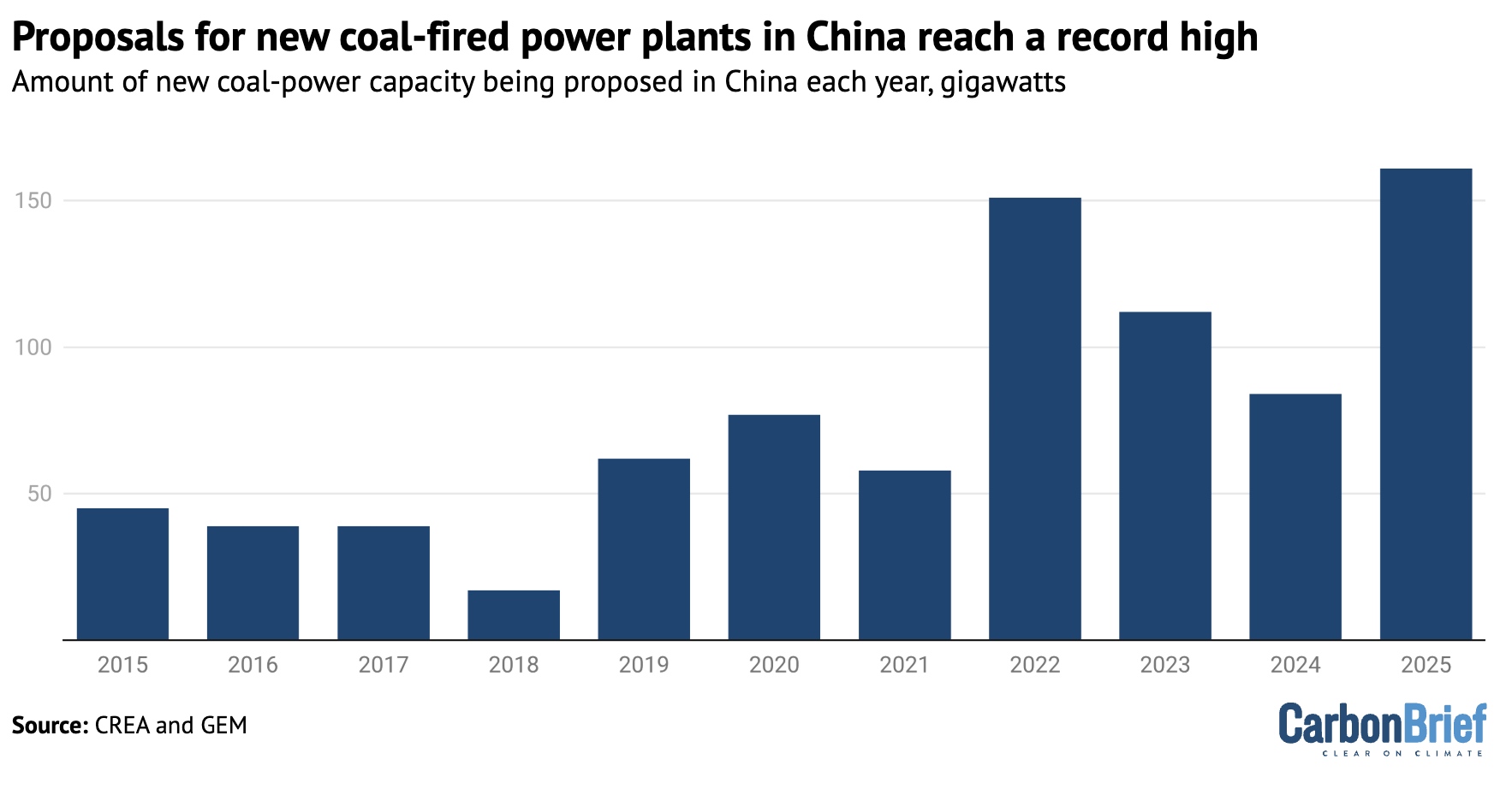
Recent findings indicate a striking surge in proposals to construct new coal-fired power plants in China, with developers submitting requests for a total of 161 gigawatts (GW) of new capacity in 2025. This figure, released by the Centre for Research on Energy and Clean Air (CREA) and Global Energy Monitor (GEM), highlights a paradoxical trend where coal development appears to accelerate even as the country makes substantial strides in renewable energy. This situation raises significant questions about the future trajectory of China's energy policies and its commitment to climate goals, particularly as the world grapples with the urgent need to transition to cleaner energy sources.
The report underscores that this record-high proposal volume represents about 13% of China's existing coal capacity. While the country has made notable advancements in renewable energy deployment, which have effectively reduced coal power generation and carbon dioxide (CO2) emissions, the influx of new coal proposals signals a potential conflict between immediate energy needs and long-term climate objectives. Despite the push for renewables, many existing coal plants are operating at only half their capacity, suggesting a systemic overreliance on coal that could hinder progress towards a greener energy landscape.
Industry analysts warn that the current rush to develop new coal projects is likely influenced by a looming deadline for stricter climate policies within the next few years. This urgency is compounded by financial mechanisms that are misaligned with the goals of transitioning to renewable energy. Developers are incentivized to propose large-scale coal facilities, which, if constructed, could drastically undermine efforts to reform the power system. The concern is that investing in new coal infrastructure could entrench fossil fuel dependency, making it more challenging to pivot towards a sustainable energy framework in the future.
The report also highlights a noticeable shift in the dynamics of coal power in China. Although the nation added a record 95GW of coal capacity last year and has 291GW in the pipeline, the trend of new coal proposals is diverging from global patterns. While many countries see a significant portion of proposed coal projects fail to materialize, approximately two-thirds of China's proposed coal capacity since 2014 has been either commissioned or remains under development. This reflects a robust commitment to coal infrastructure, despite the global shift towards greener energy solutions.
As China's power sector continues to be one of the largest emitters of CO2 globally, emissions from this sector peaked at over 5.6 billion tonnes in 2024. If considered as an independent entity, it would rank among the highest emitters worldwide, second only to China itself. However, the last year has seen these emissions stabilize or decline, primarily due to the rapid integration of renewable energy sources that are meeting the increasing electricity demand. Such developments suggest a potential turning point, as the country increasingly relies on renewables to stabilize its energy supply, pushing coal generation down.
The implications of this coal expansion are profound. The report notes that the additional coal capacity could lead to structurally low utilization rates, meaning power plants may not operate at full capacity for extended periods. Such conditions can create financial strains on coal operators, raising the likelihood of stranded assets and increasing calls for continued policy support. The challenge remains for China to balance its immediate energy requirements with the long-term vision of a sustainable and clean energy future. As the nation navigates these complex dynamics, the path forward will be crucial not only for its economic growth but also for global climate outcomes.