China Signals a Tougher Line on Fossil Fuels With Earth Day Policy Document Aimed at Heavy Emitters
Chinese government leaders marked Earth Day with the release of a policy document calling for stricter controls on fossil fuel consumption and enhanced oversight of the country's largest emitters. Experts reading the document describe it as a significant signal of Beijing's continued commitment to its climate pledges, and as a bridge between the broader goals set out in the fifteenth five year plan published in March and the more detailed sectoral plans that are expected to follow over the coming years. The timing and language of the release suggest that climate governance is increasingly being woven into the fabric of routine economic planning rather than treated as a separate environmental concern.
The document uses the phrase strict control in relation to coal, oil, and natural gas consumption, a formulation that Chinese policy watchers have come to read as a directive with real teeth. Earlier iterations of central policy tended to speak of reasonable control or rational growth, leaving provincial governments wide latitude to continue building fossil infrastructure. By contrast, the new guidance links fossil fuel consumption more directly to emission peaking targets and to the country's commitment to achieve carbon neutrality before 2060. Analysts note that the document also calls for stronger enforcement mechanisms, including improved measurement, reporting, and verification requirements for major industrial emitters, and for closer supervision of the project approval processes that have historically allowed coal capacity to expand.
China is the world's largest emitter of greenhouse gases in absolute terms, although its emissions per person remain well below those of the United States or Australia. The country is also the dominant manufacturer of solar panels, wind turbines, lithium ion batteries, and electric vehicles, exporting the hardware of the energy transition to virtually every other nation. That dual position, as both the biggest source of fossil fuel combustion and the main supplier of clean technologies, gives Chinese climate policy an outsized influence on global outcomes. Decisions made in Beijing about how quickly to restrain coal and oil use, and how aggressively to deploy renewables at home, shape both the trajectory of global temperatures and the cost curves of clean energy worldwide.
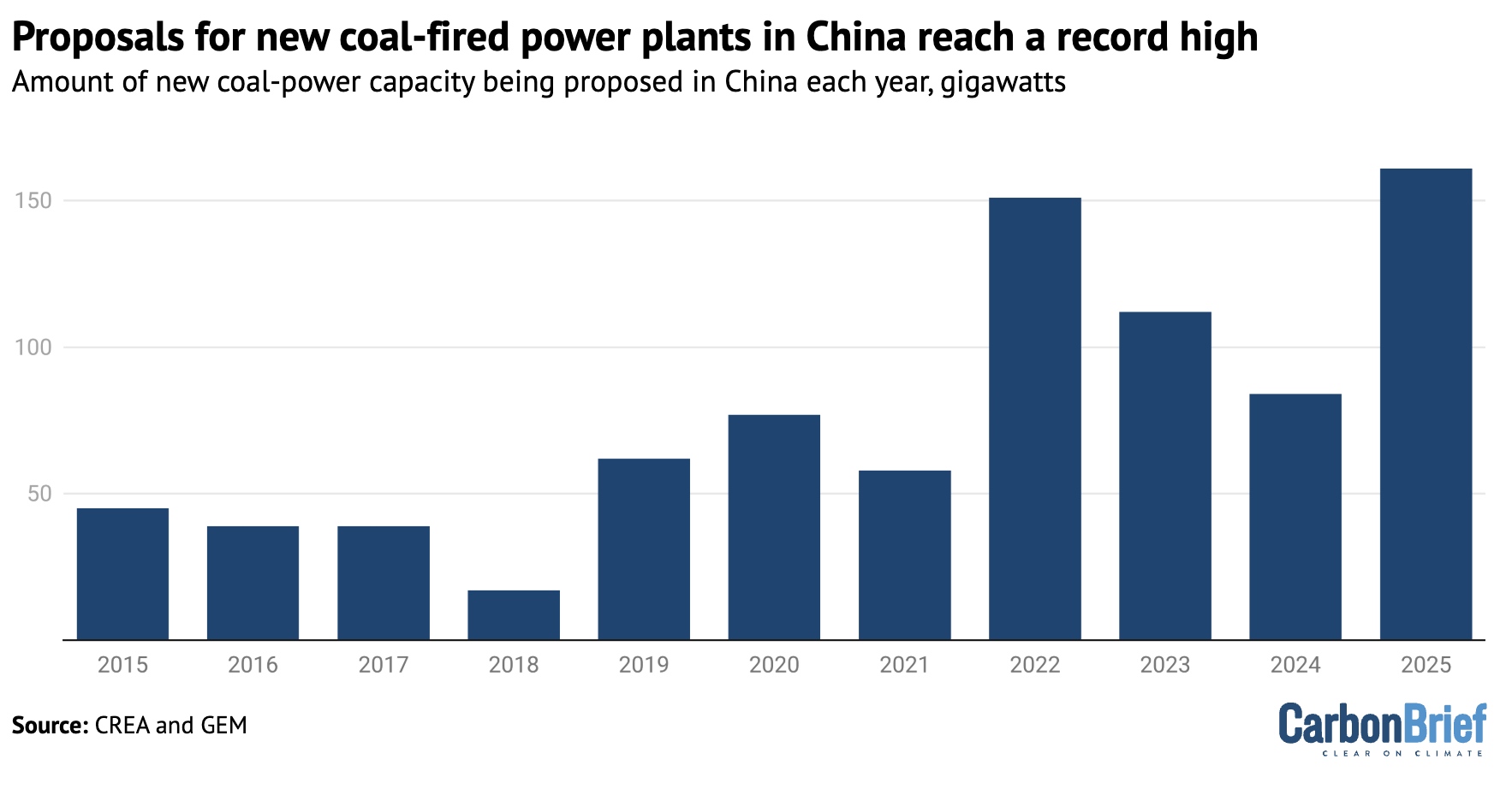
Of particular interest to climate analysts is the document's treatment of the power sector. China's electricity system remains the largest consumer of coal on the planet, and the past several years have seen a surprising surge in approvals for new coal fired plants. Officials have justified this as a measure to stabilize the grid in the face of extreme heat events and rapid growth in renewable generation, but the build out has raised concerns about stranded assets and locked in emissions. The new guidance emphasizes that coal should serve an increasingly supporting role behind renewables, with priority given to flexible operation, carbon capture retrofits, and eventual retirement, rather than to baseload expansion. Implementation will depend on how provincial governments translate central direction into permitting practice.
Equally important are the signals aimed at heavy industry. Steel, cement, aluminum, chemicals, and petrochemicals collectively account for a large share of Chinese emissions, and they have proved more difficult to decarbonize than the power sector. The policy calls for stricter control over new capacity, accelerated adoption of efficiency standards, and expanded coverage of the national emissions trading scheme, which currently applies only to the power sector but is slated to grow to include steel, cement, and aluminum. If implemented forcefully, these measures could trigger a reshuffling of industrial geography, as producers relocate toward regions with abundant low carbon electricity and the ability to meet tighter standards, with implications for global supply chains in construction materials and manufactured goods.
For the international climate diplomacy circuit, the document's release just months before the next United Nations climate summit is a reminder that Chinese domestic policy often telegraphs negotiating positions. Western observers will be watching to see whether Beijing moves to formally enhance its Nationally Determined Contribution, the country's pledge under the Paris Agreement, and whether it sets a firmer date for peaking emissions. Developing country partners, especially those benefiting from Chinese investment in green infrastructure, are likely to treat the document as reassurance that the pace of decarbonization at home will continue to support exports of clean technology abroad. For a world still grappling with how to balance economic growth, energy security, and environmental urgency, Earth Day 2026 produced a message from Beijing that cannot be ignored.
Observers will also be watching how the policy shapes China's massive build out of renewables. The country already installs more solar capacity every year than the rest of the world combined and leads in wind power, battery storage, and electric transportation. Translating that hardware advantage into rapid emission reductions requires parallel progress on grid flexibility, electricity market reform, and the retirement of high emitting assets. The new Earth Day document, read alongside the five year plan and related guidance, suggests that Beijing is laying the groundwork for each of these elements. Whether the pieces come together fast enough to peak emissions well before 2030, as many scientists believe is necessary to meet global climate goals, will be one of the defining questions of the coming decade.