Coal's Comeback Is a Myth: Analysis Shows Global Coal Power Will Barely Rise Despite Energy Crisis
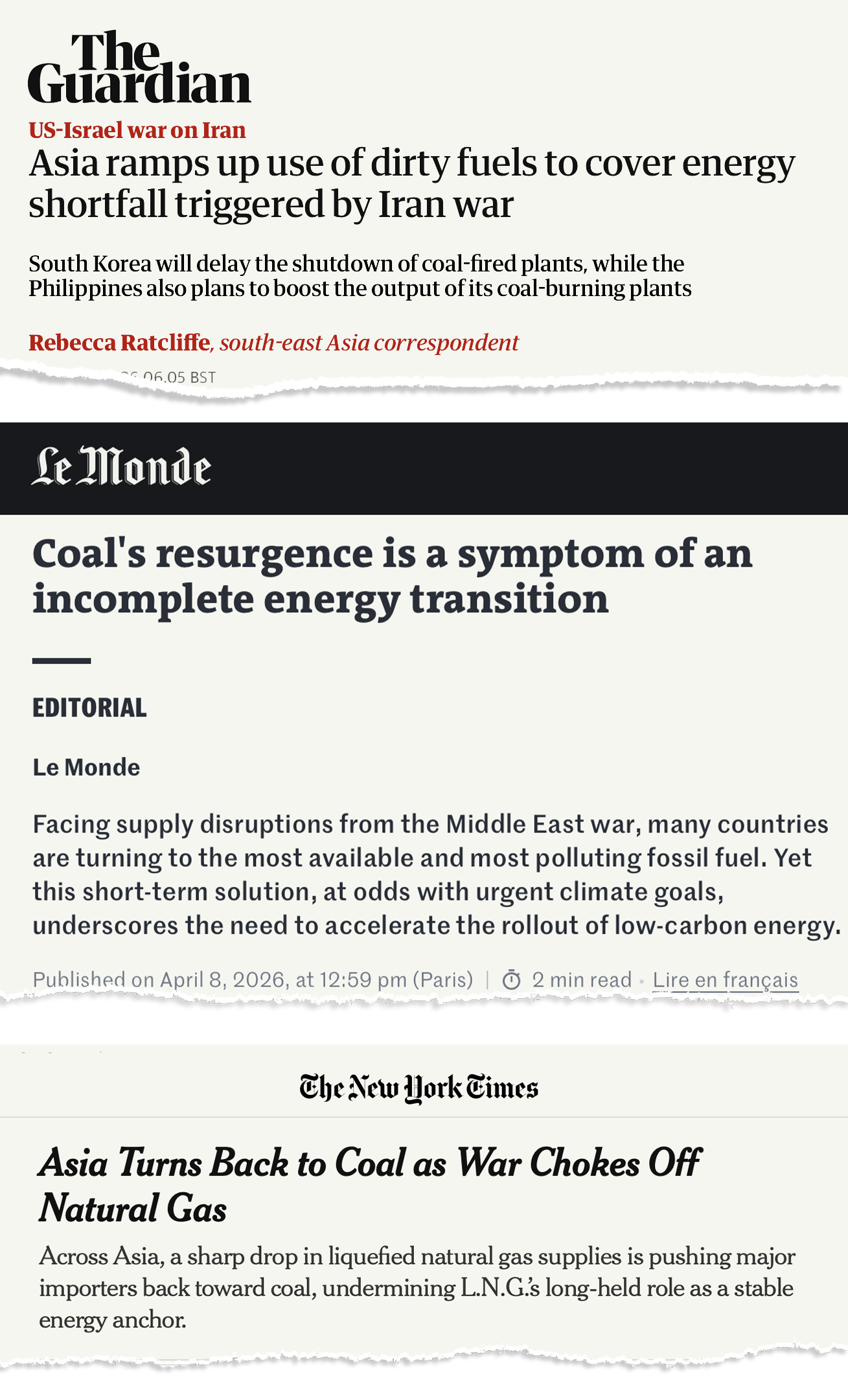
Widespread predictions of a major return to coal power in the wake of the ongoing energy disruptions caused by the Iran crisis appear to have been greatly exaggerated, according to a detailed new analysis by the energy think tank Ember. Despite at least eight countries in Asia and Europe announcing plans to extend or increase their coal fired electricity generation, the analysis concludes that the global impact will amount to no more than a 1.8 percent rise in coal power output in 2026, a figure that represents a worst case scenario rather than a likely outcome. The findings challenge a narrative that has dominated energy headlines in recent months and suggest that the structural decline of coal power remains firmly intact, even as short term geopolitical disruptions create temporary pressures on energy markets.
The energy crisis that prompted these coal expansion announcements traces back to the disruption of global gas supplies following the conflict involving Iran and the blockage of the Strait of Hormuz, a critical chokepoint through which roughly one fifth of the world's liquefied natural gas (LNG) shipments normally pass. Asian countries that depend heavily on LNG imports, including Japan, South Korea, Pakistan, Bangladesh, and the Philippines, were among the first to announce contingency measures involving increased coal use. Germany and Italy in Europe also indicated they might delay coal phase out plans or temporarily increase coal generation to manage energy security concerns. These announcements generated significant media attention, with some commentators declaring coal's return "from the dead" and warning of devastating consequences for climate commitments.
Ember's analysis paints a far more nuanced picture. By examining coal policy changes and market responses across 16 countries plus the 27 member states of the European Union, which together accounted for 95 percent of total coal power generation in 2025, the think tank estimated the maximum potential increase in coal use under the most pessimistic assumptions. The resulting figure of 175 terawatt hours represents the combined effect of gas to coal fuel switching, the possible reactivation of mothballed coal plants, and delays in planned coal plant closures. Roughly three quarters of this potential increase is concentrated in just two areas: China and the European Union, where large existing coal fleets provide the most capacity for switching. Other notable but smaller contributions could come from India and Indonesia.
Several factors explain why the coal comeback has been so limited. Clean energy deployment has accelerated dramatically in recent years, with solar and wind installations growing fast enough to offset much of the decline in gas generation. Analysis by the Centre for Research on Energy and Clean Air found that in March 2026, the fall in global gas fired generation was offset by increases in renewable power rather than coal. The economics of coal have also shifted fundamentally since the last major energy crisis in 2022, when Russia's invasion of Ukraine temporarily spiked European coal use. Solar and wind power are now the cheapest sources of new electricity generation in most markets, making coal plants increasingly uncompetitive even when gas prices are elevated. Battery storage costs have also continued to fall, reducing the grid reliability arguments that once favored coal.
The pattern mirrors what happened in Europe following the 2022 energy crisis. At that time, many analysts predicted a sustained surge in European coal use as countries scrambled to replace Russian gas supplies. Coal use did spike briefly in 2022, but EU coal generation quickly resumed its long term decline and reached a historic low in 2025. Experts quoted in the Ember analysis describe the current situation in similar terms: any increase in coal use is "merely masking a longer term structural decline." Dave Jones, Ember's chief analyst, emphasized that the 1.8 percent figure represents an upper bound and that the actual outcome could be significantly lower if gas prices moderate in the second half of the year or if electricity demand growth slows.
Perhaps most significantly, the energy crisis may actually be accelerating the transition away from fossil fuels rather than reversing it. With gas prices remaining elevated and supply chains uncertain, clean energy projects are emerging as more attractive investments for governments and private capital alike. Countries that experienced the vulnerability of depending on imported fossil fuels are increasingly viewing domestic renewable energy capacity as a strategic security asset rather than merely an environmental measure. The Ember analysis concludes that while the short term increase in coal use is real and regrettable from a climate perspective, the bigger story of 2026 is the continued and accelerating growth of clean energy, which is steadily reducing the world's dependence on the most carbon intensive fuel source in the global energy mix.