Electric Vehicles Surge Ahead: A Historic Shift in the EU Automotive Market
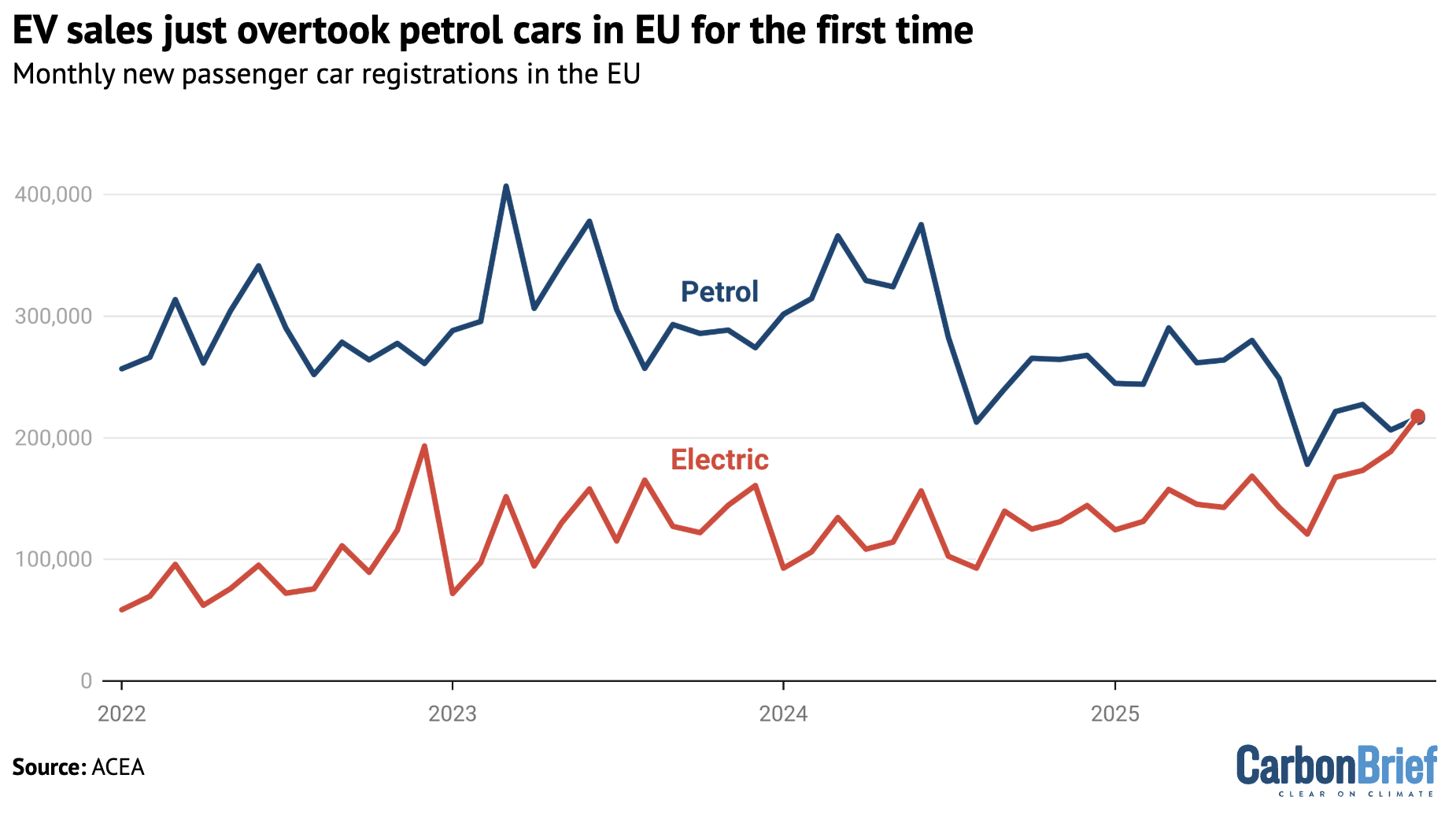
For the first time in history, electric vehicles (EVs) have officially outsold traditional petrol-powered cars in the European Union, marking a significant milestone in the region's automotive landscape. According to the latest statistics from the European Automobile Manufacturers’ Association (ACEA), December 2025 saw battery electric vehicle registrations reach a remarkable 217,898 units, a staggering 51% increase compared to the previous year. In stark contrast, sales of conventional petrol cars plummeted by 19%, dropping to 216,492 units from 267,834 in December 2024. This pivotal shift not only highlights the growing acceptance of EVs among consumers but also underscores a larger trend towards sustainable transportation solutions in the face of climate change.
The rise of battery electric vehicles in the EU is particularly noteworthy given the broader context of the automotive market's evolution. In 2025, electric vehicles accounted for 17.4% of total car sales in the bloc, a significant leap from 13.6% in 2024. This transition reflects the EU's ambitious push towards decarbonization, with the automotive sector being a major contributor to carbon emissions. As cities and nations grapple with the impacts of climate change, the shift away from fossil fuel dependence is becoming increasingly critical. The ACEA's report indicates that 1,880,370 new battery electric cars were registered throughout the year, with key markets like Germany, the Netherlands, Belgium, and France leading the charge, collectively representing 62% of EV registrations.
Despite the surge in electric vehicle sales, the decline of petrol cars was equally profound, with overall registrations dropping by 18.7% across the EU in 2025. France experienced the steepest decline, with a staggering 32% reduction in petrol car registrations, followed closely by Germany (-21.6%), Italy (-18.2%), and Spain (-16%). The data paints a clear picture of a market in transition, as consumers increasingly gravitate towards greener alternatives. While hybrid vehicles still dominate the market share with a 5.8% increase year-on-year, the growth rates for battery electric vehicles and plug-in hybrids are outpacing this segment, highlighting a consumer preference shift that could shape the future of mobility in Europe.
The backdrop of this automotive transition is the EU's comprehensive automotive package released in December. This initiative aims to support the automotive sector's pivot towards clean mobility, proposing a notable shift in regulations. The EU intends to target a 90% reduction in carbon dioxide emissions from 2021 levels by 2035, allowing for a more flexible approach that accommodates various vehicle types, including hybrids and plug-in hybrids. This nuanced legislative strategy acknowledges the current market realities while still pushing for significant reductions in greenhouse gas emissions. However, the automotive industry has voiced concerns, arguing for a reconsideration of stringent targets amid competition from global players, particularly in the Chinese market, which has made substantial headway in the EV sector.
The competitive dynamics within the EU automotive market are also worth noting. Volkswagen continues to lead the pack, capturing 26.7% of new registrations in December 2025, up from 25.6% the previous year. Stellantis, Renault, Hyundai, Toyota, and BMW follow in the rankings, but the landscape is shifting, with Tesla experiencing a notable decrease in market share from 3.5% to 2.2%. This decline is reflective of broader controversies surrounding its owner, Elon Musk, as well as intensified competition from emerging players like BYD, a Chinese EV manufacturer that saw its market share triple from 0.7% to 1.9% in the same time frame.
This historic moment in the EU automotive sector signifies a broader commitment to sustainability and innovation. With increasing consumer demand for electric vehicles and supportive policy frameworks, the momentum towards cleaner transportation is undeniable. As the EU strives to meet its climate goals amid changing market dynamics, the transition towards EVs not only represents a victory for environmental advocacy but also poses challenges and opportunities for manufacturers, policymakers, and consumers alike. The coming years will be critical in determining how the automotive landscape evolves, balancing the need for sustainable practices with the realities of market competition.