Europe's Energy Shield, Renewables Eclipse Coal, and a Colombian Fossil Fuel Summit Headline a Pivotal Climate Week
Climate policy, energy markets, and geopolitics collided this week as the European Commission unveiled a sweeping package of measures designed to shield consumers from the price shocks of the widening Iran war, while a landmark milestone in global electricity generation and a high profile summit in Colombia reinforced the sense that the transition away from fossil fuels is entering a new and more contested phase. Taken together, the developments capture a single moment in which short term crisis management and long term decarbonization are increasingly difficult to separate.
At the center of the European response is a draft strategy, dubbed AccelerateEU by analysts, that combines emergency measures with structural reforms. The package calls for temporary reductions in electricity taxes, coordinated filling of natural gas storage over the summer months, targeted support for households facing soaring bills, and accelerated permitting for renewable energy projects. Officials stopped short of reintroducing the price caps and windfall taxes that marked the 2022 energy crisis, instead framing the current response as a bridge to a cleaner and more resilient grid. The Iran war has already added an estimated twenty four billion euros to the bloc's oil and gas import bill since hostilities escalated, a figure that has concentrated minds in capitals that had grown complacent about energy security after the shock of the previous decade.
Another equally consequential story emerged from fresh data showing that renewables have overtaken coal as the world's largest source of electricity. Wind and solar generation, buoyed by record installations in China, India, and the European Union, combined with hydropower to deliver more terawatt hours in the first quarter of 2026 than coal fired plants. The milestone had been forecast for several years, but its arrival reflects both the falling costs of clean technologies and the growing reluctance of financial institutions to back new coal capacity. Analysts cautioned that coal use remains high in absolute terms, and that displacing it from the power mix in emerging economies will require sustained investment in grids, storage, and flexible demand, but the symbolic weight of the moment is difficult to overstate.
Colombia, meanwhile, hosted a summit of countries pursuing a formal phaseout of fossil fuel production, drawing delegations from more than forty nations along with representatives of civil society, indigenous groups, and labor unions. President Gustavo Petro has positioned his government as a leader of what participants are calling a just transition bloc, arguing that wealthy producers should curb extraction first while financing alternatives for developing economies that depend on hydrocarbon revenues. Skeptics point to the gap between the pledges on display and the realities of global energy demand, yet the summit demonstrated that the supply side of the fossil fuel debate, long taboo in international negotiations, is now firmly on the agenda.
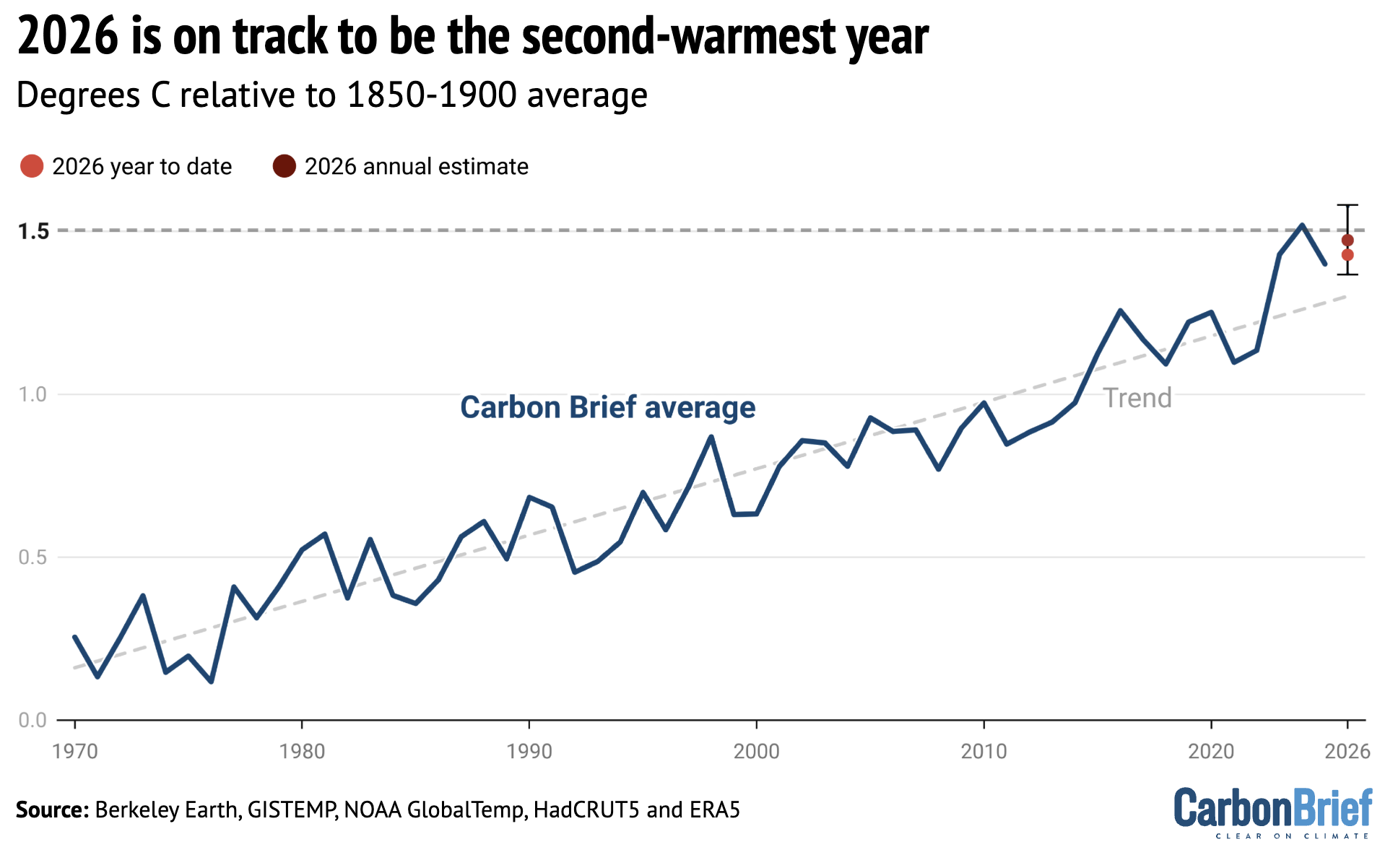
Underlying these political and market shifts, the physical climate continued to deliver warnings. Preliminary data from multiple monitoring agencies indicate that 2026 is tracking as the second warmest year on record, behind only the extraordinary heat of 2024. Marine heatwaves persist across large portions of the North Atlantic and western Pacific, while a weakening El Nino pattern has done little to cool the planet. Scientists emphasize that the long term temperature trend is driven almost entirely by greenhouse gas emissions, with natural variability producing year to year wiggles around a steadily rising line. The implications for agriculture, public health, and infrastructure planning are already visible, from early onset heatwaves in South Asia to sustained drought in parts of southern Europe and southern Africa.
Elsewhere on the climate beat, a coalition of developing countries pressed wealthy nations for faster delivery of the three hundred billion dollar climate finance commitment agreed at the previous United Nations climate summit. Advocates argued that the combination of energy price volatility, debt pressures, and rising adaptation costs is straining fiscal space in the most vulnerable economies. Policymakers in Brussels and Washington signaled openness to streamlining disbursement, although the details remain contested. With the next round of formal negotiations approaching, the week's events underscored a recurring theme, the transition to a low carbon economy is accelerating in some dimensions and stalling in others, and the gap between ambition and delivery will shape outcomes for decades to come.
Looking at the broader picture, the week's developments carry a common thread. Energy systems built on imported fossil fuels have repeatedly proved vulnerable to geopolitical shocks, from the oil crises of the 1970s through the gas crunch of 2022 and now the fresh turbulence caused by the Iran war. Each episode has strengthened the economic and security case for accelerating the transition to domestically produced renewable power and locally manufactured storage, transport, and industrial heat. The climate case for that transition has long been clear. The events of this week suggest that the strategic case is finally catching up. The coming months will show whether that alignment between economic self interest and climate stewardship holds together under pressure, or whether old habits of dependence reassert themselves as soon as markets settle.