Exploring the Intriguing Connection Between Solar Storms and Earthquakes
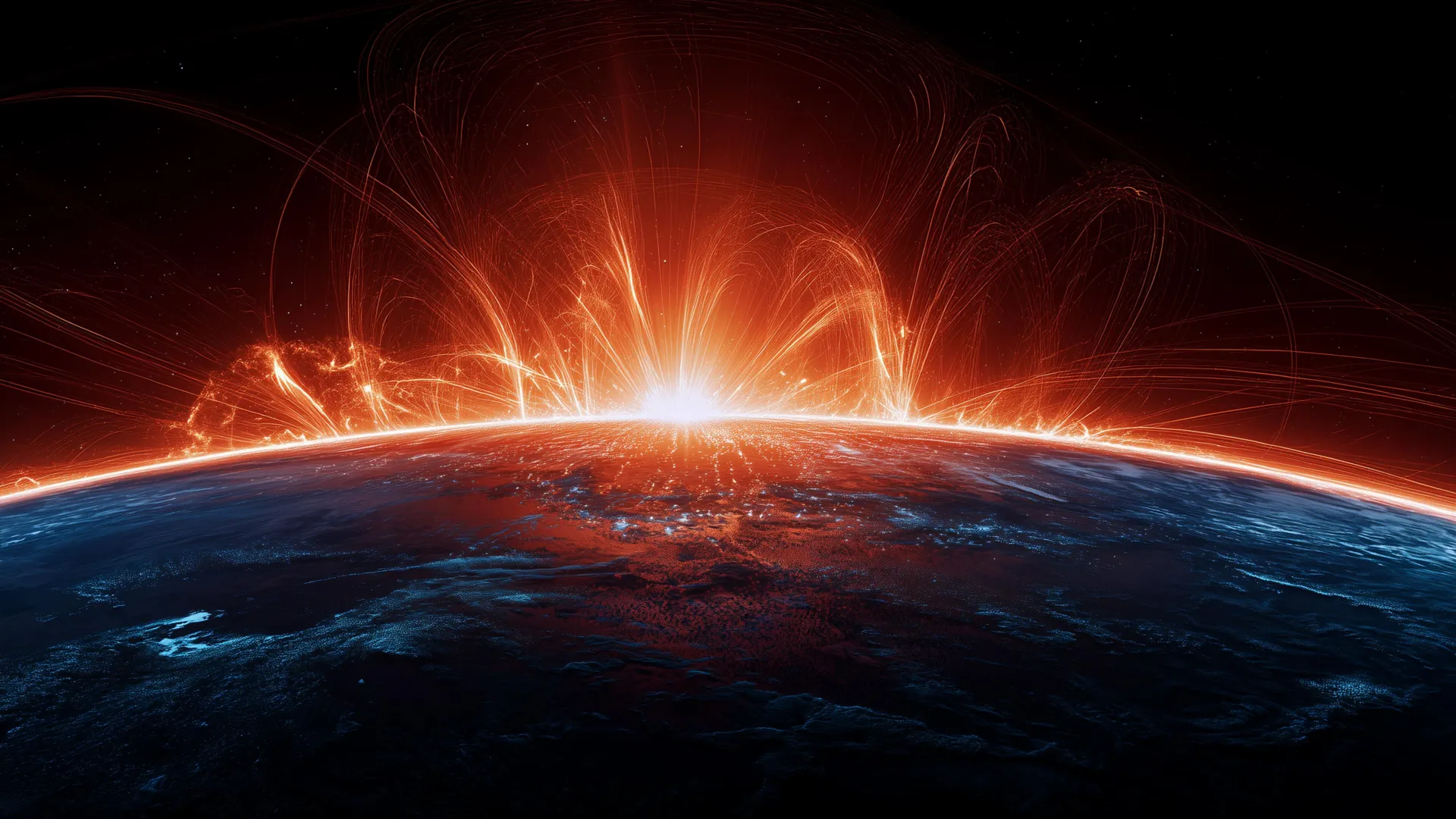
A novel hypothesis has emerged in the field of geophysics, suggesting a potential link between solar storms and seismic activity on Earth. This intriguing theory posits that disturbances in the ionosphere caused by solar flares might generate electric fields that influence the fragile fault lines within the Earth’s crust. While this notion does not assert a direct cause-and-effect relationship, it opens a new avenue for understanding the complex interplay between space weather and natural geological events, challenging traditional perspectives on seismic triggers.
Solar flares, which are intense bursts of radiation emanating from the sun, can significantly impact the Earth’s magnetic field and atmosphere. These eruptions can lead to geomagnetic storms, which in turn can disturb the ionosphere, a layer of the atmosphere filled with charged particles. When solar activity peaks, it can create fluctuations in electric fields that permeate through the ionosphere and reach the Earth's surface. Researchers have speculated that these electric fields could penetrate into tectonic plates and interact with pre-existing stress along fault lines. If a fault is already under significant strain, the additional electrostatic pressure might be enough to initiate a seismic event.
The potential connection between solar storms and earthquakes is not a new concept in the scientific community, but recent studies have reignited interest in this relationship. Previous research has suggested correlations between increased solar activity and the occurrence of earthquakes, particularly large-scale events. However, establishing a direct causal link remains elusive. Many scientists argue that earthquakes primarily result from tectonic processes driven by geological forces rather than external influences like solar activity. Nevertheless, the theory that solar storms could serve as a secondary trigger offers a fresh perspective that merits further exploration.
Understanding this possible interaction is significant for multiple reasons. Firstly, it could improve earthquake prediction models by incorporating additional variables beyond traditional geological factors. While predicting earthquakes remains notoriously challenging, recognizing the influence of solar activity could enhance the accuracy of forecasting methods, potentially providing communities with earlier warnings. This could be especially important for regions situated near tectonic boundaries, where the risk of seismic activity is already heightened. More comprehensive models could also aid in disaster preparedness, allowing residents and authorities to plan more effectively for potential geological events.
Moreover, this emerging field of study highlights the importance of interdisciplinary research in advancing our understanding of natural phenomena. The integration of solar physics with seismology exemplifies how different scientific domains can converge to provide richer insights into the Earth’s systems. As researchers continue to investigate the dynamics between solar activity and seismic events, advancements in technology and data collection will play a crucial role in validating or refuting these hypotheses. High-resolution satellite data and ground-based observation systems can offer a clearer picture of how solar storms impact the Earth’s atmosphere and subsurface.
The implications of this research extend beyond academic curiosity; they touch on real-world applications that could save lives and mitigate damage from earthquakes. As scientists delve deeper into this fascinating connection, the hope is that new findings will not only clarify the role of solar storms in triggering earthquakes but also foster greater public awareness about how interconnected our planet’s systems truly are. In a time when climate change and space weather are gaining attention in discussions about global challenges, understanding these relationships will be vital for both scientific inquiry and practical applications in disaster management.