Extraordinary Fossils Preserved in Rust Reveal a Lost Australian Rainforest Teeming with Ancient Life
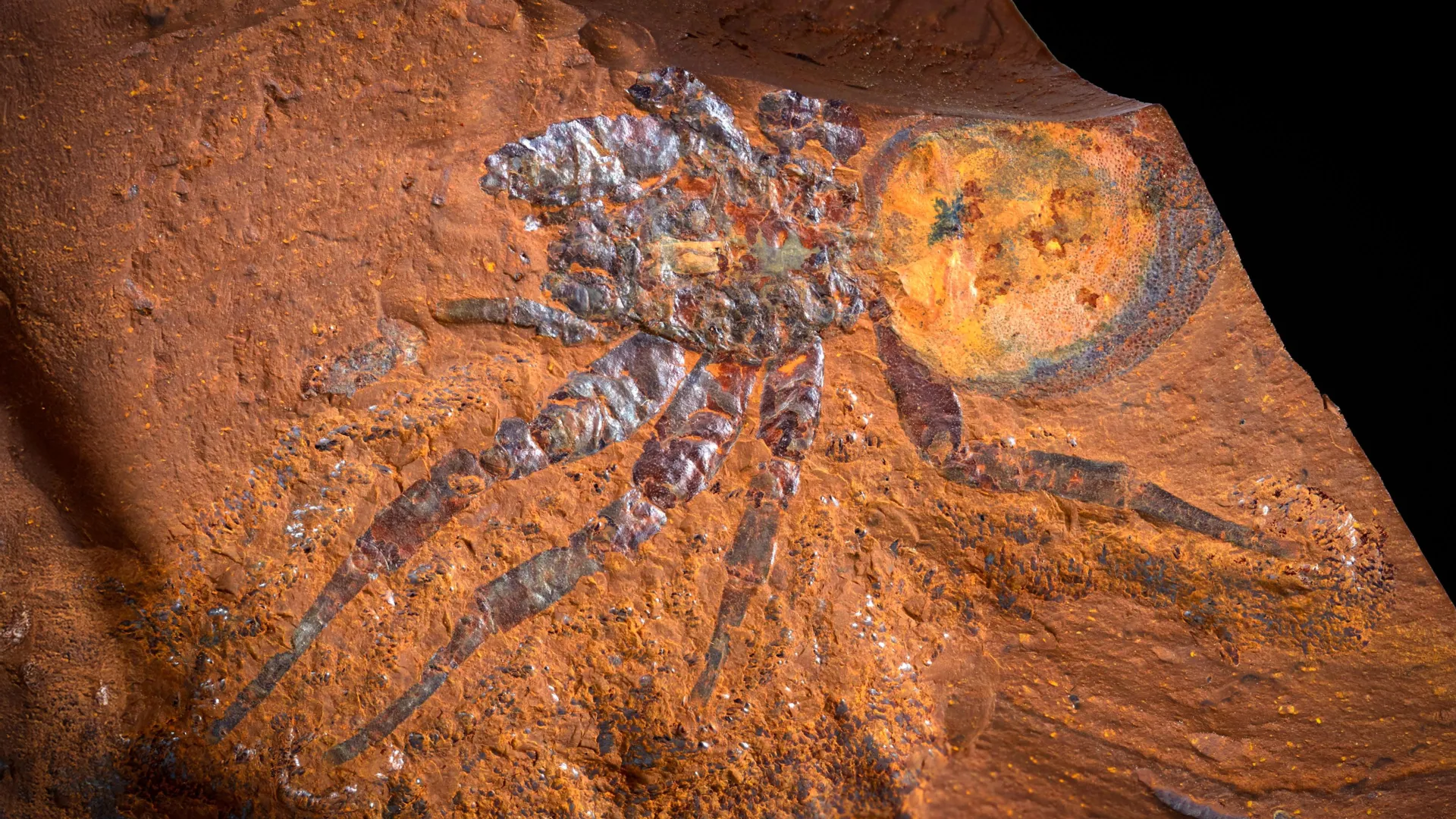
Beneath the sun-baked farmland of New South Wales, paleontologists have discovered one of the most remarkable fossil deposits ever found on the Australian continent. At a site called McGraths Flat, researchers have uncovered an astonishing array of ancient organisms preserved not in the usual geological materials like shale or limestone, but in iron-rich sediment that essentially rusted around them, capturing biological details at a level of resolution that has left scientists worldwide genuinely stunned. The fossils date to between 11 and 16 million years ago, a period when the region was covered by lush rainforest rather than the dry grasslands that characterize it today.
The preservation mechanism at McGraths Flat is unlike anything previously documented in the paleontological record. Tiny particles of iron oxide, essentially rust, infiltrated the tissues of dead organisms and filled individual cells before decomposition could erase them. This process, which scientists believe occurred in an environment where iron-rich groundwater seeped through organic material in a shallow lake or pond, captured biological structures at a subcellular level. Researchers have been able to identify organelles within plant cells, pigment granules in the eyes of fossilized fish, individual sensory hairs on spider legs, and the internal organ structures of insects. This degree of preservation transforms these fossils from mere impressions of ancient life into three-dimensional records of biological architecture that rival what can be observed in living specimens under a microscope.
The diversity of species found at the site paints a vivid picture of the ecosystem that thrived in this part of Australia during the Miocene epoch. The fossil assemblage includes numerous species of spiders, including trapdoor spiders whose burrow structures are preserved alongside their bodies. Freshwater fish with intact scale patterns and eye structures have been recovered, along with a rich array of insects spanning multiple orders. Plant fossils include leaves with preserved cellular structure, seeds, and even delicate flowers. Perhaps most remarkably, the site has yielded fossils of organisms that are rarely preserved under any circumstances, such as soft-bodied larvae and the gossamer wings of tiny parasitic wasps. Each new excavation season at McGraths Flat seems to produce specimens that rewrite assumptions about what the fossil record can preserve.
For scientists studying Australia's environmental history, the McGraths Flat deposit provides a crucial window into a period of dramatic ecological transformation. During the middle Miocene, Australia was still drifting northward from its earlier position as part of the ancient supercontinent Gondwana, and its climate was considerably wetter and warmer than today. Vast rainforests covered much of the continent's interior, supporting ecosystems that bore little resemblance to the arid and semi-arid landscapes that now dominate. The transition from rainforest to grassland and desert occurred over millions of years, driven by shifting ocean currents, changing atmospheric patterns, and Australia's continued northward movement into drier climate zones. McGraths Flat captures a snapshot of this vanished world with extraordinary fidelity.
The scientific significance of the iron oxide preservation pathway extends far beyond this single site. Previously, paleontologists generally considered iron-rich sediments to be poor candidates for fossil preservation, assuming that the chemical environment would destroy organic remains rather than protect them. The McGraths Flat discoveries have overturned this assumption entirely, suggesting that researchers may have been overlooking similar deposits around the world. The team has already identified geological conditions comparable to those at McGraths Flat in several other regions, raising the exciting possibility that equally spectacular fossil assemblages may be waiting to be discovered in places where no one thought to look.
Advanced analytical techniques have been central to unlocking the secrets of these rust-encased fossils. Scanning electron microscopy reveals surface details at nanometer scales, while synchrotron radiation analysis allows researchers to map the chemical composition of fossil tissues without destroying them. Energy-dispersive X-ray spectroscopy has confirmed the presence of original biological molecules, including melanin pigments that once gave color to ancient organisms. These chemical signatures allow scientists to reconstruct not just the shapes of ancient creatures, but aspects of their appearance and physiology that are normally lost to time. A fossilized fish eye, for example, retains enough melanin to suggest what wavelengths of light the animal could detect, offering insights into the visual environment of the Miocene rainforest.
The McGraths Flat research program continues to expand, with new excavation campaigns planned and collaborative studies involving institutions across Australia, Europe, and North America. Each specimen recovered from the rust-colored sediment adds another thread to the tapestry of understanding about how Australian ecosystems evolved, adapted, and ultimately transformed under the pressure of continental drift and climate change. For the broader field of paleontology, this site stands as a powerful reminder that the Earth still holds profound surprises beneath its surface, and that the tools and assumptions scientists bring to their work must constantly evolve to keep pace with what the rocks reveal.