Flood Defense Funding: A Controversial Investment Amid Climate Skepticism in Lincolnshire
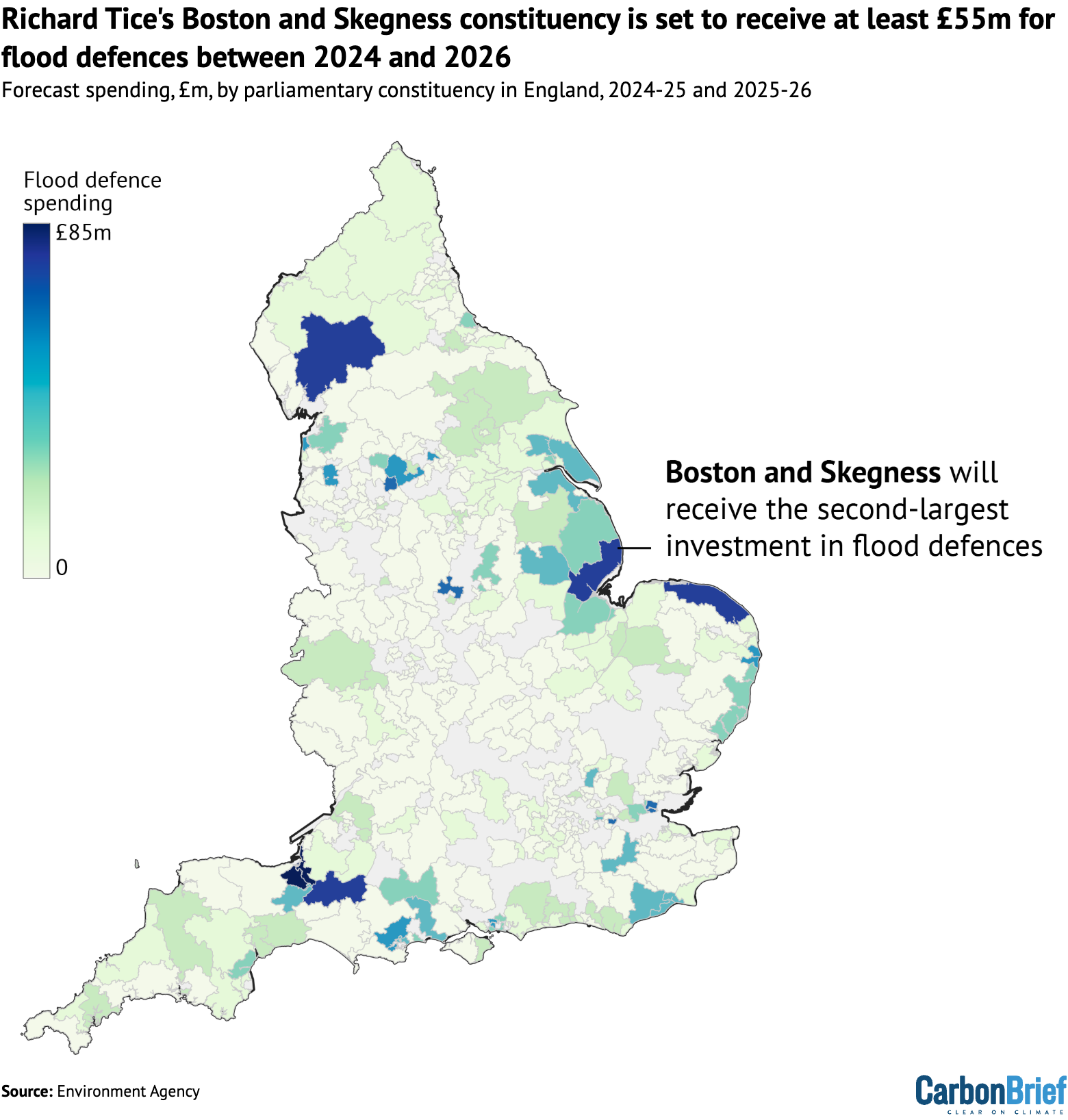
The announcement of a substantial £55 million investment in flood defenses for the Boston and Skegness constituency, represented by Richard Tice, the deputy leader of the Reform party, has sparked significant discussion. This funding, part of a broader £1.4 billion initiative aimed at enhancing flood resilience across England, is particularly noteworthy given Tice’s vocal skepticism regarding climate change. As one of the most vulnerable regions in the UK, Lincolnshire's struggle against rising sea levels and increasing flood events starkly contrasts with the political rhetoric surrounding climate action.
Flooding in the UK is becoming a more pressing issue, driven primarily by the impacts of climate change. Increased rainfall, storm intensity, and rising sea levels are expected to contribute to more frequent and severe flooding events. The Environment Agency has indicated that the nation is falling short in maintaining its flood defenses, with projections suggesting that fewer properties will be protected by 2027 than previously planned. The Climate Change Committee (CCC) has pointed to a combination of rising costs, legacy issues from previous administrations, and an increase in extreme weather events as key factors complicating flood management efforts. Despite these challenges, the recent government pledge to invest in flood defenses reflects an attempt to address these escalating risks.
The context behind the £55 million funding for Boston and Skegness reveals a deeper narrative about the relationship between climate skepticism and the tangible realities of climate impact. Richard Tice has been an outspoken critic of climate initiatives, famously dubbing the push for net-zero emissions as "net stupid zero." His opposition to mainstream climate science brings forth an irony, as his constituency, which is at high risk from flooding, stands to benefit significantly from government investment intended to mitigate the very effects of climate change he disputes. With projects planned for beach defenses and upgrades to pumping stations, this funding represents a critical lifeline for a region that faces imminent threats from both river and coastal flooding.
The disparity in flood defense funding distribution also highlights the political complexities surrounding climate action. Despite having a significant number of Labour MPs, constituencies with non-Labour representatives, including those held by the Reform party, have received a notable portion of the funding. This trend suggests that flood risk is not confined to traditional political boundaries, as areas with Conservative and Liberal Democrat MPs have also secured substantial investments. The allocation reflects the urgent need for flood management in coastal and rural regions, which have historically been underrepresented in discussions about climate resilience and environmental policy.
Furthermore, the financial commitment towards flood defenses is part of a larger government strategy to invest a record £7.9 billion over a decade into protecting thousands of homes and businesses. The recent £1.4 billion fund aims to support a broad spectrum of flood and coastal erosion risk management (FCERM) schemes, which encompass not only new defenses but also the maintenance of existing infrastructure. The 2024-2026 spending program, if executed as planned, is projected to bring about improvements closer to targets set by the Environment Agency and could play a significant role in safeguarding communities that are increasingly threatened by climate-induced flooding.
The contradiction between the Reform party’s climate-skeptical stance and the practical need for flood defenses raises vital questions about the future of climate policy in the UK. As climate change continues to manifest through extreme weather patterns, the disconnect between political ideology and scientific consensus could have far-reaching implications. It is crucial for policymakers to reconcile these differences and recognize the importance of proactive climate action, not only for the environment but also for the safety and security of vulnerable communities. As the impacts of climate change become more pronounced, the need for comprehensive and science-based approaches to flood management will only grow stronger, challenging political narratives that dismiss the urgency of climate action.