Global Biodiversity Reporting: A Mixed Response to UN Deadline
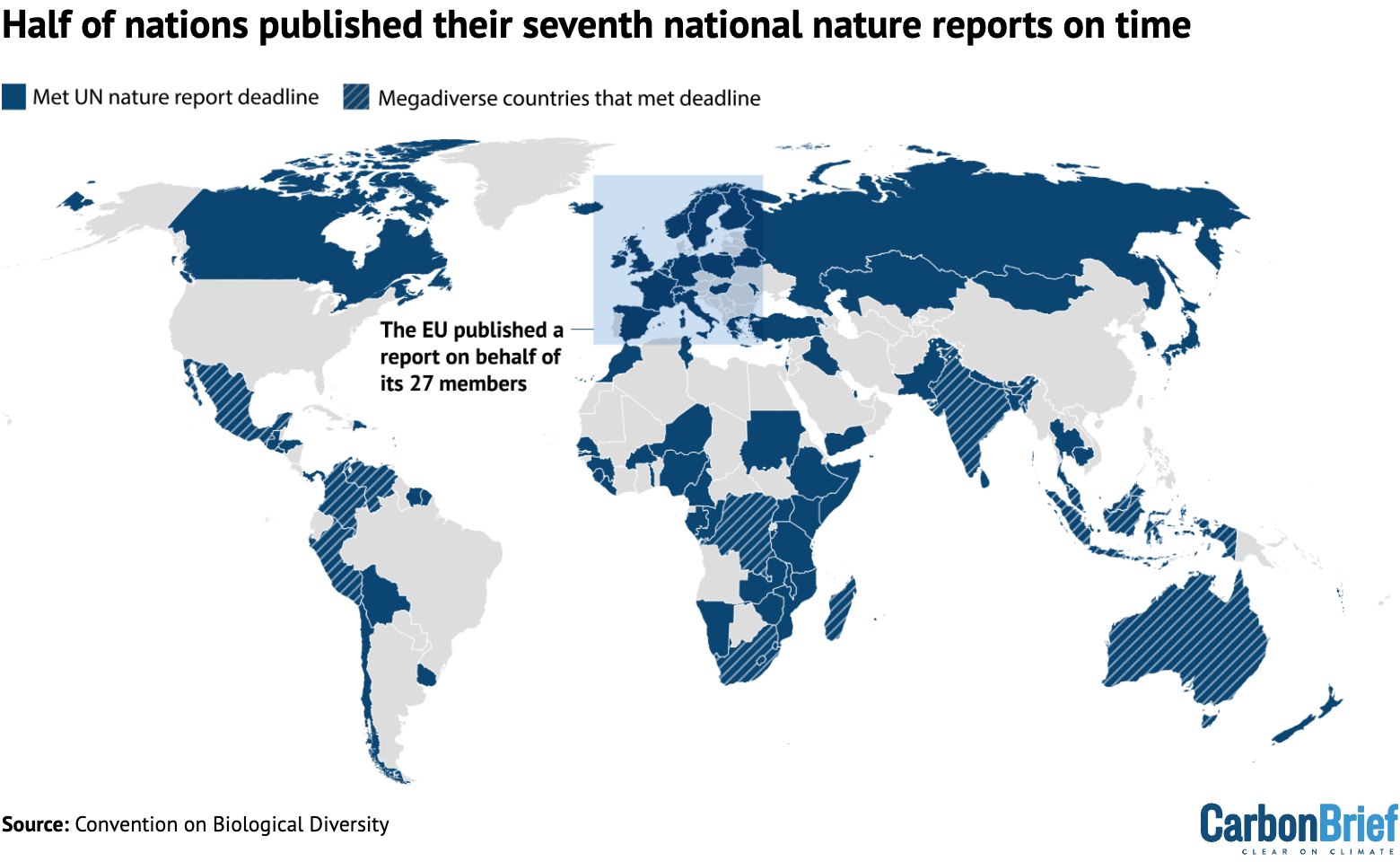
As nations grapple with the urgent need to address biodiversity loss, a recent analysis reveals that half of the countries participating in the United Nations biodiversity treaty have met the deadline for submitting their national reports. According to Carbon Brief, 98 out of the 196 countries were able to deliver their seventh national reports by the February 28 deadline. This milestone is particularly significant as it includes 11 of the world's 17 megadiverse nations, which together host a staggering 70% of Earth's biodiversity. The findings underscore the critical role these nations play in global conservation efforts and the importance of timely reporting in the collective fight against nature loss.
The process of reporting is not merely bureaucratic; it serves as a vital mechanism for tracking progress against the ambitious goals set in the Kunming-Montreal Global Biodiversity Framework (GBF). Adopted in 2022, this landmark agreement aims to halt and reverse nature loss by 2030. Each participating country is tasked with documenting its efforts and challenges in achieving the 23 targets outlined in the framework. The upcoming global report, which will synthesize these national submissions, is anticipated to inform discussions at COP17, scheduled for later this year in Armenia. Failure to submit reports on time could have consequences for how nations are evaluated and held accountable for their biodiversity commitments.
Among the nations that submitted their reports on time, many are recognized as biodiversity hotspots. Countries such as India, Indonesia, and Colombia are part of this critical group and showcase the diverse ecological richness that they must protect. However, the submissions also reveal stark disparities in performance and commitment. For example, the United Kingdom's report indicates that it is on track to meet only three of the GBF's targets. This raises concerns about the adequacy of the UK's conservation strategy, especially regarding the ambitious goal of protecting 30% of land and marine areas by 2030. Current statistics show that only 7% of land in England is designated for nature protection, suggesting significant gaps in the UK's conservation efforts that need urgent attention.
The analysis extends beyond mere compliance with deadlines. It highlights the broader implications of these reports for global biodiversity governance. National plans, known as National Biodiversity Strategies and Action Plans (NBSAPs), are also crucial in this landscape. Countries were encouraged to submit these plans ahead of COP16 in 2024, yet early findings indicated that only 15% had done so. This figure has since climbed to 39%, but it still reflects a concerning lag in proactive biodiversity planning. Countries that are unable to submit comprehensive NBSAPs are allowed to propose national targets, which lack the detailed strategies needed for effective implementation. As of early March, 78% of nations had submitted such targets, but the absence of actionable plans raises questions about their commitment to real change.
At the recent biodiversity talks in Rome, discussions highlighted the challenges many nations face in meeting reporting deadlines. Representatives from several countries, including Fiji, voiced concerns about the technical and financial constraints that hinder timely submissions. These constraints can be particularly pronounced for developing nations, which may lack the resources or infrastructure needed to gather and process the required data. The Global Environment Facility, which assists countries in preparing their reports, has acknowledged these difficulties but emphasizes the importance of these submissions in shaping global conservation strategies. Without adequate support and resources, the ability of countries to fulfill their biodiversity obligations may be compromised.
As the world gears up for COP17, the importance of timely and comprehensive reporting cannot be overstated. The analysis by Carbon Brief serves as a wake-up call, urging all nations to recognize their role in the collective responsibility to protect biodiversity. The stakes could not be higher, as the loss of biodiversity threatens not only ecosystems but also human livelihoods and the stability of the planet. The upcoming global report will not only reflect the current state of biodiversity efforts but will also set the tone for future international cooperation and action. It is imperative that nations take these commitments seriously and work collaboratively to turn the tide on nature loss, ensuring a sustainable future for all.