Global Energy Crisis: The Ripple Effects of the Iran Conflict and International Response
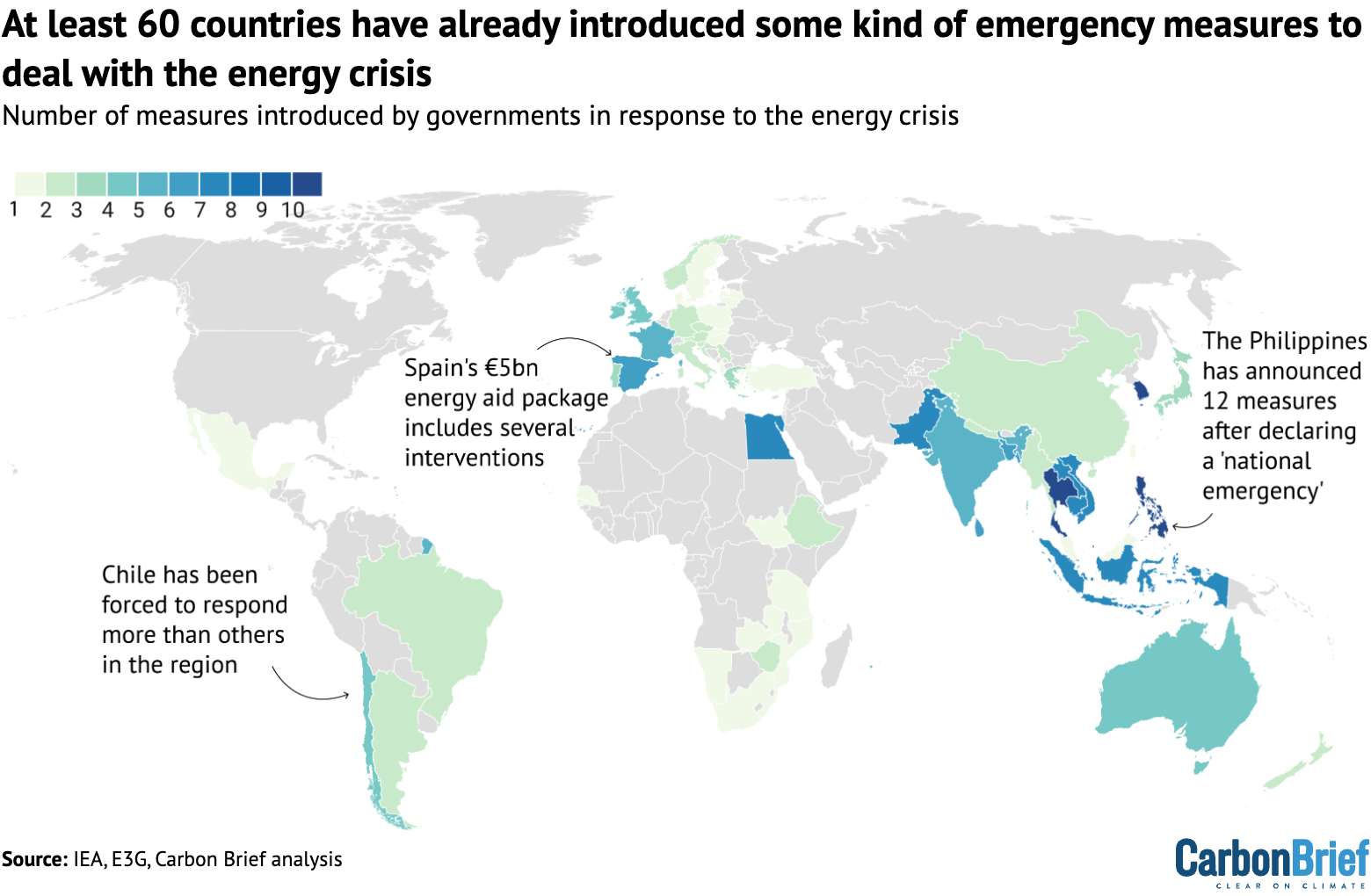
The ongoing conflict between the United States, Israel, and Iran has triggered a significant global energy crisis, prompting immediate and varied responses from around the world. Following the outbreak of hostilities in late February, at least 60 nations have swiftly enacted nearly 200 policy measures aimed at addressing the fallout. This crisis, largely fueled by the disruption of vital energy supplies, highlights the interconnectedness of global energy markets and the urgent need for countries to adapt to rapidly changing circumstances. Analysis from Carbon Brief, supplemented by data from the International Energy Agency (IEA), reveals a comprehensive overview of how nations are reacting to this unprecedented situation.
The conflict has escalated tensions in an already volatile region, leading to attacks on key energy infrastructure. Notably, Iran's blockade of the Strait of Hormuz, a critical maritime route responsible for the transit of approximately 20% of the world's oil and liquefied natural gas (LNG), has severely hampered supply chains. This disruption has sent fuel prices soaring, affecting economies worldwide. In response, many governments have implemented emergency measures designed to mitigate the impact on consumers and stabilize markets. The predominance of these responses points to a global reliance on fossil fuels and the urgent need for diversification towards more sustainable energy solutions.
Among the various strategies employed, a significant number of countries have opted to reduce fuel taxes as a means to alleviate the financial burden on citizens. Approximately 30 nations, ranging from Norway to Zambia, have announced tax cuts to help offset the rising costs of fuel. This approach is particularly crucial for lower and middle-income households that are disproportionately affected by surging energy prices. Other countries have taken more drastic measures, such as implementing driving bans, fuel rationing, and even school closures to reduce consumption. These actions underscore the desperation of nations heavily reliant on energy imports from the Middle East, especially in Asia where the impact has been most pronounced.
The economic implications of these measures are significant, as countries like Japan, South Korea, and Italy have begun to pivot back to coal as a temporary solution to their energy needs. This shift raises concerns about long-term environmental impacts, especially in light of global commitments to reduce carbon emissions. Simultaneously, some nations are leveraging this crisis as an opportunity to accelerate investments in domestic renewable energy infrastructure. The dual approach of managing short-term needs while considering sustainable long-term strategies reflects the complexity of the global energy landscape.
The situation in Asia has been particularly dire, with countries such as Indonesia, South Korea, and India allocating billions to fuel subsidies in an effort to protect their citizens from price hikes. Nations like the Philippines have declared states of emergency, instituting measures to conserve energy, such as limiting air conditioning in public buildings and subsidizing public transportation. Other countries have implemented measures like speed limit reductions and encouraging remote work to cut down on fuel consumption. These collective actions signify a critical juncture for energy policy in the region, as governments grapple with balancing economic stability and environmental responsibilities.
While Europe is not as immediately exposed to the current crisis as Asia, it is not immune to the repercussions. The continent, still recovering from the energy crisis precipitated by its reliance on Russian gas, faces increased competition for dwindling resources. At least 18 European nations have introduced measures to ease the financial strain on their citizens, with Spain launching a €5 billion aid package despite being relatively insulated from the crisis due to a higher share of renewable energy in its grid. The ongoing developments in the Middle East can serve as a wake-up call for the global community, emphasizing the need for a comprehensive approach to energy policy that prioritizes both resilience and sustainability.
As the world navigates the complexities of the energy crisis sparked by the war in Iran, it becomes increasingly clear that the road ahead will require cooperation, innovation, and a commitment to long-term solutions. The extensive damage to energy infrastructure, coupled with ongoing geopolitical tensions, means that the effects of this crisis will likely linger well beyond the cessation of hostilities. Policymakers must now consider how best to support their economies while laying the groundwork for a more sustainable energy future, one that is less vulnerable to the shocks of geopolitical conflicts. This moment in history serves as a vital reminder of the interconnected nature of global energy systems and the imperative for nations to work collaboratively towards a more secure and sustainable energy landscape.