India's 2026 Budget: A Bold Step Towards Climate Resilience and Energy Security
On February 1, 2026, India's finance minister Nirmala Sitharaman presented a budget that reflects the nation’s urgent priorities in the face of climate change and energy security challenges. The budget allocates a significant $2.2 billion towards advancing carbon capture, utilization, and storage (CCUS) technologies. This commitment is particularly noteworthy as India grapples with its status as the third-largest emitter of greenhouse gases globally. While the budget document does not explicitly reference climate change, the underlying themes of resource security and technological advancement resonate strongly with the pressing need for climate action. As trade barriers and geopolitical tensions rise, the budget serves as a crucial framework for addressing both domestic and international challenges related to energy and climate resilience.
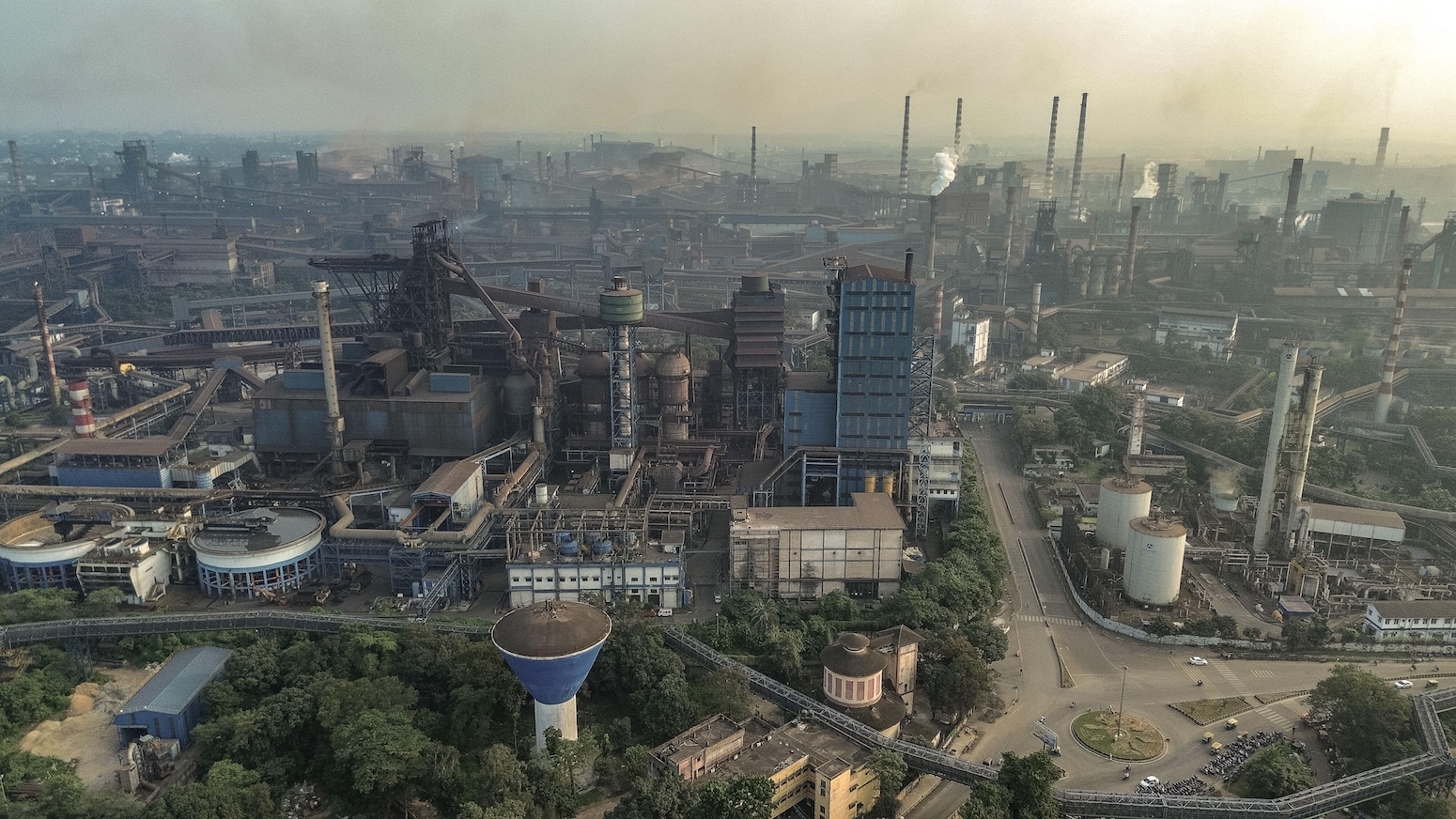
The allocation for CCUS technologies is a central feature of India's strategy to mitigate emissions from its most polluting sectors, including power generation, steel production, cement manufacturing, and chemical processing. These industries are facing increasing scrutiny under initiatives such as the European Union’s Carbon Border Adjustment Mechanism (CBAM). The funding aims to support the development of infrastructure that captures carbon dioxide emissions and either utilizes or stores them underground or underwater. This investment aligns with India’s roadmap for achieving net-zero emissions by 2070, identifying CCUS as a critical component for decarbonizing sectors with limited alternative solutions. Experts, including Dr. Vikram Vishal from the Indian Institute of Technology Bombay, view this funding as a vital step toward industrial decarbonization, highlighting the country’s vast potential for both onshore and offshore carbon storage.
Another significant announcement from the budget is the establishment of dedicated corridors for the mining and processing of critical minerals and rare earth elements. Recognizing the growing importance of these materials in the transition to renewable energy technologies, the budget proposes strategic initiatives in mineral-rich states like Odisha, Kerala, Andhra Pradesh, and Tamil Nadu. These corridors aim to boost research, manufacturing, and exploration of critical minerals, which are essential for the production of batteries, electric vehicles, and various high-tech applications. The inclusion of coking coal as a critical mineral further emphasizes the government's intent to streamline mining operations, potentially at the expense of local community consultations. This move raises critical questions about balancing economic development with environmental and social considerations, a challenge that India must navigate carefully.
Support for nuclear energy also forms a key pillar of the 2026 budget. The government has proposed exemptions from import duties for nuclear power equipment, signaling a commitment to expand this low-carbon energy source as part of its overall energy mix. Despite its controversial history, nuclear energy offers a means to generate substantial amounts of electricity with minimal greenhouse gas emissions. In a country where energy demands are rapidly increasing, the expansion of nuclear power could play a pivotal role in reducing reliance on fossil fuels and enhancing energy security. However, the integration of nuclear energy into India's broader energy strategy must address public concerns regarding safety, waste management, and the socio-political implications of nuclear infrastructure.
Renewable energy initiatives also receive attention in the budget, particularly through support for rooftop solar projects. This aligns with India's broader objective to increase the share of renewable sources in its energy portfolio. As the country moves towards its target of 500 gigawatts of renewable energy capacity by 2030, rooftop solar installations provide an opportunity for decentralized energy production, empowering households and businesses while reducing grid pressure. The budget’s focus on solar energy reflects a growing recognition of its potential to drive sustainable growth and energy independence. However, achieving these ambitious targets will require robust policy frameworks and investment in grid infrastructure to accommodate the variability of renewable sources.
Despite these positive strides, the absence of explicit climate adaptation measures in the budget is notable. As India faces the realities of climate change, including extreme weather events, rising sea levels, and shifting agricultural patterns, adaptation strategies are essential for safeguarding vulnerable communities. While the budget lays out a vision for cleaner energy production, a holistic approach must also encompass resilience-building initiatives that address the socio-economic impacts of climate change. As India navigates its path toward sustainability, the balance between mitigation and adaptation will be critical in ensuring long-term environmental and economic stability.