India's Emission Trends: A Turning Point in Carbon Dioxide Growth
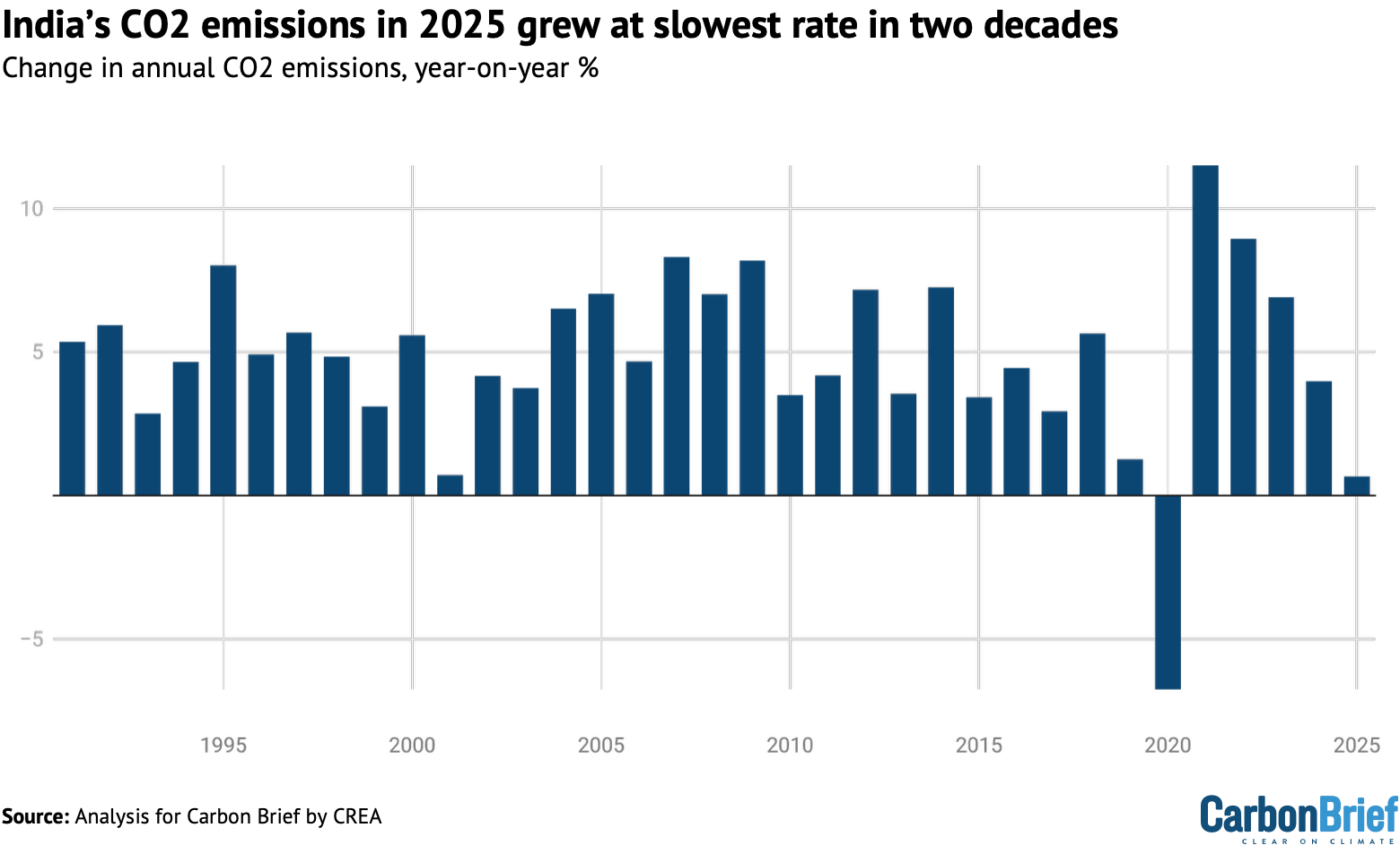
The year 2025 marked a significant moment in India's battle against carbon dioxide emissions, as the country experienced the slowest growth rate of CO2 emissions in over two decades. With a modest increase of just 0.7% for the entire year, this shift in trajectory stands in stark contrast to the previous four years, which saw growth rates ranging from 4% to 11%. This notable change highlights an emerging trend that could have profound implications for India's energy landscape and its commitment to addressing climate change. The analysis, which examines emissions from fossil fuels and cement, indicates that India is at a critical juncture where clean energy adoption is beginning to make a substantial impact on its overall carbon footprint.
The data reveals that emissions from the power sector decreased by 3.8% in 2025, a remarkable achievement that reflects both record growth in clean energy and a dip in electricity demand. India added a staggering 90 terawatt hours (TWh) of new clean energy capacity, effectively doubling the previous record set in 2024. This shift toward renewable energy sources, particularly solar and wind, has been particularly pronounced in states that have embraced these technologies. The decline in coal power generation marks a pivotal shift, as it represents the first significant drop in emissions from this sector since 1973, outside of the disruptions caused by the COVID-19 pandemic. These changes are not just numbers; they signify a broader transition in India's energy paradigm that prioritizes sustainability.
Despite these positive developments, the overall rise in CO2 emissions can be attributed to increases in steel and cement production, which grew by 8% and 10% respectively. This paradox showcases the complexities of India's industrial growth alongside its environmental commitments. As the country strives to balance economic growth with climate action, the reliance on traditional fossil fuels remains a challenge. Oil demand saw a modest increase of 0.4%, while natural gas consumption fell by 4%. These trends indicate a nuanced landscape where certain sectors are still driving emissions upward, necessitating a careful examination of India's future energy policies.
Interestingly, reductions in fossil fuel imports have alleviated some of the vulnerabilities associated with geopolitical tensions, particularly in relation to the conflict in Iran. Coal imports for power generation plummeted by 20%, while gas imports decreased by 6%. Such trends suggest a strategic pivot in energy sourcing that could enhance energy security. The static nature of net oil imports indicates a stabilization in this sector, even amidst global fluctuations. While the steel industry continues to demand imported coal, the overall decline in fossil fuel consumption offers a glimmer of hope for India's emissions trajectory.
Looking ahead, India's energy landscape is at a potential inflection point. Should clean energy capacity continue to grow at the current pace, it could soon meet or exceed the rising demand for electricity, leading to sustained reductions in coal-fired power generation. The government has set ambitious targets within the framework of the Paris Agreement, but these goals must reconcile the ongoing demand for fossil fuels with the need for sustainable growth. The decisions made in the coming years will be critical in determining whether the recent slowdown in emissions is a temporary blip or a long-term trend.
The implications of this analysis extend beyond India's borders, as the country plays a significant role in the global fight against climate change. With a population exceeding 1.4 billion, India's energy consumption patterns have far-reaching impacts on international climate agreements and environmental policies. The current trends suggest that India is beginning to carve out a new path that prioritizes renewable energy, even as traditional industries continue to exert pressure on emissions. The balancing act between economic growth, energy security, and climate commitments will be a defining challenge for the nation as it navigates the complexities of its development in an increasingly carbon-conscious world.