Protecting the Antarctic Peninsula: The Urgency of Limiting Global Warming to 2 Degrees Celsius
New research underscores the critical need to keep global warming below 2 degrees Celsius to safeguard the Antarctic Peninsula's fragile ecosystems. This area, known for its unique biodiversity, is home to a variety of species including penguins, seals, and the continent's only two flowering plants. A comprehensive study published in the journal Frontiers in Environmental Science provides a thorough review of existing literature and data, revealing stark projections about the potential impacts of climate change on this pristine region. As the effects of climate change continue to escalate, the findings of this study serve as a crucial reminder of the urgent need for effective climate action.
The Antarctic Peninsula, which stretches northward from West Antarctica towards South America, encompasses approximately 232,000 square kilometers, along with an additional 80,000 square kilometers of surrounding islands and archipelagos. It is the most biodiverse region of Antarctica, characterized by its stunning landscapes and rich wildlife. It hosts multiple species of penguins, including the gentoo and Adélie varieties, as well as whales and apex predators like orcas. Each spring, more than 100 million birds migrate to the peninsula to breed, underscoring its ecological importance. The presence of hundreds of moss and lichen species, along with the continent's only flowering plants, adds to the region's unique biological tapestry. However, the Antarctic Peninsula is currently experiencing some of the most significant climate changes on the planet, with rising temperatures and shifting ecosystems posing severe threats to its biodiversity.
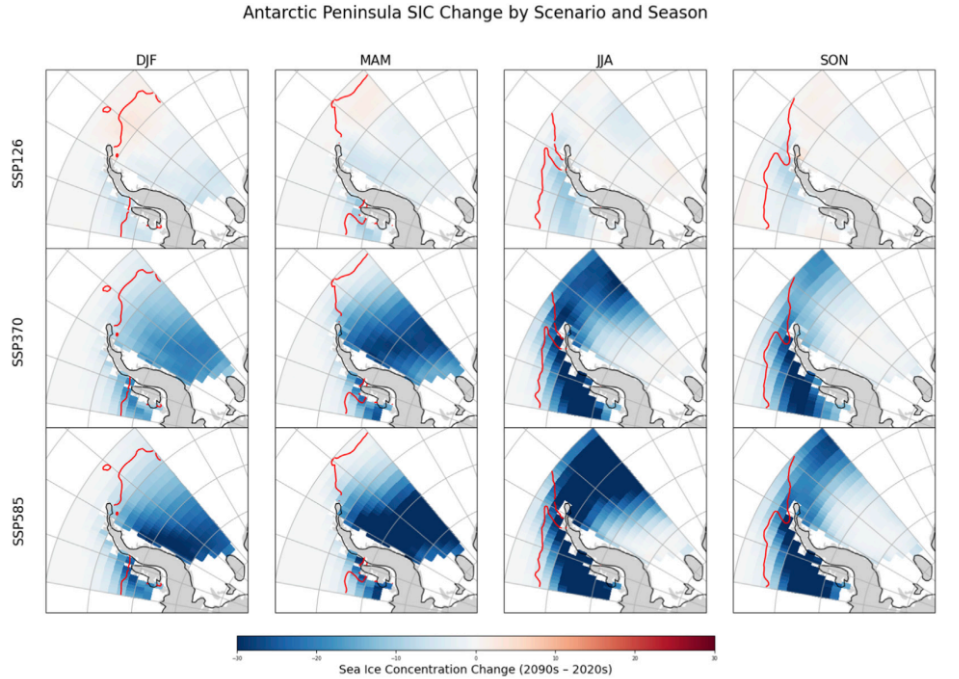
The study highlights three different warming scenarios, each with drastically different implications for the Antarctic Peninsula. The low-emissions scenario, designated as SSP1-2.6, aims to limit global warming to below 2 degrees Celsius. Under this scenario, the Antarctic Peninsula is projected to warm by approximately 2.28 degrees Celsius by the end of the century. In contrast, higher emissions scenarios, such as SSP3-7.0 and SSP5-8.5, could see temperatures soar by 5.22 degrees and 6.10 degrees respectively. These stark contrasts illustrate the wide range of potential futures based on current emission trajectories and policy decisions. The study asserts that the choices made today will directly influence the environmental conditions of the peninsula in the coming decades.
In addition to reviewing published literature, the researchers utilized results from the Coupled Model Intercomparison Project 6 (CMIP6), a set of climate models developed for the Intergovernmental Panel on Climate Change's (IPCC) latest assessment. This integrated approach allowed the team to create a more nuanced understanding of the potential changes facing the peninsula's physical and biological systems. The findings point to the likelihood of more frequent extreme weather events, ice shelf collapses, and the potential extinction of native species if global warming continues unchecked. The study notes that a warming of 4 degrees Celsius could lead to "dramatic and irreversible" consequences, emphasizing the urgent need for climate mitigation strategies.
Climate change is already manifesting in the Antarctic Peninsula, where temperatures have increased more rapidly than the global average over the past century. This warming trend has been corroborated by various studies, including one from 2019 that examined the region's fate at 1.5 degrees Celsius of global warming. However, the new research indicates that maintaining such a threshold is increasingly unlikely, highlighting the pressing nature of the climate crisis. The implications for the region's glaciers, sea ice, and wildlife habitats are profound, with potential cascading effects on global sea levels and ecosystems that extend far beyond the Antarctic region.
The findings of this study serve as a wake-up call, emphasizing that the future of the Antarctic Peninsula is inextricably linked to global climate policy and individual actions. As climate scientists and policymakers grapple with the realities of climate change, the choices made now will determine not only the fate of the Antarctic Peninsula but also the health of our planet as a whole. Achieving the ambitious goal of limiting global warming to 2 degrees Celsius is not merely a scientific aspiration; it is a moral imperative that demands immediate and concerted efforts from all sectors of society. By understanding the significance of protecting this unique ecosystem, we can work collectively to ensure its preservation for future generations.