Rapid Acceleration of Global Warming: A Wake-Up Call for Climate Action
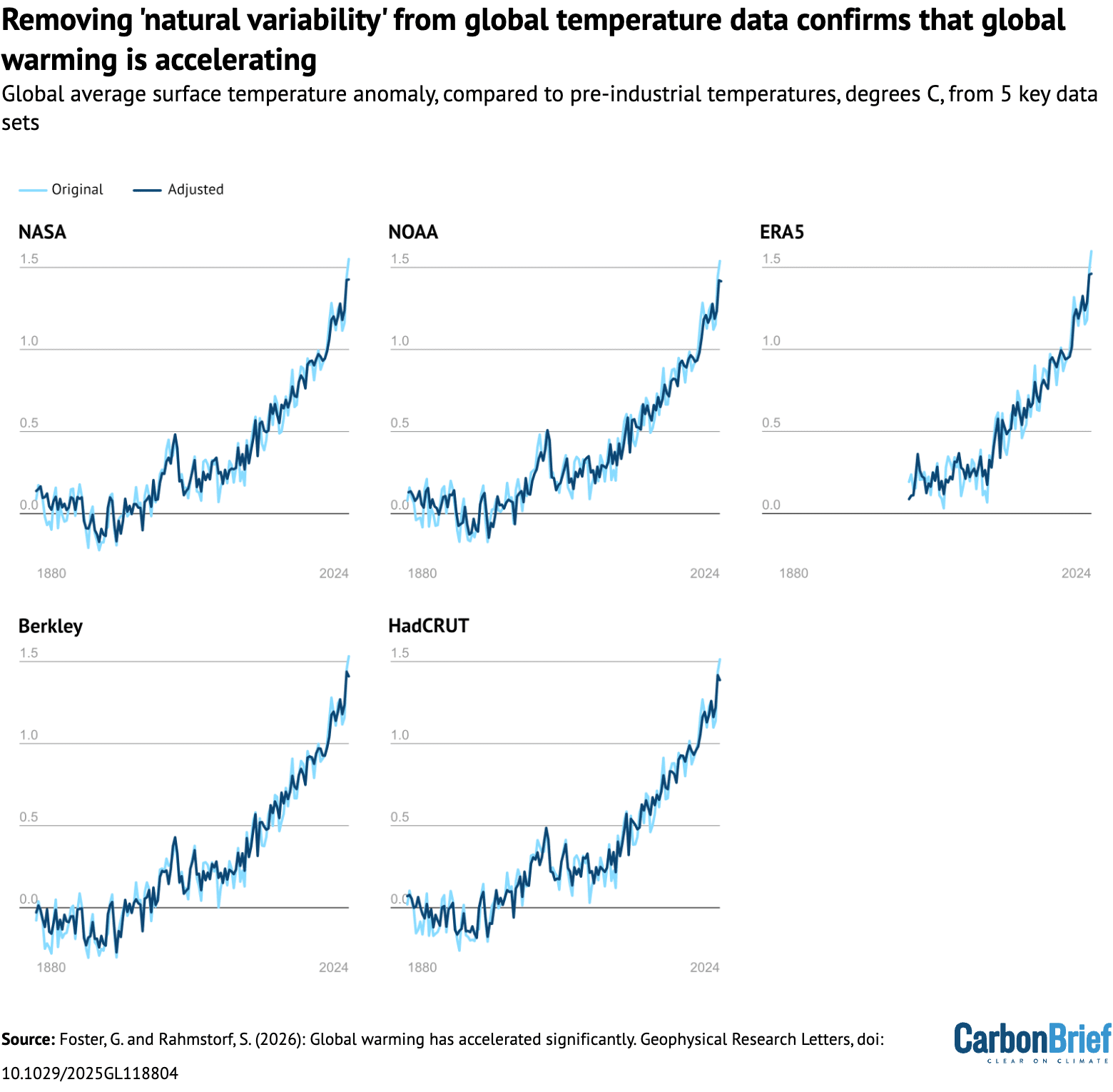
Recent findings from a groundbreaking study have unveiled a concerning trend in global warming, indicating that the pace of temperature rise has nearly doubled since 2015. Published in the reputable journal Geophysical Research Letters, this research presents alarming evidence that the world is currently experiencing the fastest rate of warming on record. The implications of this acceleration are significant, particularly in relation to the Paris Agreement's critical threshold of 1.5 degrees Celsius above pre-industrial levels. If current trends continue, scientists warn that this limit could be surpassed as early as the next few years, raising crucial questions about the future of climate action and global policy.
Historically, the planet has been warming at a rate of approximately 0.2 degrees Celsius per decade since the 1970s. However, the research highlights a marked increase in this rate, which has escalated to approximately 0.35 degrees Celsius per decade since 2015. This sharp increase has prompted scientists to reassess the factors contributing to global temperature rises. By isolating human-driven warming from natural variability, the authors have shed light on the significance of anthropogenic influences, such as greenhouse gas emissions and land-use changes. While natural factors like El Niño events, volcanic eruptions, and solar variations do contribute to short-term climate fluctuations, the study emphasizes that the long-term warming trajectory is primarily driven by human activity.
The study's authors utilized sophisticated statistical techniques to dissect and analyze global temperature datasets, including those from NASA, NOAA, and the Met Office Hadley Centre. By removing the impact of natural variability, such as the fluctuations caused by the El Niño-Southern Oscillation, the researchers were able to clarify the underlying warming trend. This approach revealed that while years like 2023 and 2024 are recorded as the warmest on record, accounting for natural variability provides a more nuanced understanding of how human actions are influencing climate change. Dr. Grant Foster, one of the authors of the study, likened the natural variability to “random noise” that can obscure the real, alarming trend of accelerated warming.
Understanding the context of this acceleration is crucial for interpreting the urgency of the findings. The 1.5 degrees Celsius threshold, established in the Paris Agreement, is not merely a number; it represents a critical boundary beyond which the effects of climate change could become increasingly severe. Crossing this threshold could lead to devastating impacts, including more frequent and severe weather events, rising sea levels, and disruptions to ecosystems and biodiversity. Although a single year exceeding this threshold does not automatically equate to a breach of the Paris Agreement, the trend indicates that sustained warming could lead to irreversible consequences for our planet. The growing body of evidence suggests that without immediate and substantial reductions in greenhouse gas emissions, the global community may soon face the dire reality of exceeding this crucial climate target.
The study's findings have reignited discussions about the need for strengthened climate policies and actions to mitigate the effects of climate change. As the world grapples with the consequences of rising temperatures, urgent questions arise about the effectiveness of current strategies. Policymakers, scientists, and activists alike must now confront the stark reality that the window for preventing catastrophic climate change is rapidly closing. The strong statistical confidence in the observed acceleration of global warming underscores the necessity for immediate action to curb emissions and transition to sustainable energy sources. The scientific community's consensus reinforces the idea that the time for half-measures has passed; comprehensive and aggressive climate action is essential to avert the worst impacts of climate change.
As individuals and communities reflect on these findings, it becomes increasingly important to consider how collective action can contribute to meaningful change. Engaging in conversations about sustainability, advocating for policy changes, and supporting clean energy initiatives are vital steps everyone can take. Additionally, the role of education in raising awareness about climate change cannot be overstated. By fostering a better understanding of the science behind global warming and its implications, society can empower individuals to make informed decisions that contribute to a more sustainable future. The latest research serves as a clarion call, reminding us that the fight against climate change is not just a scientific or political challenge, but a moral imperative for the generations to come.