Record Renewable Energy Generation in March 2026: A £1 Billion Windfall for the UK
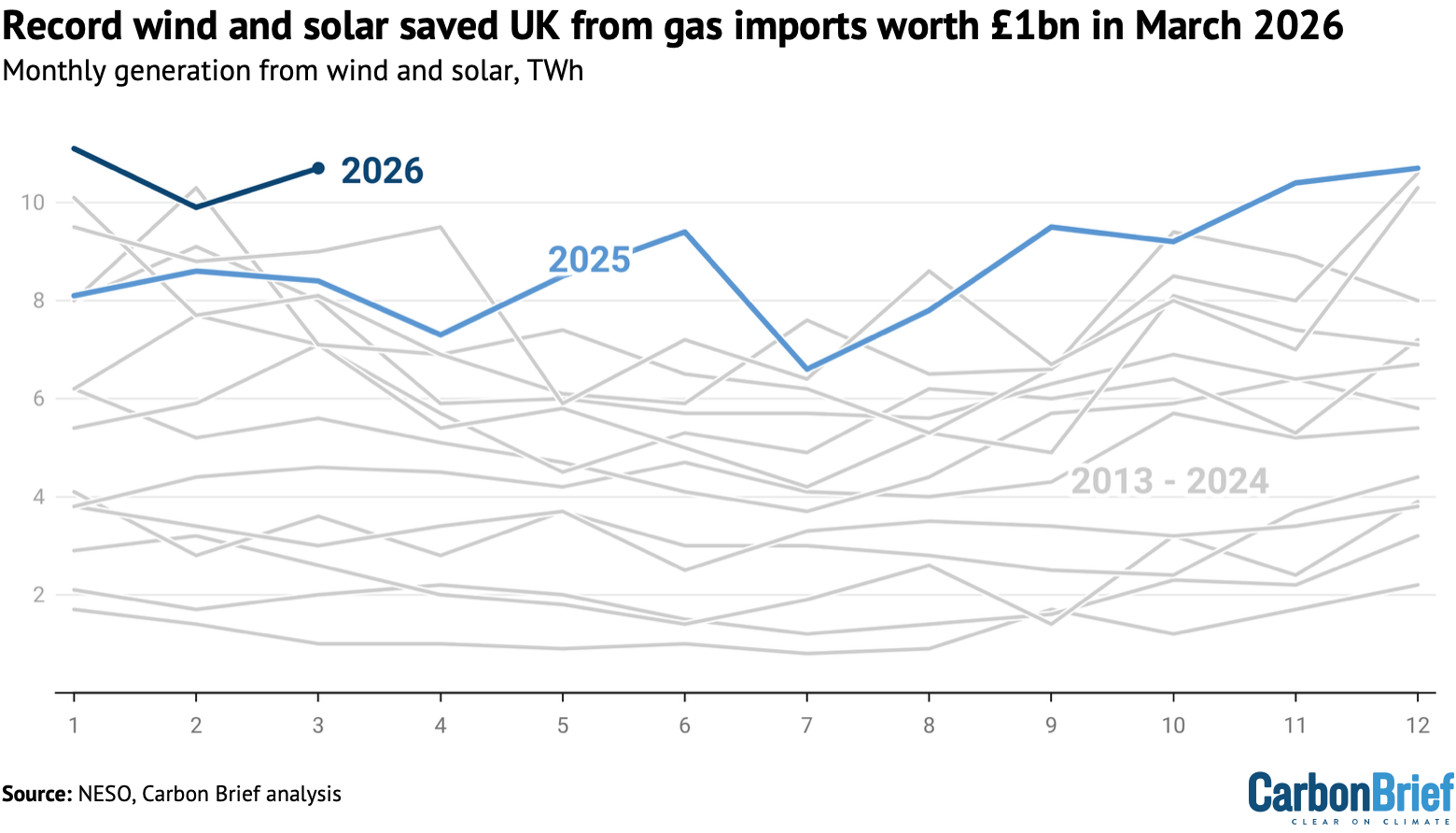
The United Kingdom experienced a remarkable transformation in its energy landscape during March 2026, with record-breaking electricity generation from wind and solar power sources. According to a detailed analysis by Carbon Brief, this surge in renewable energy output not only set new benchmarks for the month but also saved the nation from importing gas worth an estimated £1 billion. This development underscores the significant strides the UK has made in transitioning towards a more sustainable energy future, showcasing the potential of renewables to reduce dependency on fossil fuels during times of geopolitical uncertainty.
The statistics are striking. Wind energy generation on the island of Great Britain soared by 38% compared to the previous year, reaching unprecedented levels for March. Concurrently, solar power generation closely mirrored last year’s impressive output, bolstered by favorable weather conditions that contributed to an exceptionally sunny spring. Together, both renewable sources generated a staggering 11 terawatt hours (TWh) of electricity in March 2026, marking a combined increase of 28% over previous years. This record output is indicative of the growing investment and advancements in renewable technologies, which are playing a vital role in reshaping the UK's energy mix.
The implications of this record renewable energy generation are profound. By generating 11 TWh from wind and solar, the UK effectively averted the need to import 21 TWh of liquefied natural gas (LNG). This is equivalent to approximately 18 fully loaded tankers of LNG that would have been necessary to meet the nation’s energy demands. Given the volatile global gas market, exacerbated by ongoing geopolitical tensions such as the Iran war, the cost of these imports would have been substantial. At current high prices, which hovered around 130p per therm, this could have represented a financial burden of about £1 billion for the UK economy.
The shift towards renewable energy has also had a notable impact on domestic gas generation. In March 2026, gas-fired electricity generation fell by 25% compared to the same month in 2025, reaching the lowest level recorded for March. This decline in gas usage not only reflects the success of renewable energy integration but also signifies a broader trend away from fossil fuels in response to climate change imperatives and economic factors. As a result, gas was responsible for setting the price of electricity roughly 25% less frequently than in March 2022, a year marked by soaring fossil fuel prices due to the war in Ukraine. This shift is crucial for stabilizing electricity prices and providing consumers with more predictable energy costs.
The significance of this development cannot be overstated. The UK's ability to generate substantial amounts of electricity from wind and solar sources not only reduces its reliance on imported fossil fuels but also strengthens energy security in an increasingly volatile global market. Moreover, it positions the UK as a leader in renewable energy adoption, setting an example for other nations striving to meet their climate goals. The ongoing advancements in energy storage technologies, grid management, and renewable energy infrastructure will likely continue to enhance the UK's capacity to harness clean energy, thereby facilitating a smoother transition away from fossil fuels.
Looking ahead, the momentum gained in March 2026 is likely to pave the way for further innovations and investments in the renewable sector. As the UK government continues to prioritize the development of clean energy technologies and policy frameworks, the nation stands at the forefront of a global movement towards sustainable energy practices. With the potential for significant cost savings for consumers, as highlighted by studies indicating that households could save up to £1,100 on energy bills through initiatives such as 'plug-in solar,' the benefits of this transition are becoming increasingly tangible. As the world grapples with the challenges of climate change and energy security, the UK's achievements in harnessing renewable energy serve as a beacon of hope and a model for future endeavors.