Rising from the Deep: Scientists Reveal Tectonic Forces Behind Australia's Iconic Twelve Apostles
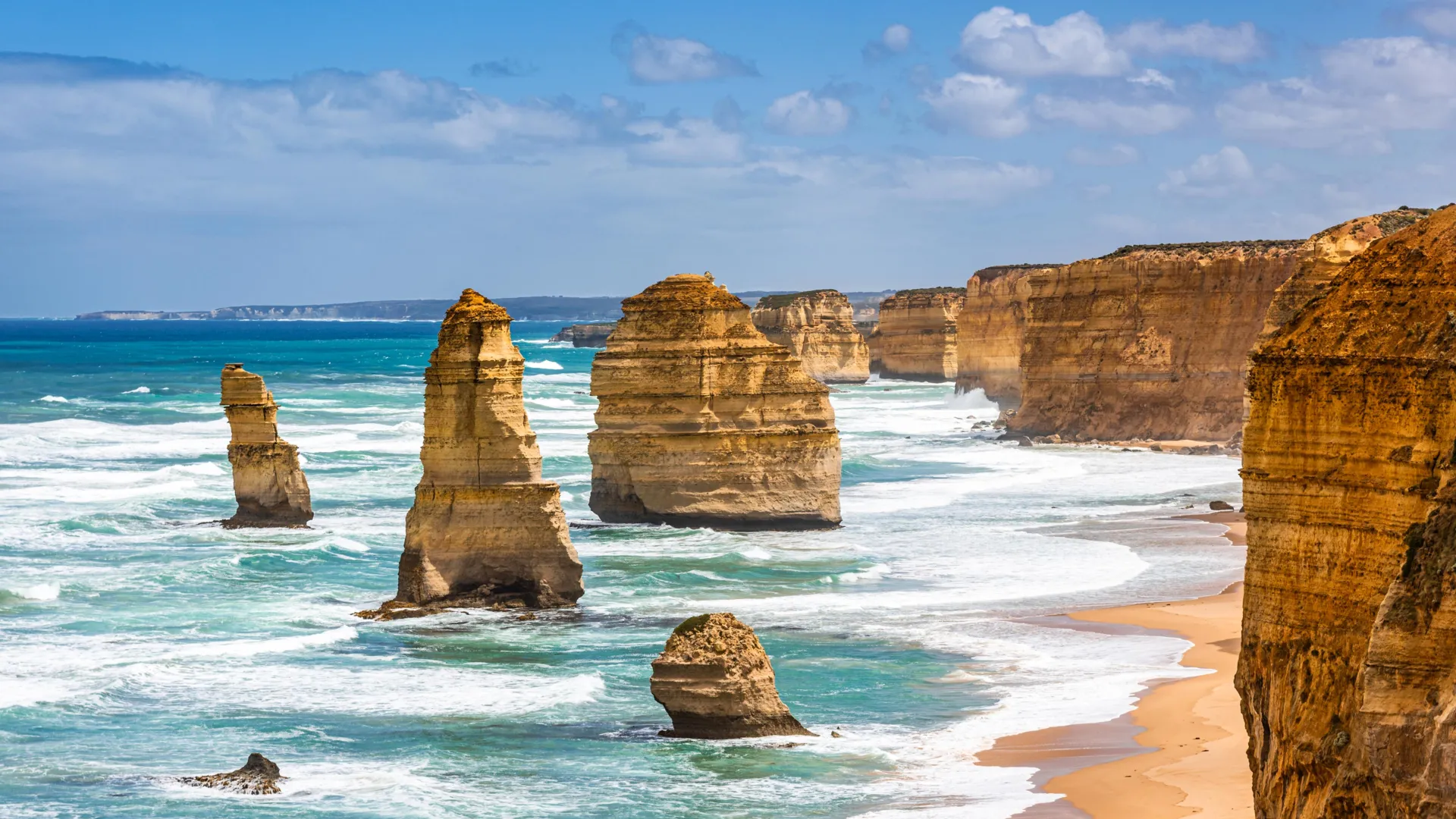
Australia's Twelve Apostles, the towering limestone sea stacks that draw millions of visitors to Victoria's Great Ocean Road each year, have long been understood as products of relentless coastal erosion. Waves and weather gradually carved away at the soft limestone cliffs, leaving behind isolated pillars standing defiantly against the Southern Ocean, or so the story went. New research has now fundamentally rewritten this geological narrative, revealing that tectonic forces played a crucial and previously unrecognized role in pushing these formations upward from the ocean floor over millions of years.
The study has uncovered evidence that the Twelve Apostles were not simply left behind as the coastline retreated, but were actively uplifted by geological forces operating deep beneath the surface. Tectonic activity along Australia's southern margin gradually raised sections of the seafloor, bringing ancient limestone deposits that formed in shallow marine environments up to their current positions above sea level. This uplift process unfolded over millions of years, with the rocks that make up the Apostles recording a long history of changing conditions as they rose from ocean depths to their present dramatic coastal setting.
What makes this discovery particularly valuable to scientists is the realization that the Twelve Apostles function as natural time capsules, preserving detailed records of environmental conditions stretching back approximately 14 million years. The limestone contains chemical signatures, fossils, and sedimentary structures that record information about ancient ocean temperatures, sea levels, atmospheric composition, and the organisms that lived in these waters over vast stretches of geological time. Accessing and interpreting these records requires understanding exactly how and when the rocks were formed and uplifted, which is precisely what the new research provides.
The team of researchers employed a combination of geological field work, laboratory analysis, and computer modeling to reconstruct the tectonic history of the formation. By dating different layers within the limestone and analyzing the fossils preserved at various levels, they were able to build a detailed timeline of when different sections of the rock were deposited and when they were lifted above sea level. The results revealed that the uplift was not a single event but a gradual process that accelerated and decelerated at different times, likely in response to changes in the tectonic forces acting on the Australian continental plate.
The findings have implications that extend well beyond the geological history of one famous tourist attraction. Understanding the tectonic uplift history of coastal formations like the Twelve Apostles helps scientists calibrate their models of past sea levels, which is critical for understanding how the global climate system has responded to changes in greenhouse gas concentrations throughout Earth's history. Previous estimates of past sea levels in this region may need to be revised to account for the tectonic uplift that the new research has documented.
For visitors standing on the clifftops of Port Campbell National Park, gazing at the Apostles rising from the churning surf, this research adds a new dimension of wonder to an already awe-inspiring landscape. These towering stacks are not merely the remnants of a retreating coastline, but monuments to the restless geological forces that continue to reshape our planet. Each layer of stone records a chapter in Earth's deep history, from ancient tropical seas teeming with microscopic life to the slow, powerful movement of tectonic plates that eventually brought these marine sediments to their spectacular position along Australia's southern coast.