Santa Marta Summit Charts New Course: 57 Nations Forge Practical Roadmaps Away from Fossil Fuels
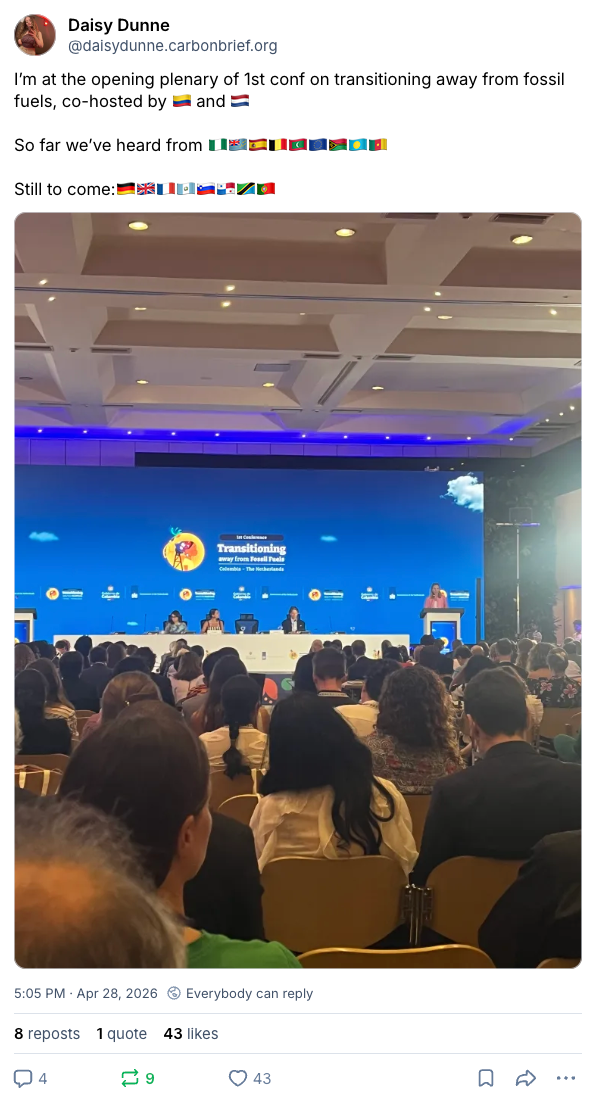
The Colombian coastal city of Santa Marta played host to what many participants described as a groundbreaking moment in international climate diplomacy late in April 2026, as 57 countries gathered for the first-ever summit specifically dedicated to the practical mechanics of transitioning away from fossil fuels. Co-hosted by Colombia and the Netherlands, the conference represented a deliberate departure from the often contentious dynamics of annual United Nations climate negotiations, offering instead a more intimate forum where ministers and climate envoys could engage in frank, solution-oriented discussions.
The summit's origins trace back to the heated final hours of the COP30 climate conference in Belem, Brazil, where a coalition of roughly 80 nations had pushed unsuccessfully for formal language about a fossil fuel "roadmap" in the summit's outcome text. When that effort stalled against opposition from major oil-producing nations, Colombia and the Netherlands announced they would create their own venue for these conversations. Notably, the co-hosts chose to exclude countries including China, Russia, and the United States from the invitation list, with Colombian environment minister Irene Velez Torres explaining that the organizers wanted to assemble a "coalition of the willing" rather than rehash the lengthy debates that often paralyze broader multilateral negotiations.
The conference format drew widespread praise from attendees, who described the atmosphere as "refreshing" and "highly successful." Rather than the usual pattern of prepared national statements delivered to a large plenary hall, the high-level segment featured small breakout sessions where ministers sat together to discuss specific barriers they face in reducing fossil fuel dependence. Topics ranged from financing mechanisms for renewable energy deployment in developing nations to strategies for managing the economic impacts on communities currently dependent on coal, oil, and gas production for their livelihoods.
Several concrete outcomes emerged from the summit. Countries agreed to develop national roadmaps detailing their specific plans for reducing fossil fuel consumption, with timelines and measurable milestones. New tools were introduced to help governments identify and reform harmful fossil fuel subsidies, which globally still amount to trillions of dollars annually and represent one of the largest obstacles to clean energy transition. Participants also explored mechanisms for addressing the carbon intensity embedded in international trade, recognizing that supply chains often shift emissions from one country to another without reducing them overall.
A distinctive feature of the Santa Marta gathering was its integration of scientific research into the policy discussions. A two-day "science pre-conference" brought together 400 academics from around the world to present the latest research on energy transition pathways. The event also saw the launch of a new international science panel dedicated to providing rapid, tailored analysis to countries seeking to accelerate their shift away from fossil fuels. Colombian minister Velez Torres, herself a former academic, emphasized the importance of grounding policy decisions in scientific evidence, telling journalists that "we need to go back to science and base our decisions on science."
As the summit concluded, Tuvalu and Ireland were announced as co-hosts of a second transitioning-away-from-fossil-fuels summit, scheduled to take place in the Pacific island nation in 2027. The choice of Tuvalu, one of the world's most climate-vulnerable nations, sends a powerful symbolic message about the urgency of the transition. Meanwhile, the Brazilian COP30 presidency has committed to incorporating the discussions and frameworks developed in Santa Marta into an "informal" fossil fuel roadmap, potentially bridging the gap between this smaller coalition's ambitions and the broader global climate process.