The Atlantic's Overturning Circulation Is Slowing, and Scientists Are Racing to Understand Whether a Full Collapse Is Possible
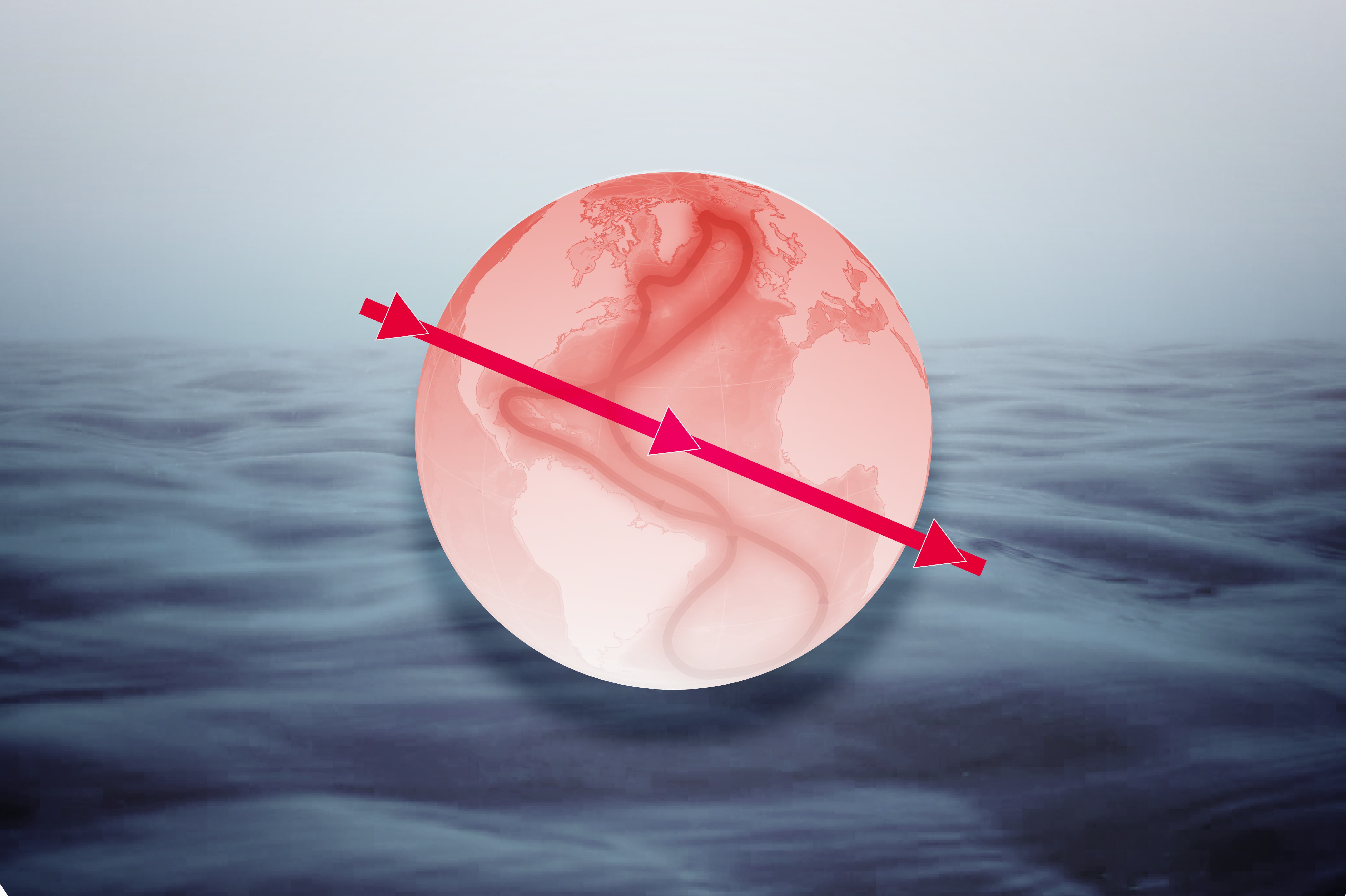
Running like a silent conveyor belt through the global ocean, the Atlantic Meridional Overturning Circulation carries warm, salty water from the tropics to the far North Atlantic, where it cools, sinks into the deep ocean, and returns southward at depth. That simple image conceals one of the most important organizing features of the planet's climate. The circulation, known as the AMOC, moves enormous quantities of heat, carbon, and nutrients, keeping northwest Europe noticeably warmer than other regions at similar latitudes and influencing rainfall patterns in Africa, Asia, and the Americas. As global temperatures continue to climb, scientists are increasingly concerned that human activity is pushing this ancient ocean system toward instability, with potentially abrupt consequences.
The physical engine of the AMOC is the cold dense water that forms each winter in the seas around Greenland and Iceland. As sea ice forms, salt is expelled, leaving the surrounding surface water saltier and therefore denser. That dense water sinks, pulling in replacement water from farther south and setting up the overturning loop that defines the circulation. Human caused climate change alters this balance in several ways at once. Warmer air and water make it harder for the surface to cool and sink. Melting ice from Greenland floods the region with fresh water, reducing density and further inhibiting sinking. Stronger and shifted winds modify the pattern of evaporation and precipitation across the Atlantic. Each of these effects nudges the system in the same direction, toward a slower and potentially less stable circulation.
Direct observations of the AMOC are relatively recent, with systematic measurements beginning in the mid 2000s through an array of moored instruments stretched across the Atlantic at roughly twenty six degrees north. The records show substantial variability from month to month and year to year, making it difficult to detect a clear long term trend from observations alone. Paleoclimate reconstructions based on ocean sediments, coral skeletons, and ice cores suggest that the AMOC may already have weakened by ten to fifteen percent compared with its strength before the industrial era. Climate models consistently project further slowdown this century under continued warming, although the amount varies widely depending on how freshwater fluxes from Greenland and other feedbacks are represented.
Behind the question of gradual slowdown lurks the more dramatic possibility of a tipping point. Theoretical and modeling studies have long suggested that the AMOC has multiple stable states. A sufficiently strong perturbation, such as a large pulse of meltwater or a prolonged accumulation of warmth and freshwater at the surface, could, in principle, flip the system into a much weaker or even a collapsed configuration that would persist for centuries. Paleoclimate evidence shows that abrupt AMOC transitions happened during past glacial periods, associated with dramatic climate swings across the North Atlantic region and beyond. Whether the modern AMOC is sensitive to the same kind of transition, and whether such a transition could be triggered in the coming decades, remains an active area of research.
The consequences of a major AMOC weakening would be profound. Europe would likely experience a cooling or slowed warming in the northwest alongside continued global warming elsewhere, creating a paradoxical pattern of regional chill embedded in a hotter world. Sea level rise on the northeast coast of the United States would accelerate because the circulation currently helps to pull water away from that coastline. Tropical rainfall bands such as the West African monsoon and the Amazon wet season could shift dramatically, with severe implications for agriculture and water supply. Marine ecosystems tied to the distribution of nutrients and oxygen in the Atlantic would be reorganized, potentially collapsing fisheries that have supported coastal communities for centuries.
Scientists have generally considered a full collapse within this century to be unlikely but not impossible, a low probability yet high consequence risk that deserves serious attention. Recent studies have pushed the conversation further, identifying early warning signs in the variability of sea surface temperatures and salinity in key regions that may indicate the system is losing resilience. Policy responses can influence the outcome. Deep cuts to greenhouse gas emissions would slow the warming and ice melt that are stressing the AMOC, while better monitoring and improved models would reduce uncertainty about how close the system is to a critical threshold. For now, the overturning continues to turn, moving heat and carbon through the depths as it has for thousands of years, even as the planet it sustains is changing faster than at any time in recent geological history.
Beyond the physical science, the AMOC has become a focal point in discussions about how to communicate tipping point risks to the public. Unlike the steady increase of atmospheric carbon dioxide or the gradual retreat of mountain glaciers, ocean circulation changes unfold invisibly beneath the surface and may produce little obvious impact until a threshold is crossed. Policy experts argue that risks of this kind deserve treatment comparable to other low probability and high consequence events such as pandemics or financial crises, with investments in monitoring, modeling, and resilience planning that do not depend on waiting for clear evidence of catastrophe. The AMOC's long history and uncertain future together make it both a scientific frontier and a test case for how societies manage deep uncertainty in a changing climate.