The Cloudy Truth: How Declining Low-Level Cloud Cover is Fueling Global Warming
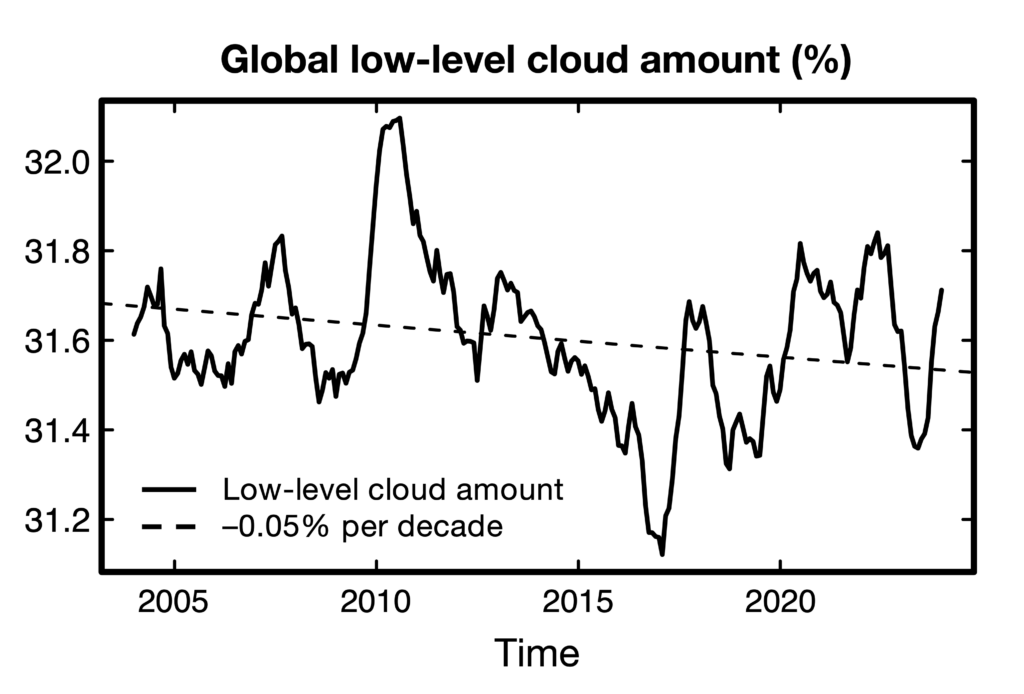
Recent scientific findings have illuminated a concerning trend in our atmosphere that is contributing to the rapid acceleration of global warming. Over the last two decades, a significant decline in low-level cloud cover has been observed, allowing more sunlight to reach the Earth’s surface. This phenomenon is not just a simple weather observation; it has profound implications for the planet's climate system. As global temperatures have soared to unprecedented levels, the role of diminishing cloud cover in amplifying warming has garnered increasing attention from climate scientists. A recent study published in *Atmospheric Chemistry and Physics Letters* delves into the relationship between cloud cover and Earth's energy imbalance, which is the difference between the energy absorbed from the sun and the energy radiated back into space. This imbalance has more than doubled in the past 20 years, primarily driven by an increase in greenhouse gases that trap heat in the atmosphere. The study reveals that the decline in low-level cloudiness since 2003 accounts for an astonishing half of this increase in energy imbalance, marking a crucial turning point in understanding human impact on global warming.
Low-level clouds, which form beneath 6,500 feet (2,000 meters) and include types such as stratus and cumulus clouds, play a critical role in regulating the Earth’s climate. These clouds act as a natural barrier against solar radiation, reflecting a significant portion of incoming sunlight back into space. This reflective quality serves as a protective layer, keeping the planet cooler than it would otherwise be. Satellite data reveal a consistent downward trend in low-level cloud cover since the early 2000s, a finding that has been corroborated through various observational studies. As these clouds dissipate, more solar energy is absorbed by the Earth, leading to an increase in surface temperatures and exacerbating the already dire effects of climate change.
The implications of this research extend far beyond academic interest. Understanding the dynamics of low-level cloud cover is vital for accurately predicting future climate scenarios. The study emphasizes that the increase in Earth's energy imbalance is not merely a result of natural climate variability but is largely attributable to human-induced changes. This conclusion reinforces the urgency with which policymakers and environmental advocates must approach climate action. The findings highlight the need for more stringent regulations on greenhouse gas emissions, as well as investments in renewable energy sources to mitigate the effects of anthropogenic warming.
Diving deeper into the causes of declining cloud cover reveals a complex interplay of human activity and environmental change. Three primary factors have been identified as driving this trend. Firstly, reductions in aerosol emissions, which are tiny particles produced mainly by the combustion of fossil fuels, have altered cloud formation processes. Efforts to combat air pollution have led to cleaner air, which paradoxically results in less cloud formation. Aerosols serve as nuclei for cloud droplets, and their reduction means fewer opportunities for clouds to develop. Secondly, the increasing concentration of greenhouse gases has led to a warmer and drier atmosphere, further driving cloud dissipation. Although warmer air can hold more water vapor overall, the relative humidity, the measure of how saturated the air is with moisture, has been declining in many regions, contributing to cloud reduction.
Lastly, the warming of ocean surfaces has a direct impact on atmospheric humidity, influencing cloud formation and persistence. As oceans absorb more heat, the resulting increase in temperature affects the moisture content in the air, creating conditions that are less favorable for cloud development. This cycle creates a feedback loop that further amplifies warming, as reduced cloud cover allows for even greater absorption of sunlight at the ocean's surface, leading to additional warming. The implications of this feedback loop are significant, as they suggest that the effects of climate change are not only driven by greenhouse gas emissions but are also exacerbated by changes in cloud dynamics.
In conclusion, the decline in low-level cloud cover presents a multifaceted challenge in the fight against global warming. This research underscores the critical role of human activities in altering natural climate processes and highlights the urgent need for comprehensive climate policies to address these changes. As global temperatures continue to rise, understanding the significance of cloud dynamics becomes increasingly essential for predicting future climate scenarios and implementing effective mitigation strategies. The findings serve as a clarion call for immediate action to address the root causes of climate change, emphasizing that the health of our planet hinges on our ability to restore balance to the Earth's energy system.