The Coal Conundrum: Assessing Trump's Impact on America's Coal Industry
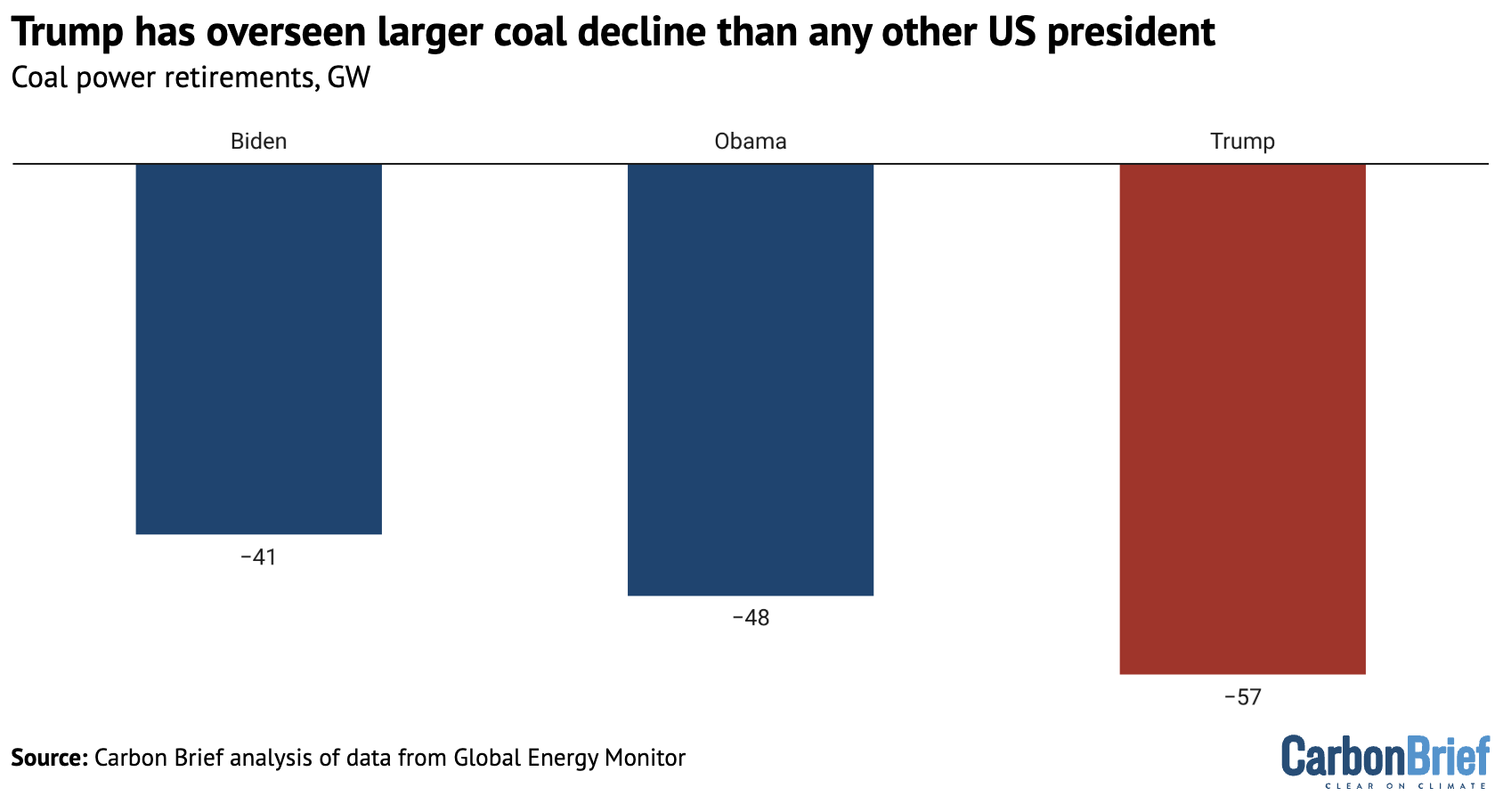
The decline of coal in the United States is a story that has unfolded over decades, but one president's tenure stands out for its unprecedented impact on the industry. Donald Trump's time in office has seen a greater reduction in coal-fired power capacity than any of his predecessors, marking a significant shift in the nation's energy landscape. This phenomenon, analyzed by Carbon Brief, reveals the complexities behind coal's decline, which is influenced by market dynamics, regulatory frameworks, and technological advancements. Understanding these factors is crucial for grasping the broader implications for energy policy and climate change in America.
During Trump’s administration, the U.S. has witnessed a drop of approximately 57 gigawatts (GW) in coal power capacity. This figure surpasses the reductions experienced during Barack Obama’s two terms, which saw a decrease of 48GW, and Joe Biden’s first term, which has already recorded a decline of 41GW despite being shorter in duration. The trend is telling as the nation transitions toward cleaner energy sources. The coal sector's struggles are not solely a result of political decisions but are deeply rooted in economic realities. The rise of natural gas, driven by fracking technology and abundant supplies, has made coal less competitive. Renewable energy sources, particularly wind and solar, have also gained traction, rendering many coal plants unviable economically.
The Trump administration made various attempts to bolster the coal industry, portraying it as a vital component of America's energy independence. Interior Secretary Doug Burgum referred to initiatives aimed at supporting coal as an opportunity for “clean, beautiful, American coal,” emphasizing a narrative that contrasts sharply with the market trends. Despite these efforts, the reality remained that the majority of the U.S. coal fleet was aging and inefficient. Approximately 75% of coal plants are over 40 years old, reflecting a critical need for modernization or replacement. The lack of investment in new coal infrastructure, in favor of cheaper, cleaner alternatives, highlights the challenge of sustaining an industry that is struggling to adapt to a rapidly changing energy market.
The broader implications of coal’s decline extend beyond economic considerations; they touch on environmental and health issues as well. Coal is one of the dirtiest fossil fuels, contributing significantly to greenhouse gas emissions and air pollution. As coal power decreases, the potential for improved air quality and reduced carbon emissions becomes more pronounced. By 2024, projections indicate that wind and solar energy will generate more electricity than coal in the United States, a significant milestone in the fight against climate change. This transition not only aligns with global efforts to reduce dependence on fossil fuels but also positions the U.S. as a leader in renewable energy development.
Recent analyses from the U.S. Energy Information Administration have indicated that surging electricity prices have made both coal and gas-fired power generation more economically viable. However, even with these rising costs, many utilities continue to plan the closure of their aging coal plants. The essence of this transition reflects a fundamental shift in how energy is produced and consumed, as well as a growing recognition of the need for sustainable practices. Utilities are increasingly facing pressure from consumers and investors to adopt clean energy solutions. In 2025, for example, clean energy sources accounted for 96% of new electricity generation capacity added to the grid, reinforcing the notion that the future of energy lies beyond coal.
Despite the challenges posed by market dynamics, the Trump administration's efforts to revive coal through emergency legislation have not yielded the desired results. Many coal plants remain economically unfeasible, and the trend toward clean energy continues to gain momentum. The critical question remains: How will the U.S. navigate the transition away from coal while ensuring energy reliability and economic stability? As the country moves forward, policymakers must consider the lessons learned from this era of coal decline. The importance of investing in renewable energy infrastructure, embracing technological innovation, and implementing effective policies will be paramount in shaping a sustainable energy future.
As coal's prominence diminishes in the U.S. energy landscape, the focus will increasingly shift toward sustainable alternatives. The narrative surrounding coal has transformed from one of dominance to a cautionary tale of an industry that failed to adapt to changing times. Moving forward, the transition to renewable energy presents both challenges and opportunities, and the decisions made today will have lasting implications for future generations. Understanding the historical context of coal’s decline underlines the importance of sustainable energy policies that prioritize environmental health and economic resilience in a world that is increasingly moving towards cleaner energy solutions.