Trump's Legacy in Coal: A Surprising Shift Amid Declining Demand
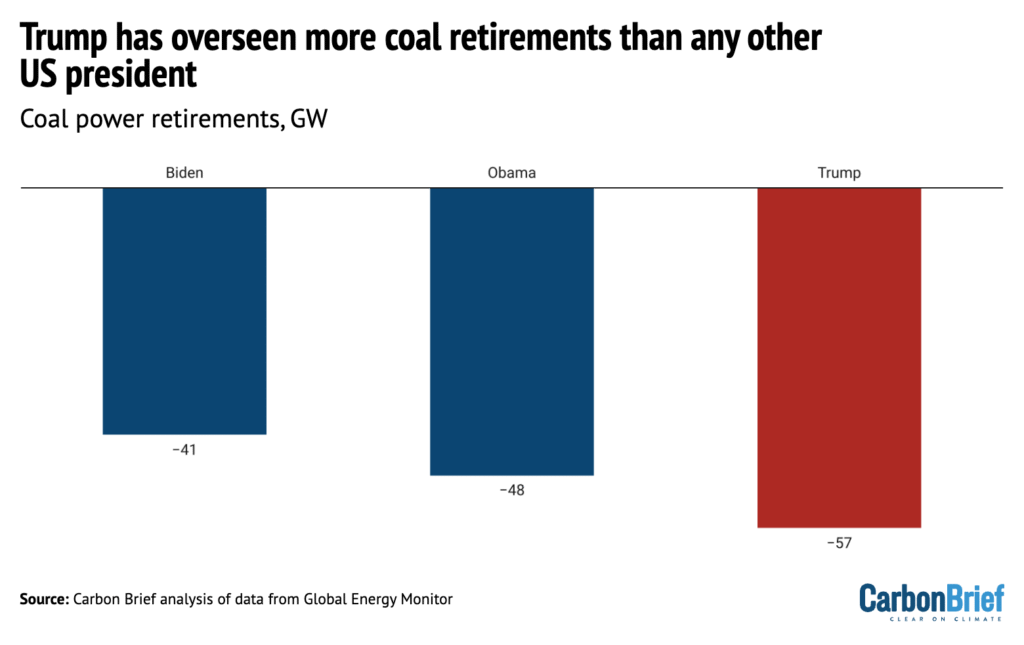
The landscape of coal power in the United States has undergone a significant transformation during Donald Trump's presidency, leading to the retirement of more coal-fired power plants than during the terms of any previous president. This phenomenon, highlighted by recent analyses, underscores a complex interplay of market dynamics, regulatory changes, and the broader shift towards cleaner energy sources. While Trump’s administration made concerted efforts to revitalize the coal industry, the economic realities of energy production ultimately dictated a different narrative.
Data indicates that approximately 57 gigawatts (GW) of coal capacity have been retired during Trump's time in office, a figure surpassing the 48GW retired under Barack Obama and the 41GW under Joe Biden. This trend reflects not just the policy preferences of the sitting president, but also a significant shift in the electricity generation landscape driven by the economics of energy production. As renewable energy sources like wind and solar have rapidly become more affordable and competitive, coal's market share has markedly declined. The U.S. coal fleet, largely comprised of aging infrastructure, three-quarters being over 40 years old, faces considerable challenges in maintaining viability in an evolving energy market.
The Trump administration’s attempts to support the coal industry included measures such as rolling back climate regulations and promoting the narrative of “clean, beautiful coal.” However, these efforts were met with limited success. The 2009 “endangerment finding,” which provides the legal foundation for numerous federal climate regulations, has been a focal point of contention, with Trump’s team seeking to repeal it. On various occasions, Trump was lauded as the “undisputed champion of beautiful clean coal” by industry advocates. Yet, the reality remained stark: economic pressures stemming from cheaper natural gas and renewables continued to drive coal plant closures. More recent data has shown that, despite a temporary rise in coal power output due to surging energy prices, the long-term trend still favors the retirement of less competitive coal plants.
Market forces have played a pivotal role in the decline of coal power. The U.S. Energy Information Administration has reported that higher demand for electricity, particularly from data centers, and rising gas prices, driven by increased liquefied natural gas (LNG) exports, have recently improved the economics of both coal and gas plants. Nevertheless, these factors have not reversed the trend of coal retirements. In fact, despite a slight uptick in coal generation in 2025, the vast majority of utilities are still looking to phase out their aging coal-fired power plants. As the energy landscape continues to evolve, the dominance of new electricity generation capacity from clean sources has been striking, with renewables accounting for 96% of new capacity added to the grid in 2025.
The implications of this shift are significant, not only for energy policy but also for environmental considerations. As more coal-fired plants are retired, the U.S. is moving closer to a future where cleaner energy sources dominate the electricity generation mix. This transition is crucial for addressing climate change and reducing greenhouse gas emissions, as coal is one of the most carbon-intensive sources of energy. The trend of declining coal use is echoed globally, with countries like China and India also witnessing a decrease in coal demand, marking a pivotal moment in the global energy transition.
In summary, while Donald Trump’s presidency has been marked by efforts to bolster the coal industry, the economic realities and market dynamics have ultimately led to a significant number of coal plant retirements. This situation reveals a broader trend towards cleaner energy solutions, driven by the need for sustainability and economic viability. The retirement of coal plants under Trump's administration encapsulates the challenges facing traditional energy sources in an era increasingly defined by innovation and environmental responsibility.