UK Achieves Historic Emission Reductions as Coal Use Plummets to 400-Year Low
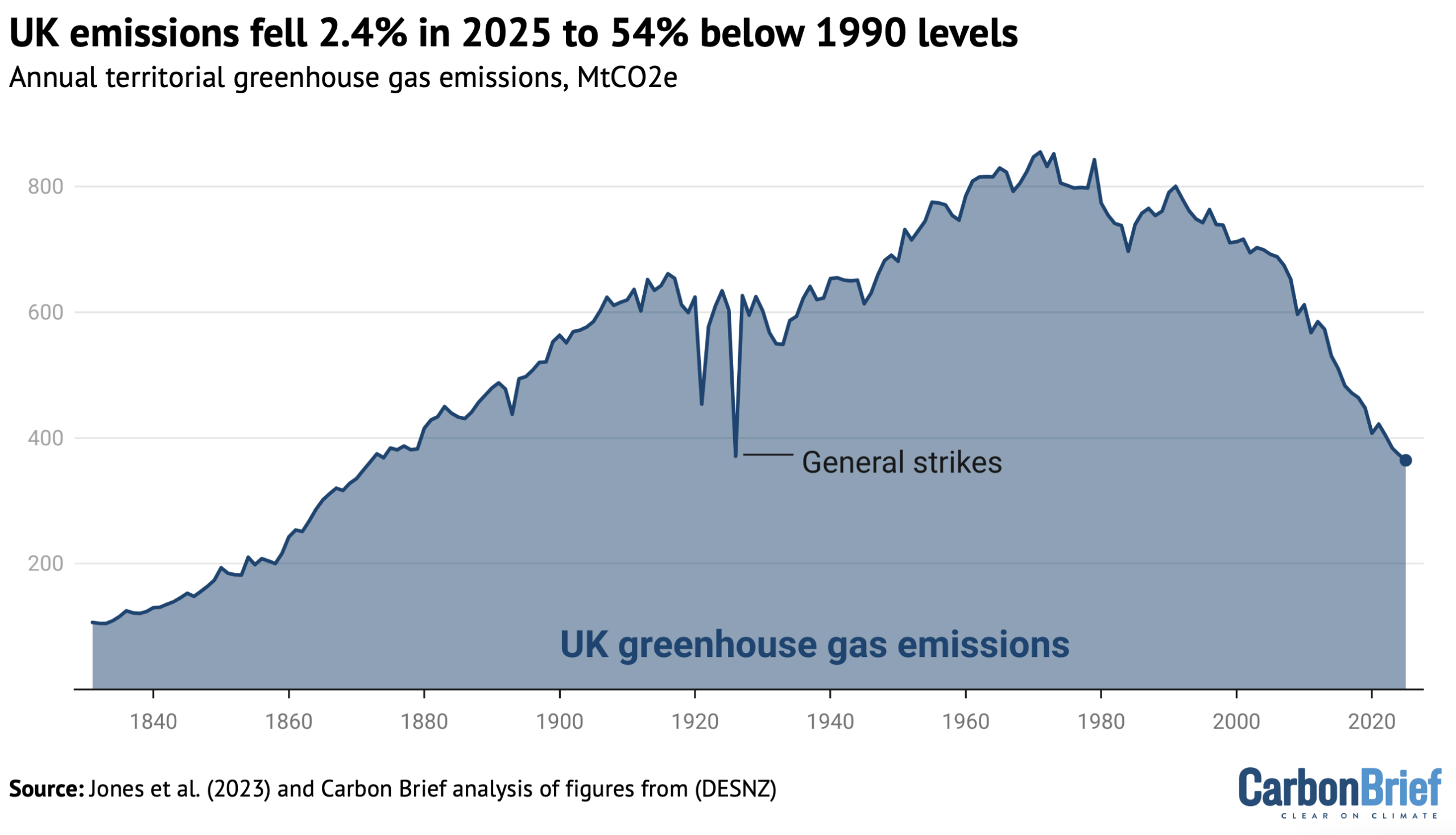
Recent analysis from Carbon Brief reveals that the United Kingdom has made significant strides in reducing its greenhouse gas emissions, achieving a 2.4% decrease in 2025. This marks the lowest level of emissions in over 150 years, a notable milestone in the country's ongoing efforts to combat climate change. The data shows that UK emissions dropped to 364 million tonnes of carbon dioxide equivalent (MtCO2e), a figure not seen since 1872, during a time when the nation was in the midst of the Industrial Revolution. The decline in emissions can be attributed to several key factors, including a historic reduction in coal usage, which has fallen to levels last recorded in the early 1600s, along with a drop in natural gas consumption to its lowest point in 34 years.
The fall in coal and gas use has been driven by a variety of circumstances, including record-high temperatures across the UK, which have reduced the demand for heating, and elevated gas prices that have made fossil fuel usage less economically viable. The transition away from coal power, which officially ended in late 2024, has also played a crucial role in this emission reduction. Additionally, the steel industry experienced a sharp slowdown, further contributing to the decrease in coal consumption. This combination of factors has aligned to create a perfect storm that has propelled the UK toward meeting its climate goals.
The implications of this reduction are significant. The UK has now achieved a remarkable 54% decrease in emissions compared to 1990 levels, all while its economy has nearly doubled in size. This achievement underscores the potential of decoupling economic growth from carbon emissions, a key challenge that many countries face in the context of sustainable development. However, while these figures are promising, experts warn that continued progress is essential. The 2.4% fall in emissions represents just over half of the average annual reduction of 15 MtCO2e that is needed to meet the UK’s legally binding net-zero target by 2050. As such, the momentum must be maintained to ensure that the UK remains on track to achieve its climate commitments under the Paris Agreement.
The analysis highlights not only the reductions in coal and gas usage, but also a shift in transportation patterns. Despite a rise in traffic levels, oil consumption fell by 0.9%, largely due to the increasing presence of electric vehicles (EVs) on the roads. The introduction of over 700,000 new EVs, electric vans, and plug-in hybrids in 2025 has significantly contributed to this decline, demonstrating the growing impact of cleaner transportation options. With nearly 3 million electric and hybrid vehicles now making up 5% of the car fleet, the transition to electric mobility is becoming an integral part of the UK’s strategy for reducing emissions. The financial benefits for EV drivers are also notable, with a reported total savings of £2 million in fuel costs for the year, further incentivizing the shift away from traditional gasoline-powered vehicles.
While the recent analysis paints a positive picture of emission reductions and the transition to renewable energy sources, it is important to consider the broader context. The UK has experienced a consistent decline in emissions over the past two decades, with reductions occurring in 27 of the last 36 years. This trend has remained relatively stable, even in the face of economic fluctuations such as the global financial crisis and the COVID-19 pandemic. However, the challenge remains to ensure that these reductions are not temporary but rather part of a sustained effort to address climate change. The data indicates that emissions have not been offset by increased fossil fuel use in imported goods, which has remained steady since around 2008. This reinforces the notion that the UK’s efforts to decarbonize its economy can lead to real, measurable impacts on global climate change.
Looking ahead, the path to reaching net-zero emissions will require a multifaceted approach that includes continued investment in renewable energy, further advancements in technology, and policy measures aimed at promoting sustainable practices across all sectors. The UK has set a benchmark for ambitious climate action, and while the journey is far from over, the recent achievements provide a hopeful glimpse into what can be accomplished with concerted effort and innovative solutions. As the global community continues to grapple with the realities of climate change, the UK’s progress serves as a compelling example of how nations can work towards a sustainable future.