UK Renewable Energy Auction Sets New Records, Paving the Way for a Greener Future
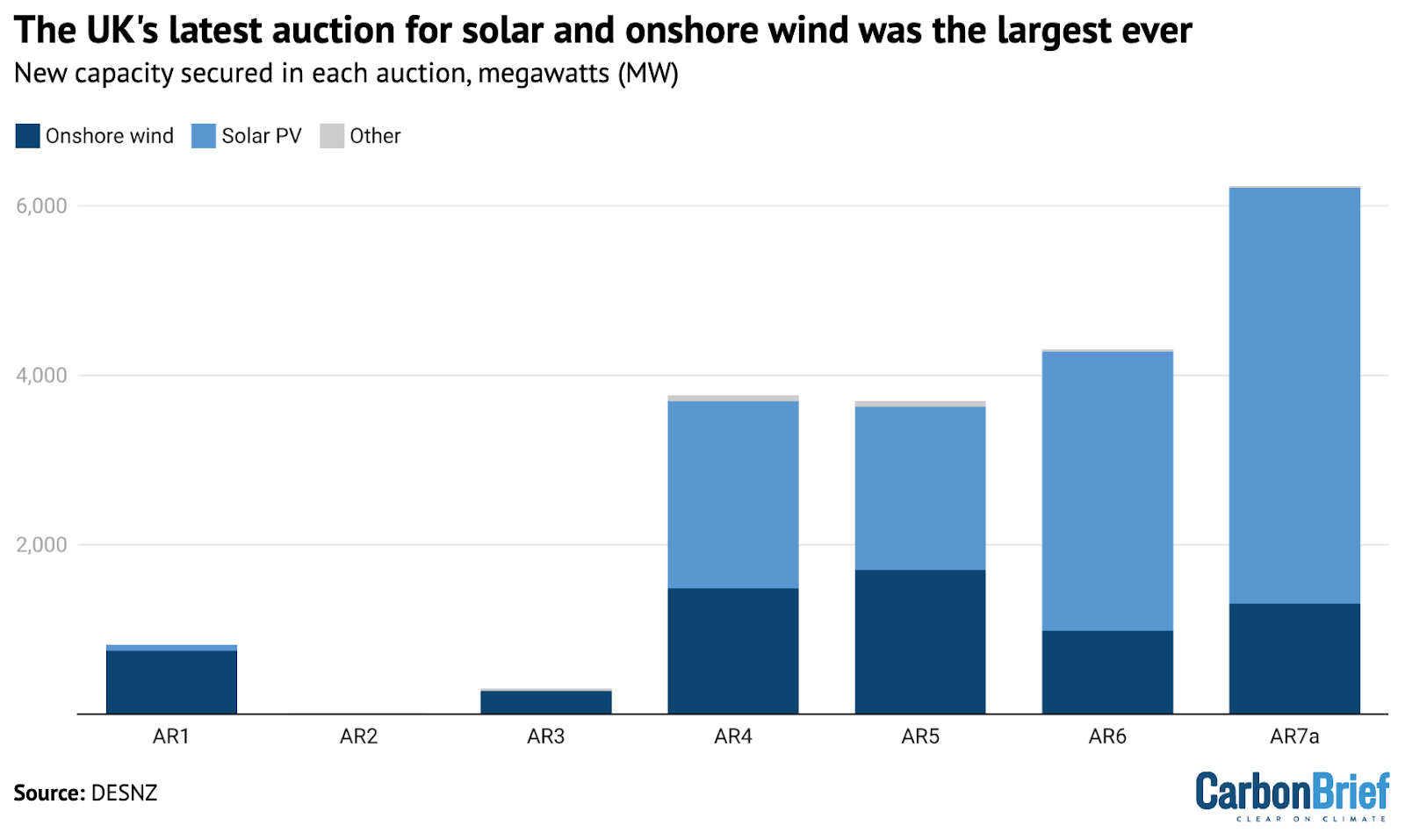
The latest renewable energy auction in the United Kingdom has delivered a remarkable outcome, securing a record 7.4 gigawatts (GW) of new capacity from solar, onshore wind, and tidal sources. This achievement comes as part of the seventh auction round, known as AR7a, which is the final segment of a two-part auction process. Earlier this year, the first part of AR7 secured an impressive 8.4 GW of offshore wind capacity. Collectively, these efforts mark AR7 as the largest auction for renewable energy in UK history, boasting a total of 14.7 GW of new capacity, an increase of 50% over the previous record set by the sixth auction round (AR6) in 2024. The implications of this auction are profound, as the new contracts for solar energy were set at £65 per megawatt hour (MWh), while onshore wind projects received £72/MWh, highlighting a significant cost reduction compared to traditional gas energy sources.
Energy Secretary Ed Miliband has praised the results, emphasizing that the prices achieved for onshore wind and solar energy are more than 50% less than the costs associated with constructing and operating new gas plants. This stark contrast not only points to the growing economic viability of renewable energy but also underscores a broader transition in the UK's energy landscape towards sustainable sources. Analysts predict that these new renewable projects will alleviate pressure on consumer energy bills while simultaneously facilitating a significant reduction in gas imports. According to research from Carbon Brief, the AR7 auction is expected to curtail UK gas demand by approximately 95 terawatt hours (TWh) per year, a reduction that could slash liquefied natural gas (LNG) imports by as much as three-quarters.
The details of the auction reveal that 157 solar projects successfully secured contracts, collectively contributing 4.9 GW of new capacity. Notably, the majority of these projects have a capacity of less than 50 MW, a threshold that allows them to be approved by local councils without navigating the more complex national infrastructure approval process. This auction also marked a significant milestone with the inclusion of a large-scale solar project, the West Burton Solar NSIP, which received a contract for 480 MW. Developed by Island Green Power, this project is noteworthy as it will utilize grid connections made available by the closure of the coal-powered West Burton plant, highlighting a clear shift from fossil fuels to renewable energy sources in the UK.
The auction also facilitated the contracting of 28 onshore wind projects, accounting for a capacity of 1.3 GW. Among these, the Imerys windfarm in Cornwall stands out as the largest onshore wind installation in England to receive backing in a decade. The recent lifting of a long-standing ban on onshore wind projects by the current Labour government has played a crucial role in fostering this growth. Scotland continues to dominate the onshore wind sector, with 1,093 MW of projects awarded contracts, compared to smaller figures in England and Wales. Notable projects include the Sanquhar II windfarm in Dumfries and Galloway, which is set to become the fourth-largest onshore wind farm in the UK at 269 MW. The Welsh government also celebrated its most successful auction yet, with more than 530 MW of renewables projects receiving support, a clear indication of the increasing momentum for green energy across the nations of the UK.
Cost efficiency has emerged as a defining feature of this auction, with the strike prices for solar and onshore wind projects falling significantly below the price caps established by the Department of Energy Security and Net Zero (DESNZ). The solar projects achieved a strike price of £65/MWh, which is approximately 7% lower than the £70/MWh from the previous auction round, while onshore wind contracts were slightly higher at £72/MWh, a marginal increase from £71/MWh in 2024. The auction results reflect a continuing trend of decreasing costs for renewable energy technologies, driven by advancements in technology, economies of scale, and increased competition among developers.
The significance of these auction results extends well beyond immediate financial implications. The UK government has set an ambitious target of achieving “clean power by 2030,” and the outcomes of the AR7 auction represent a pivotal step towards realizing this goal. The integration of renewable energy sources into the national grid not only enhances energy security but also contributes to the UK’s commitments under international climate agreements. By reducing reliance on fossil fuels and decreasing greenhouse gas emissions, the UK is taking substantial strides towards a more sustainable future. The success of this auction serves as a powerful reminder of the potential for renewable energy to reshape the energy landscape, benefiting consumers, the economy, and the environment simultaneously.