Unearthing the Depths: How Ancient Fossils Illuminate Life After the Great Dying
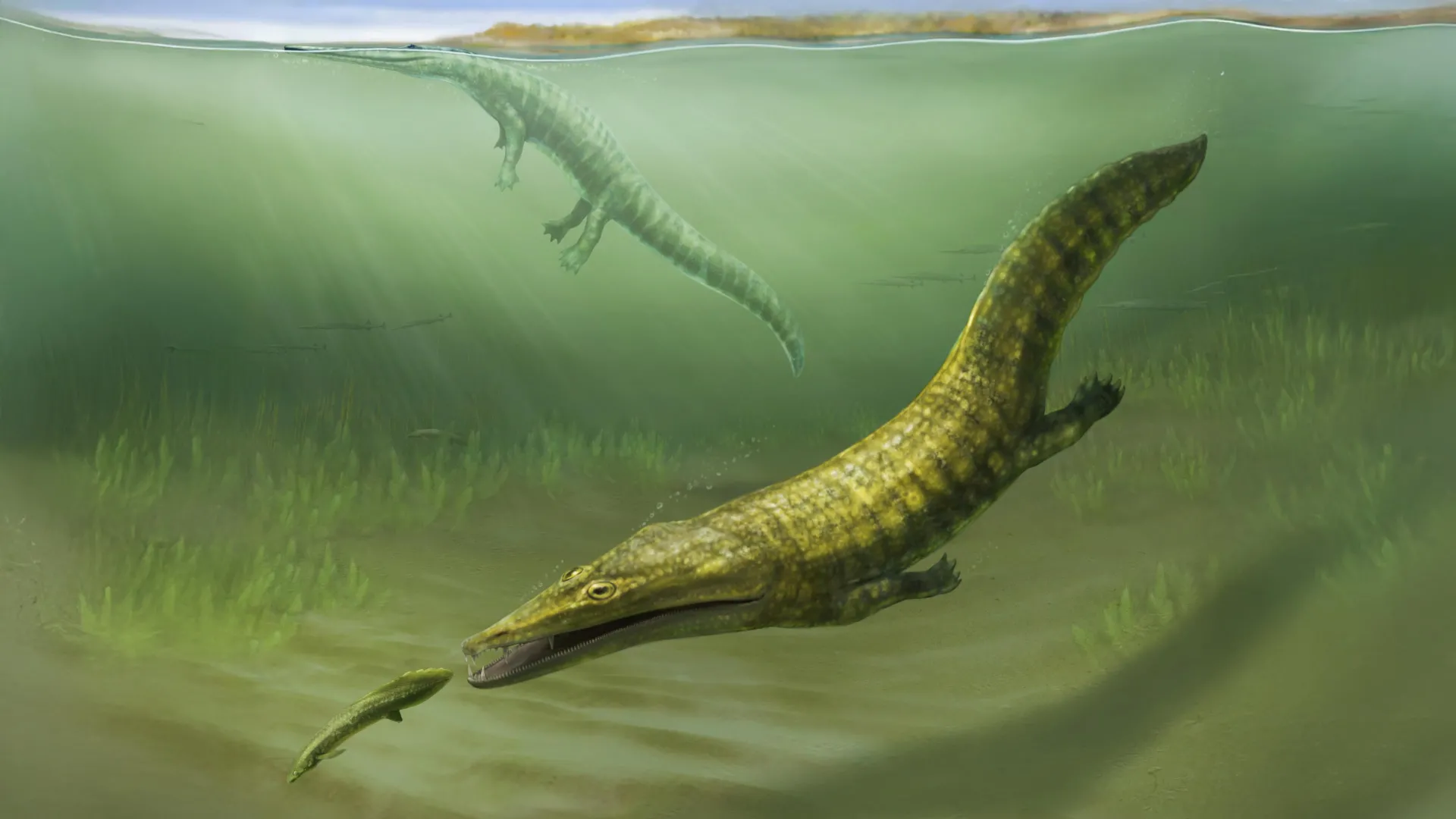
A remarkable discovery in Australia has unveiled a trove of fossils dating back approximately 250 million years, providing significant insights into the aftermath of Earth's most catastrophic mass extinction event. This extinction, often referred to as the Great Dying, occurred at the end of the Permian period and resulted in the loss of around 90% of marine species and 70% of terrestrial vertebrate species. The recent findings suggest that the recovery of marine life was not as simplistic as previously thought. Instead of a singular marine amphibian that dominated the oceans, researchers have identified a rich tapestry of early marine predators that thrived in the waters following this ecological catastrophe.
The fossils, which were largely forgotten in museum collections, have been meticulously analyzed, revealing an astonishing diversity among the marine fauna that emerged in the wake of the Great Dying. Among the newly studied specimens are several species of early tetrapods, which are four-limbed vertebrates that transitioned from land to sea. Notably, one such species exhibited an extensive geographical range, with relatives found from the Arctic Circle down to Madagascar. This finding implies that these pioneering sea-going creatures were capable of rapid dispersal across vast oceanic distances, a trait that likely aided their survival and adaptation in a post-extinction world.
The implications of this study stretch beyond mere fossil identification. Understanding the dynamics of life following the Great Dying is crucial for scientists as they seek to comprehend how ecosystems recover from severe disruptions. The oceanic environments that existed in the aftermath of this extinction event were drastically different from those that preceded it. Shifts in climate, ocean chemistry, and ecological structure created new opportunities for life to flourish. The presence of diverse predators indicates a more complex food web than previously assumed, suggesting that early tetrapods played pivotal roles in shaping marine ecosystems during their recovery phase.
Research into these ancient marine predators not only enhances our knowledge of paleobiology but also offers valuable lessons for contemporary environmental challenges. Climate change and biodiversity loss are pressing issues that parallel the mass extinction events of the past. By examining how life rebounded after the Great Dying, scientists can glean insights into resilience mechanisms among species. This knowledge could prove critical as modern ecosystems face unprecedented stressors, including rising temperatures and habitat destruction. The adaptability of ancient life forms may serve as a model for understanding how current species might cope with similar challenges in our rapidly changing world.
The geographical distribution of these early tetrapods also raises intriguing questions about the evolutionary pathways that led to their success. The ability of these species to traverse large ocean expanses indicates not only a remarkable degree of mobility but also potential behavioral adaptations that allowed them to thrive in diverse environments. This discovery prompts further investigation into the evolutionary pressures that shaped these creatures, as well as their interactions with contemporaneous species in the marine ecosystem. Such studies could illuminate the intricate relationships that have historically governed life in our oceans.
As paleontologists continue to analyze and interpret these findings, the narrative surrounding the aftermath of the Great Dying will likely evolve further. This research highlights the importance of fossil records as windows into Earth's biological history. Each fossil unearthed adds another piece to the puzzle of life’s resilience in the face of extinction. As scientists strive to understand the full scope of recovery following this monumental event, the lessons learned may guide current conservation efforts, ensuring that we protect the biodiversity that remains today.