Unprecedented Southern African Floods: A Convergence of Climate Change and La Niña
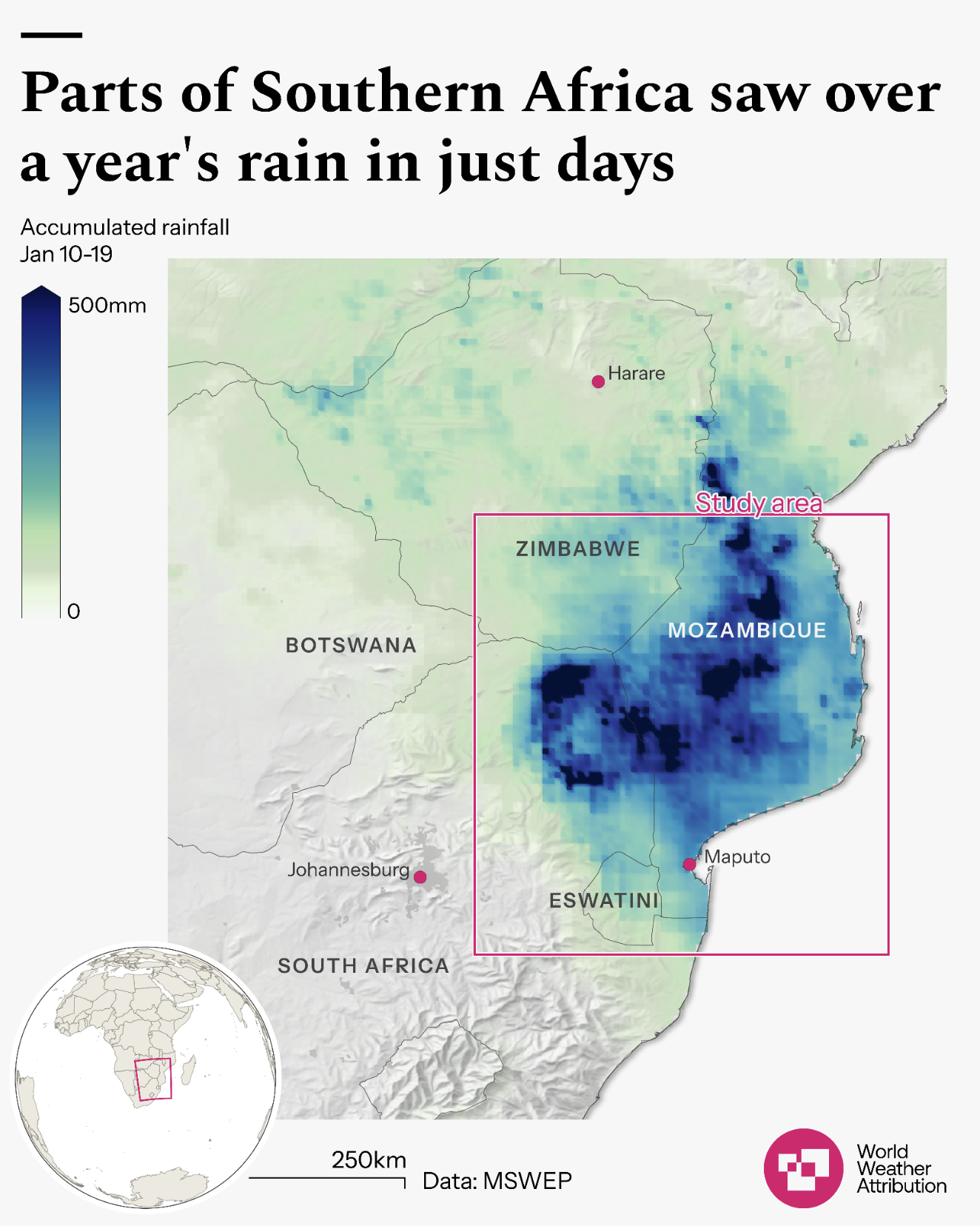
Recent weeks have witnessed catastrophic flooding across southern Africa, resulting in significant loss of life and extensive damage to infrastructure, agriculture, and communities. A rapid attribution study conducted by the World Weather Attribution service has shed light on the crucial factors that intensified this deluge, identifying climate change and the La Niña phenomenon as key contributors. From late December 2025 to early January, southeastern Africa experienced intense rainfall, with some regions receiving more than a year’s worth of precipitation within just a few days. This extraordinary weather event has left a grim legacy, claiming at least 200 lives, displacing thousands, and inundating vast expanses of farmland that are now waterlogged and unproductive.
The devastating consequences of this flooding are underscored by the study's findings, which reveal that the frequency and severity of such extreme rainfall events have increased by 40% since the pre-industrial era. While researchers faced challenges in quantifying the specific impact of climate change on this particular event due to limitations in current climate models, they expressed confidence that human-induced climate change has heightened both the likelihood and intensity of the rainfall. According to the study, the interplay between La Niña, which typically brings cooler ocean temperatures in the central and eastern Pacific, and climate change created a perfect storm, making the torrential rains approximately five times more probable than they would have been without these influences.
The heavy rains began on December 26 and reached a climax between January 10 and January 19, impacting countries such as Eswatini, Mozambique, South Africa, and Zimbabwe. Reports indicate that some areas experienced up to 200 millimeters of rain, far exceeding seasonal averages. Bernardino Nhantumbo, a researcher from Mozambique’s National Institute of Meteorology, pointed out that certain regions recorded rainfall amounts that would typically be expected over an entire rainy season in just two or three days. This alarming statistic highlights the changing climate patterns affecting the region, where extreme weather events are becoming increasingly common and severe.
The aftermath of the flooding has been devastating. In Mozambique alone, nearly 5,000 kilometers of roads have been damaged, disrupting transportation and threatening the supply chains for essential goods, including pharmaceuticals. In Zimbabwe, vital infrastructure such as bridges and roads has been significantly compromised, further complicating recovery efforts. With over 75,000 individuals affected in Mozambique, the floods have been described as the worst in a generation, prompting discussions about rescheduling the academic calendar due to the widespread impact on educational facilities.
The situation in South Africa has been equally dire. The South African Weather Service reported extensive rainfall, with some areas receiving upwards of 50 millimeters between January 11 and 13. Kruger National Park, a prominent national park, experienced severe flooding that led to its temporary closure. Environment Minister Willie Aucamp indicated that recovery efforts could take as long as five years, reflecting the extensive damage to roads, bridges, and other critical infrastructure. This crisis emphasizes the fragility of the region’s environmental and economic systems in the face of climate-related disasters.
As the rainy season peaks from December to February, the historical context of these extreme weather events becomes increasingly important. The study indicates that such intense rainfall occurrences would typically be expected only once every 50 years in today’s climate. However, the increase in rainfall severity since pre-industrial times is alarming, with observational data corroborating a 40% rise in intensity. As southern Africa grapples with the repercussions of this disaster, it is clear that the intersection of climate change and natural climatic phenomena like La Niña is reshaping the weather landscape, necessitating urgent action to mitigate future risks and enhance preparedness for ongoing climatic challenges.