Unraveling the Earth’s Fury: The Santorini Volcano and Its Recent Seismic Activity
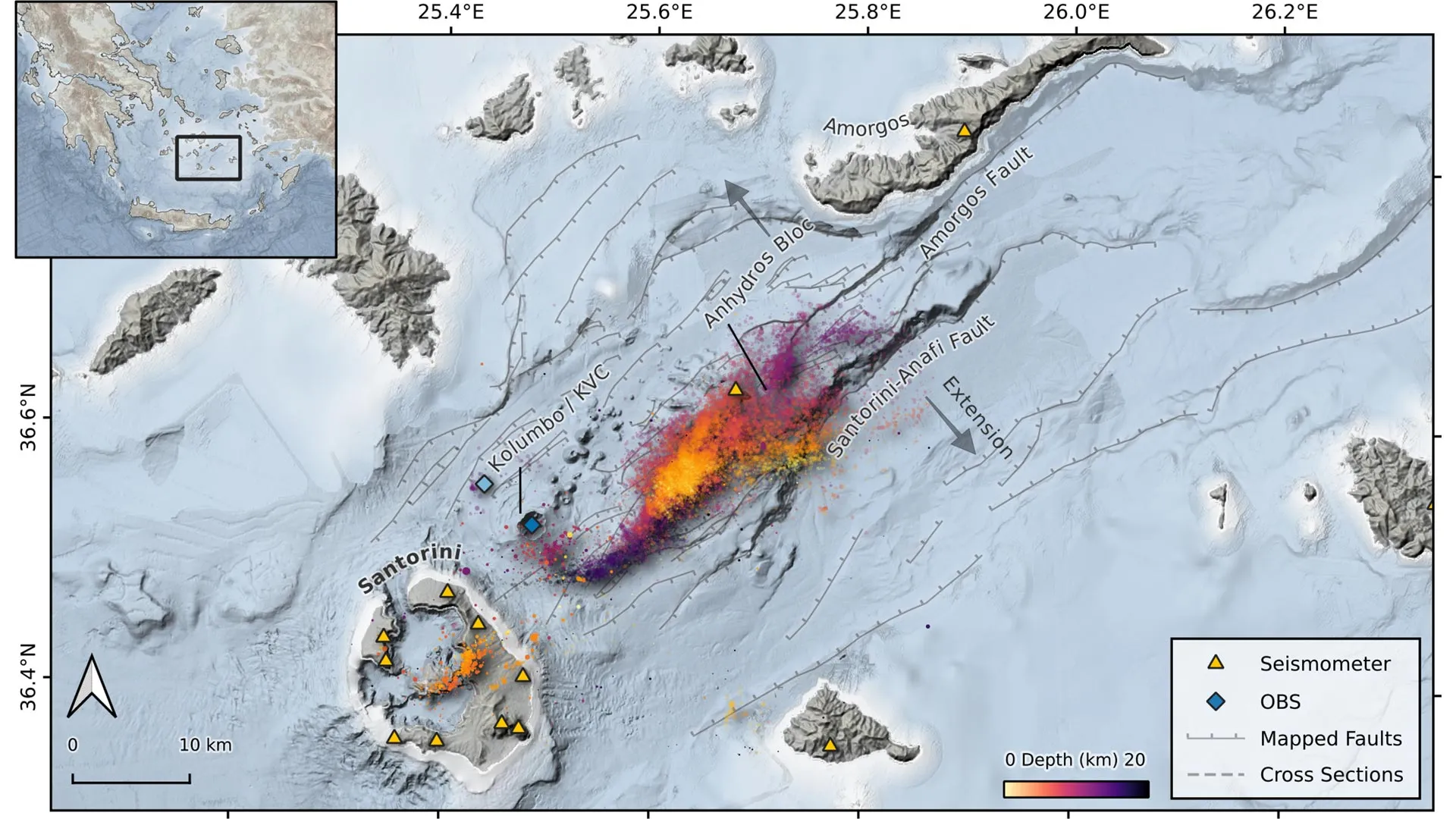
The stunning island of Santorini, known for its picturesque views, ancient history, and vibrant culture, has recently become the epicenter of intense geological activity. Over a short period, approximately 28,000 earthquakes were recorded, raising alarms among scientists and residents alike. These seismic events were not just mere tremors; they were the direct result of a significant influx of magma beneath the Earth's crust. This unusual geological phenomenon has provided researchers with a unique opportunity to study volcanic behavior and the forces that shape our planet.
In recent studies, scientists observed around 300 million cubic meters of molten magma accumulating beneath Santorini. This surge of magma is indicative of volcanic unrest and can have profound implications for the region. The seismic activity recorded was not random. Instead, it represented a complex interplay of geological processes where the rising magma fractured the surrounding rock, creating a series of seismic swarms. Understanding the dynamics of these processes is crucial, as they can signal potential volcanic eruptions.
The seismicity in Santorini has been carefully monitored using advanced technologies, including sophisticated artificial intelligence algorithms and high-resolution seafloor instruments. These tools allow researchers to map the pathways and behavior of the rising magma with remarkable precision. Recent advancements in data analysis have enabled scientists to predict how magma movement can affect seismic activity, providing invaluable insights into volcanic processes. By analyzing the patterns of the earthquakes, researchers can estimate the volume of magma that is moving and the potential risks associated with it.
The significance of this volcanic activity extends beyond academic interest. For the local population, Santorini's volcanic history is a double-edged sword. While the island's volcanic soil contributes to fertile agriculture and unique wine production, the dangers posed by volcanic eruptions cannot be ignored. Santorini is part of the Hellenic Volcanic Arc, where tectonic plates converge, making it inherently volatile. Historical records indicate that Santorini has experienced catastrophic eruptions in the past, most notably the Minoan eruption around 1600 BCE, which is believed to have led to the decline of the Minoan civilization. Current seismic activity raises questions about the timing and magnitude of future eruptions.
The scientific community is keenly observing the situation in Santorini. Volcanologists are not only focused on the immediate seismic events but are also investigating the broader implications of such activity on regional geology. Understanding how magma migration correlates with tectonic shifts can enhance predictive models for volcanic eruptions. This knowledge is vital for developing effective disaster preparedness strategies for communities living in the shadow of active volcanoes.
In conclusion, the recent surge of magma beneath Santorini, accompanied by a flurry of earthquakes, has cast a spotlight on the complex geological processes that govern volcanic activity. While the beauty of Santorini attracts millions of visitors each year, it also serves as a reminder of nature's unpredictable power. As researchers continue to study this phenomenon, they aim to unravel the mysteries of the Earth’s interior and improve our understanding of volcanic behavior. The lessons learned from Santorini may not only provide insights into the island's future but also contribute to global efforts in volcanic risk assessment and management.