Unraveling the Mystery of Earth's Mighty Antarctic Current: A New Perspective on Climate Evolution
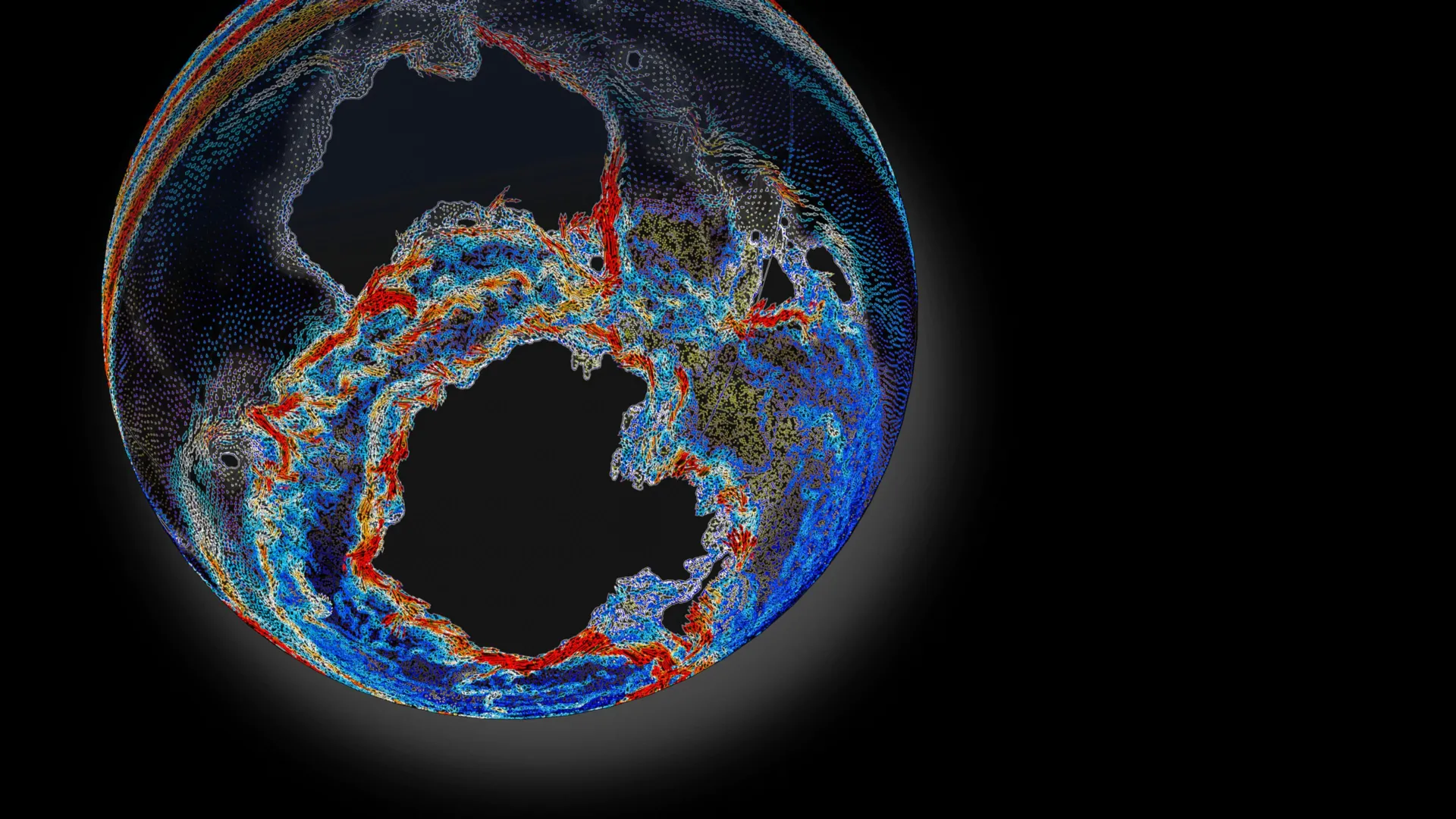
A groundbreaking study has shed new light on the Antarctic Circumpolar Current (ACC), the most powerful ocean current on the planet. This immense current, which encircles Antarctica, is not only stronger than all of the world’s rivers combined but also plays a crucial role in regulating Earth’s climate. Historically, scientists believed that the formation of the ACC was primarily driven by the opening of ocean gateways around Antarctica. However, recent research reveals a more complex interplay of geological and atmospheric factors, including the movement of continents and the influence of powerful winds. This new understanding is significant as it not only alters our perspective on the current’s origins but also highlights its critical role in the removal of atmospheric carbon dioxide, which has profound implications for climate science and our understanding of Earth’s climatic history.
The Antarctic Circumpolar Current flows uninterrupted around Antarctica, connecting the Atlantic, Pacific, and Indian Oceans. This connectivity creates a unique oceanic environment, influencing global ocean circulation patterns and climate systems. For decades, scientists have recognized the current's ability to regulate temperatures and drive marine ecosystems. However, the recent findings suggest that the ACC did not simply emerge from the opening of oceanic gateways, as previously thought. Instead, the formation of the current was a complex process that involved the shifting positions of continents, which in turn affected wind patterns. The movement of the continents played a pivotal role in facilitating the current’s development, highlighting the intricate relationship between plate tectonics, oceanography, and climate.
The research indicates that the alignment of powerful westerly winds, generated by the unique geography of the Southern Hemisphere, was essential for the ACC’s establishment. As the continents drifted and reshaped the ocean basins, these winds intensified, creating conditions that allowed the current to flourish. This crucial understanding underscores the importance of wind patterns in ocean circulation, which are often overlooked in discussions about ocean currents and climate. The findings emphasize that the interplay between atmospheric phenomena and oceanic dynamics is fundamental to understanding how large-scale climate systems operate.
One of the most significant implications of this research is its connection to the global carbon cycle. The ACC has been instrumental in sequestering carbon dioxide from the atmosphere, a process that contributed to a major cooling event in Earth’s history. As the current developed, it facilitated the uptake of carbon dioxide by the Southern Ocean, leading to a substantial reduction in greenhouse gas concentrations in the atmosphere. This cooling event, known as the Late Cenozoic Ice Age, marked a transformational period in Earth’s climatic history, ushering in the ice-covered landscapes that characterize the planet today. Understanding the mechanisms behind this carbon sequestration is vital, especially in the context of contemporary climate change, where rising carbon dioxide levels pose significant risks to the environment.
The research also has broader implications for contemporary climate models. Current projections of future climate scenarios often rely on simplified representations of ocean dynamics and atmospheric interactions. The newfound complexity in the ACC's formation suggests that climate models may need to incorporate more nuanced dynamics, particularly regarding ocean-atmosphere interactions. By refining these models, scientists can improve their understanding of climate feedback mechanisms and make more accurate predictions about future climate behavior. This is particularly important as the world grapples with the consequences of climate change, such as rising sea levels and extreme weather events.
As the scientific community continues to unravel the intricacies of Earth’s climate systems, the insights gained from this research on the Antarctic Circumpolar Current serve as a reminder of the interconnectedness of geological and climatic processes. The current’s formation, influenced by continental shifts and wind patterns, exemplifies how Earth’s climate has been shaped by a multitude of factors over millions of years. This research not only enhances our understanding of past climate events but also provides valuable context for current and future climate challenges. In the face of ongoing climate change, these insights are essential for informing effective mitigation and adaptation strategies, underscoring the importance of continued research in oceanography and climate science.