Unveiling the Depths: The First Global Map of Intriguing Mantle Earthquakes
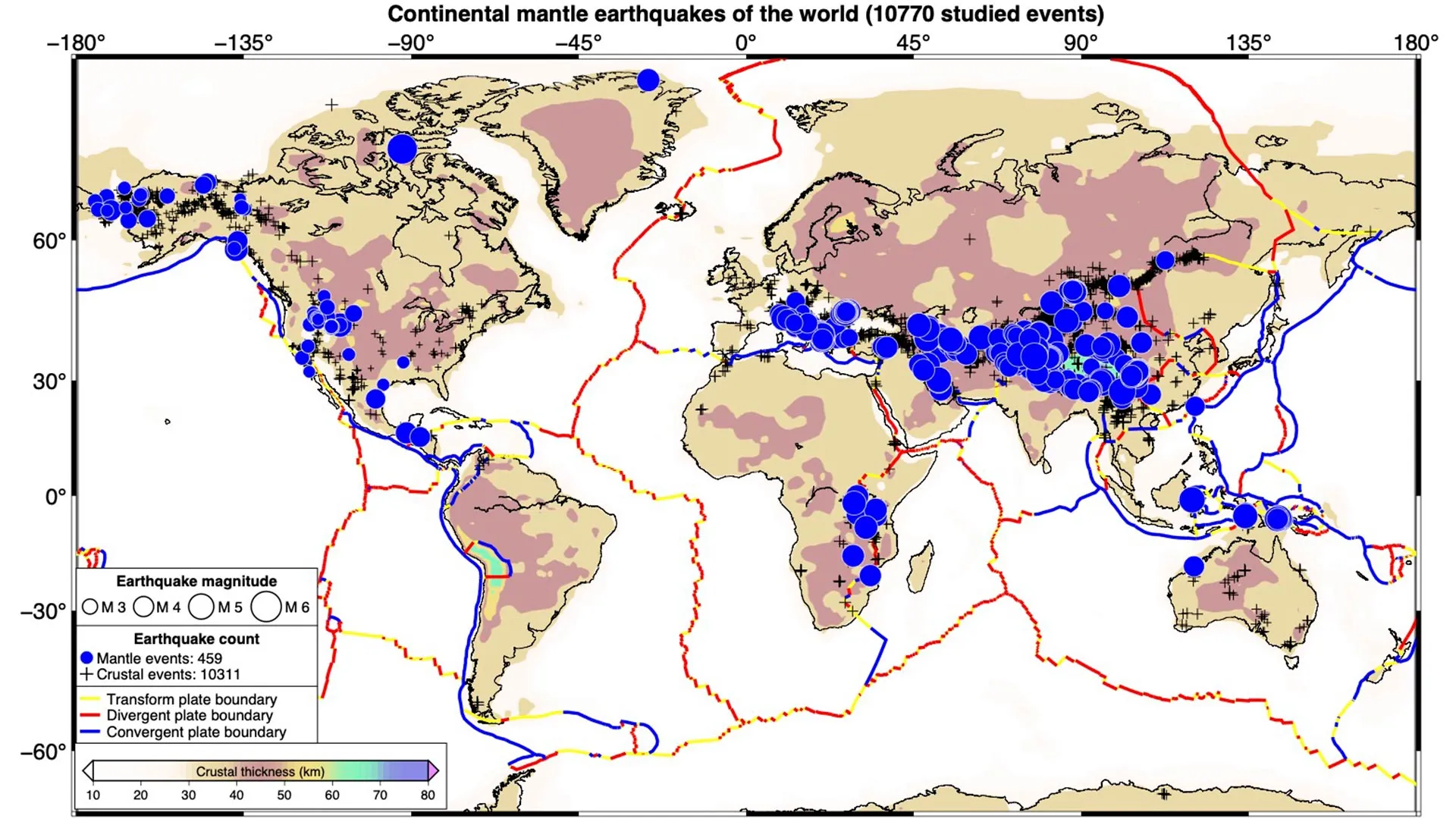
A groundbreaking study led by scientists at Stanford University has produced the first comprehensive global map of rare earthquakes originating deep within Earth’s mantle. These seismic events, often elusive and challenging to confirm, have long been a subject of curiosity among geologists and seismologists. Unlike the more familiar earthquakes that occur in the Earth's crust, mantle quakes provide a unique window into the dynamic processes occurring beneath our feet. This pioneering research not only sheds light on the distribution and characteristics of these deep tremors but also enhances our understanding of the geological forces shaping our planet.
The traditional view of earthquakes has primarily focused on crustal activity, where tectonic plates interact and create the seismic events that people commonly experience. However, mantle earthquakes are distinct in that they occur far deeper within the Earth, typically at depths exceeding 410 kilometers. Their rarity and the difficulty in detecting them have made them a mystery in the field of seismology. The team at Stanford tackled this challenge head-on by developing an innovative method that leverages subtle variances in seismic waves. This approach allows for the identification of mantle quakes, leading to the discovery of hundreds of previously undetected tremors scattered across the globe.
The study reveals that these deep earthquakes tend to cluster in certain regions, most notably in the Himalayas and near the Bering Strait. The presence of these quakes in such geologically significant areas raises intriguing questions about the processes at work within the Earth's interior. The Himalayas, for instance, are formed by the convergence of the Indian and Eurasian tectonic plates, a region already known for its seismic activity. The findings suggest that mantle earthquakes may be linked to the ongoing tectonic processes that shape mountain ranges and influence wider geological phenomena. Similarly, the Bering Strait area, characterized by complex plate interactions, further exemplifies how mantle quakes may play a role in the broader context of regional geology.
Understanding the patterns and mechanics of mantle earthquakes has profound implications for our comprehension of Earth's structure and behavior. These quakes can provide insights into the composition and dynamics of the mantle itself, offering clues about the temperature, pressure, and material properties at such depths. Moreover, this research contributes to refining models of Earth's tectonic processes, enhancing predictions about seismic risks in various regions. As the global population continues to rise and urban areas expand, understanding the potential hazards posed by deep earthquakes becomes increasingly vital.
The methods developed in this study represent a significant advancement in seismic research. By utilizing advanced seismological techniques, researchers can now differentiate between seismic waves generated by mantle quakes and those produced by crustal earthquakes. This breakthrough not only broadens the scope of seismic monitoring but also allows for a more nuanced understanding of the Earth’s internal dynamics. As technology continues to advance, the potential for discovering more hidden seismic events deep within the Earth remains promising, paving the way for future research that could reshape our understanding of geophysical processes.
The implications of this research extend beyond academic interest. In regions where deep earthquakes have been identified, there may be a need for enhanced monitoring and preparedness strategies. Understanding the potential risks associated with mantle earthquakes can inform construction codes, urban planning, and disaster response strategies. As scientists continue to unveil the complexities of Earth's interior, the newfound knowledge will be critical in mitigating risks and ensuring the safety of communities worldwide. This study not only marks a milestone in seismology but also opens the door to further exploration of the mysteries that lie beneath our feet.