Unveiling the Hidden Heat of Greenland: Implications for Sea Level Rise Predictions
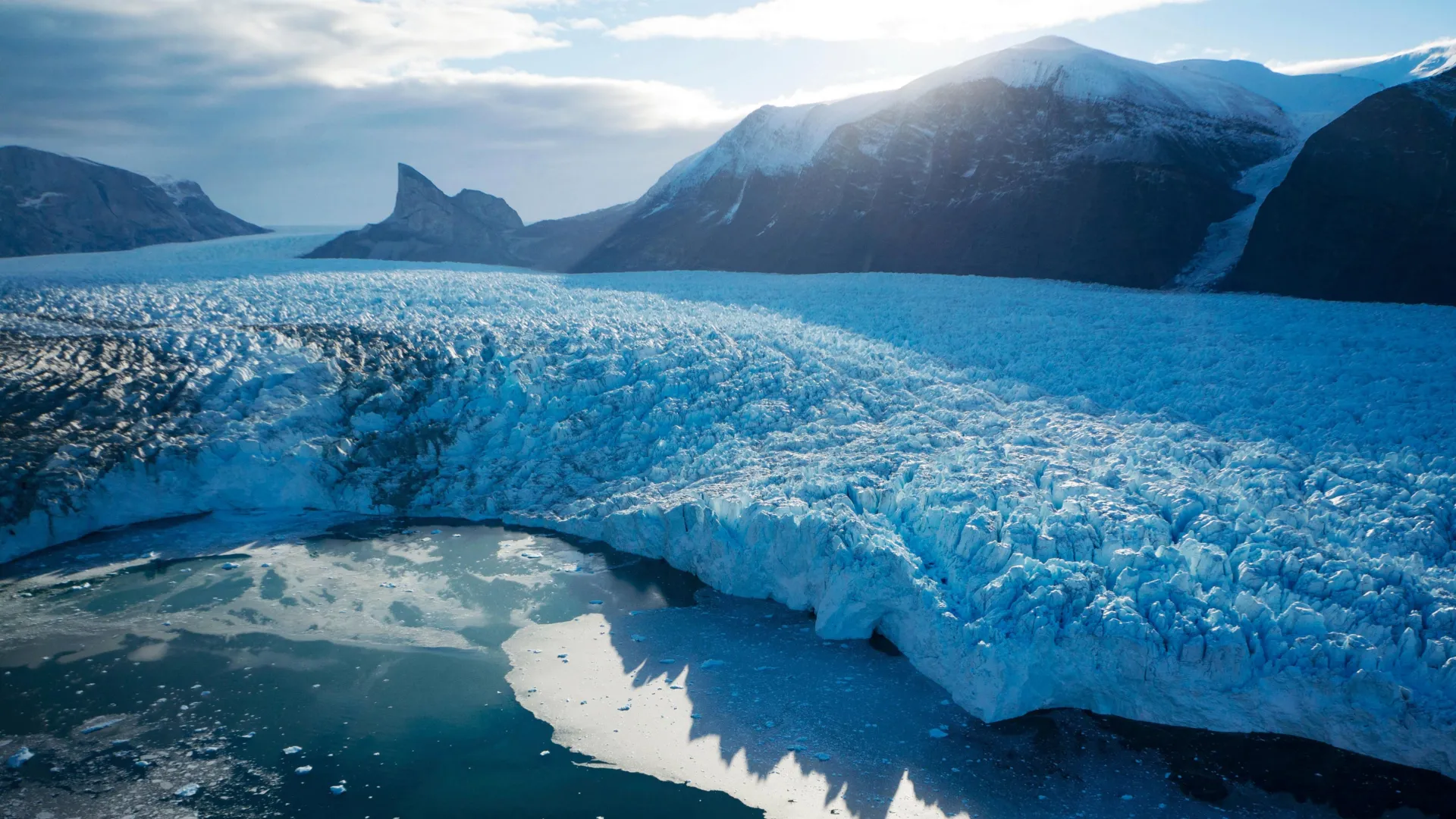
Recent advances in the understanding of Greenland's ice sheet have brought to light the significant role of underground temperatures in influencing ice dynamics and, consequently, global sea level forecasts. Researchers have developed intricate three-dimensional models that delve deep into the thermal characteristics beneath the ice, revealing a complex landscape of uneven heat distribution. This thermal variation is largely attributed to Greenland's geological history, particularly its movement over a volcanic hotspot, which has left a lasting imprint on the subsurface environment. This groundbreaking research not only enhances our comprehension of the ice sheet's behavior but also has crucial implications for predicting future sea level changes.
The intricate models devised by scientists provide a window into the subterranean temperatures that lie beneath Greenland’s vast ice cover. These temperatures are not uniform; they fluctuate significantly depending on the geological features below. The volcanic hotspot, which has been active for millions of years, has resulted in localized heating that influences how ice flows and melts. The presence of warmer areas beneath the ice can accelerate the melting process, leading to more rapid ice loss than previously anticipated. This is a critical finding, as even small changes in the ice sheet's stability can have profound effects on global sea levels.
Understanding the thermal dynamics beneath Greenland is essential for refining models that predict future sea level rise. The current estimates of sea level increase largely rely on surface measurements and historical data. However, the new insights into subsurface temperatures provide a more holistic picture that includes the effects of geothermal heat on ice dynamics. As scientists continue to integrate these findings into existing models, the projections for sea level rise may shift significantly, potentially raising concerns for coastal communities worldwide. The implications of a changing sea level are vast, affecting everything from infrastructure to ecosystems and human livelihoods.
The significance of this research extends beyond just the immediate impacts on sea level predictions. It highlights the need for a more integrated approach to studying ice sheets, one that considers the interplay between surface conditions and subsurface thermal processes. As climate change continues to alter the global environment, understanding these interactions becomes increasingly vital. The melting of the Greenland ice sheet is a key contributor to rising sea levels, and any improvement in prediction accuracy can help governments and communities better prepare for the future. Such preparations are essential, as many regions are already experiencing the effects of rising seas, including increased flooding and erosion.
As researchers continue to explore the depths of Greenland's ice and the hidden heat beneath it, the importance of long-term monitoring cannot be understated. Continuous data collection and analysis will be critical in refining our understanding of how geological and climatic factors interact to shape the ice sheet's future. Moreover, this research underscores the urgency of addressing climate change. As global temperatures rise, the interplay between geothermal heat and ice dynamics will become even more pronounced, necessitating proactive measures to mitigate the impacts of rising sea levels on vulnerable populations around the world. The findings serve as a reminder that the challenges posed by climate change are not only immediate but also deeply rooted in complex scientific phenomena that require ongoing investigation.