Why Traditional Weather Models Still Beat AI When Predicting Record Breaking Extreme Events
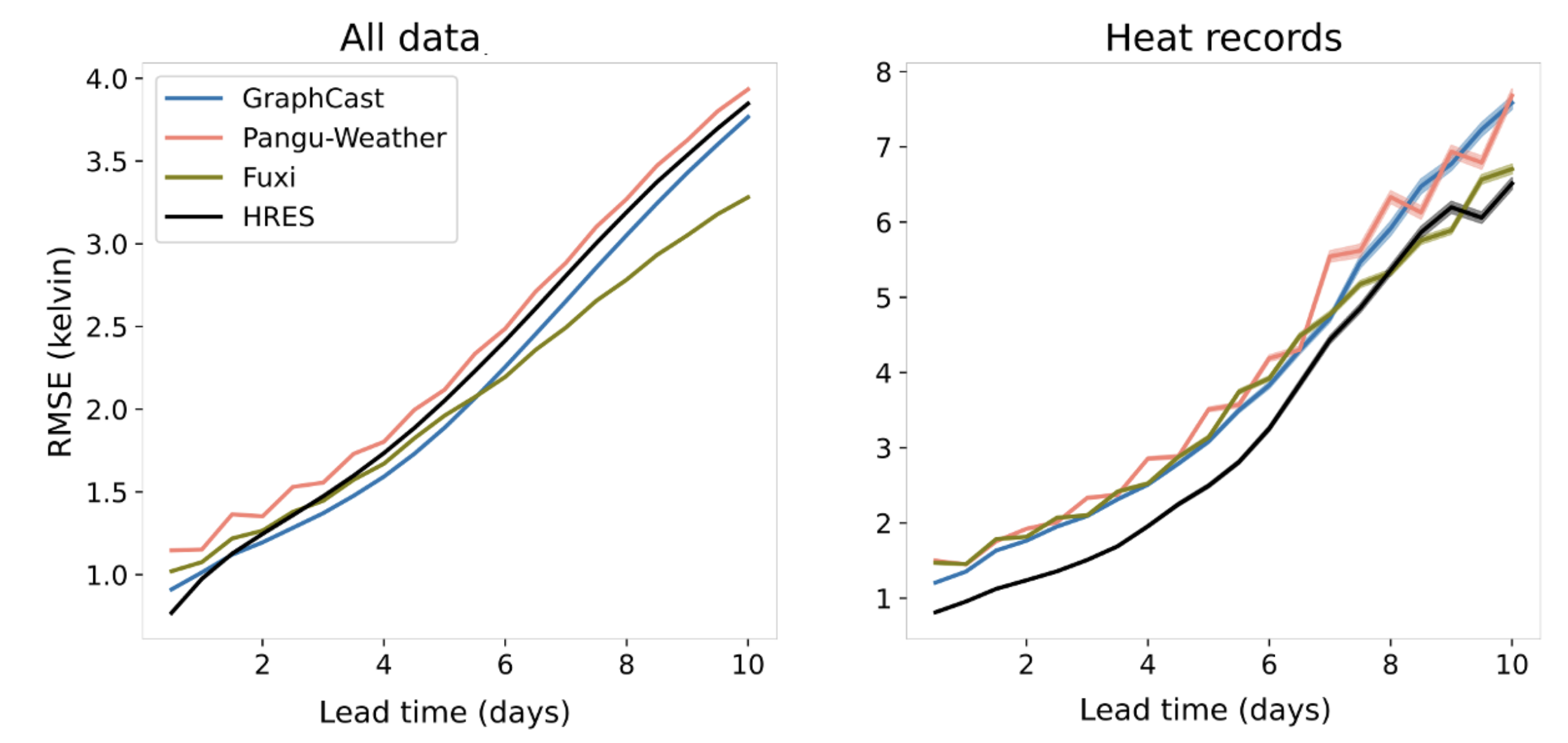
A new study published in Science Advances has delivered a sobering assessment of artificial intelligence's capabilities in weather forecasting, finding that traditional physics based models significantly outperform their AI counterparts when it comes to predicting record breaking extreme weather events. While AI weather models have made remarkable strides in recent years, often matching or exceeding conventional models for routine forecasts, the research reveals a critical blind spot: AI systems consistently underestimate both the frequency and intensity of unprecedented weather extremes, precisely the events that cause the most damage and loss of life.
The study was conducted by researchers at the Karlsruhe Institute of Technology, the University of Geneva, and other institutions. The team compared the performance of three leading AI weather models, Google DeepMind's GraphCast, Huawei Cloud's Pangu Weather, and the Fuxi model developed by a Shanghai based research team, against the European Centre for Medium Range Weather Forecasts' High Resolution forecast model, which is widely regarded as the gold standard among physics based prediction systems. The researchers tested all four models against a comprehensive database of record breaking heat, cold, and wind events recorded across the globe during 2018 and 2020.
The results were striking. For the year 2020 alone, the researchers identified approximately 160,000 record breaking heat events, 33,000 cold records, and 53,000 wind records worldwide, using ERA5 reanalysis data as their reference. When tasked with forecasting these events, the physics based model consistently produced more accurate predictions than all three AI models. The AI systems tended to underpredict both how often records would be broken and how severely the previous records would be exceeded. This pattern held across different geographic regions, seasons, and types of extreme events, suggesting a fundamental limitation rather than a specific model deficiency.
The underlying reason for this performance gap lies in how AI weather models are trained. These systems learn to recognize patterns and make predictions based on historical weather data, essentially building a statistical understanding of what weather conditions are likely given a particular set of atmospheric inputs. However, record breaking events are, by definition, outside the range of what has been observed before. When an AI model encounters conditions that could produce an unprecedented extreme, it tends to pull its prediction back toward the historical norm, effectively dampening the signal of the approaching record. Physics based models do not have this limitation because they simulate the actual physical processes driving weather, from fluid dynamics to thermodynamics, without being constrained by what has happened in the past.
This finding carries significant practical implications. Extreme weather events drive hundreds of billions of dollars in global damages annually through destroyed infrastructure, devastated cropland, and tragic loss of life. Early warning systems that can accurately predict these events save lives by giving communities time to prepare and evacuate. If AI models systematically underestimate extreme events, relying on them as the primary forecasting tool could lead to inadequate warnings and insufficient preparation for the most dangerous weather scenarios. Study author Prof. Sebastian Engelke of the University of Geneva described the findings as a "warning shot" against replacing traditional models with AI systems "too quickly."
The researchers emphasize that their findings do not diminish the value of AI in weather forecasting overall. For routine weather predictions spanning a few days ahead, AI models offer tremendous advantages in speed, computational efficiency, and often accuracy. The key takeaway is that the two approaches have complementary strengths. Physics based models excel at simulating extreme and unprecedented conditions, while AI models are highly efficient at pattern based forecasting for more typical weather scenarios. The future of weather prediction likely lies in hybrid systems that combine both approaches, leveraging AI's speed and pattern recognition for everyday forecasts while relying on physics based simulations for extreme event warnings where lives and infrastructure are at stake.